

Upper Extremity Disorders (Soft Tissue Injuries): The Daily PANCE Blueprint
Secondary to a football forcibly flexing a patient's finger, the patient cannot actively extend the digit at the distal interphalangeal (DIP) joint. What is the most likely diagnosis?
A. Felon
B. Subungual hematoma
C. Flexor profundus disruption
D. Mallet finger
E. Flexor superficialis tendon avulsion
The answer is D. Mallet finger
Mallet finger occurs when there is a disruption of the extensor tendon at its insertion on the distal phalanx, typically due to a forceful flexion of the digit while the extensor is actively trying to extend. This injury prevents the active extension of the DIP joint. It is a common sports injury involving a ball striking a finger.
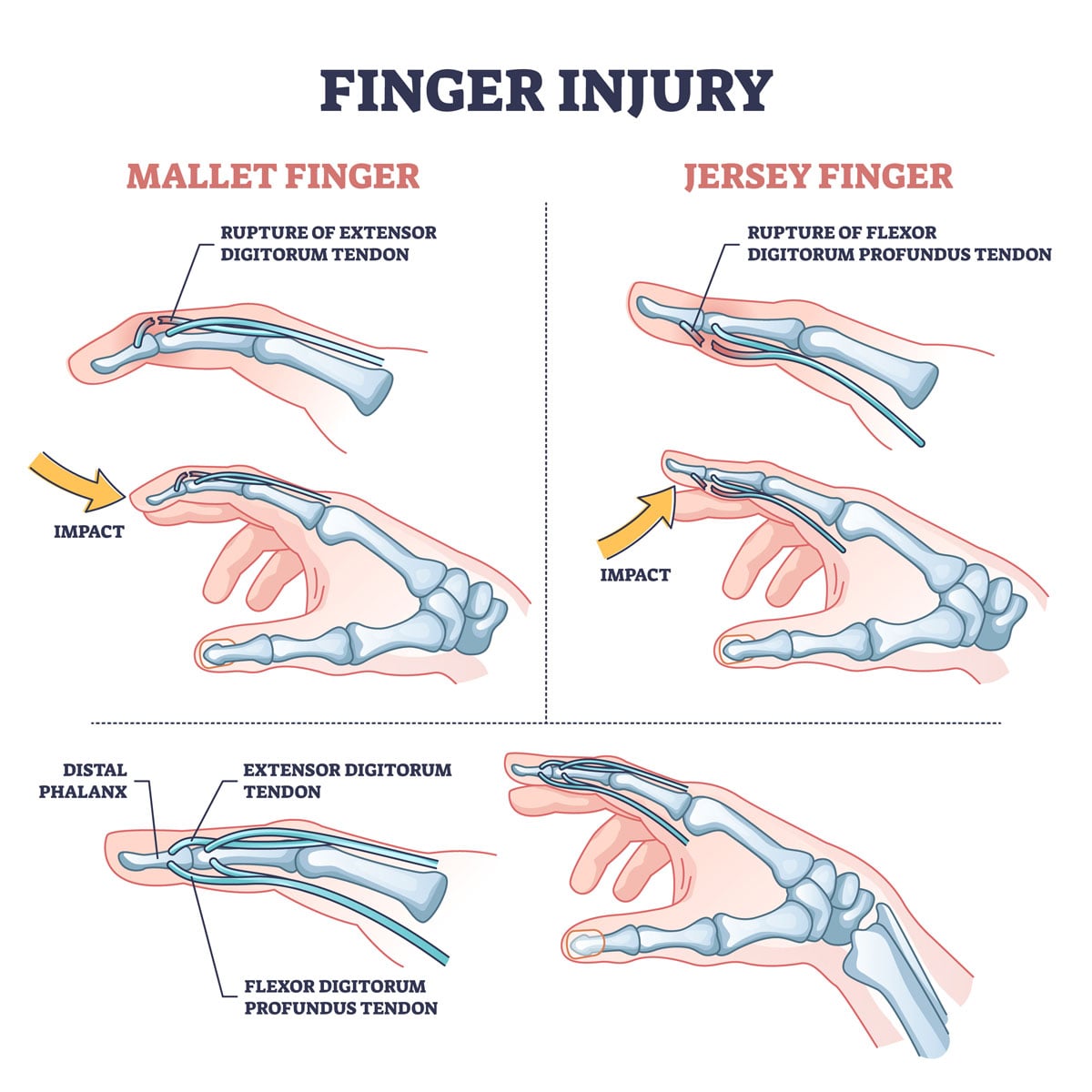
© VectorMine / Adobe Stock
Incorrect Answer Explanations:
- A. Felon – A felon is an infection of the pad of the fingertip, generally caused by bacteria. This condition involves pain, swelling, and redness but does not directly affect the tendons or the ability to extend the finger at any joint.
- B. Subungual hematoma – This condition is a collection of blood underneath the nail plate usually caused by trauma. While painful, a subungual hematoma does not affect the function of the tendons and would not prevent extension at the DIP joint.
- C. Flexor profundus disruption – Disruption or injury to the flexor profundus tendon affects the ability to flex the DIP joint, not extend it. This diagnosis would be considered if the patient were unable to actively flex the DIP joint.
- E. Flexor superficialis tendon avulsion – This involves the avulsion or tearing of the flexor superficialis tendon, affecting flexion at the proximal interphalangeal (PIP) joint, not extension at the DIP joint.
Smarty PANCE Content Blueprint Review:
PANCE Blueprint Musculoskeletal -> Upper extremity disorders -> Soft tissue injuries of the forearm, wrist, and hand -> Mallet Finger