Fractures and dislocations of the knee: The Daily PANCE Blueprint
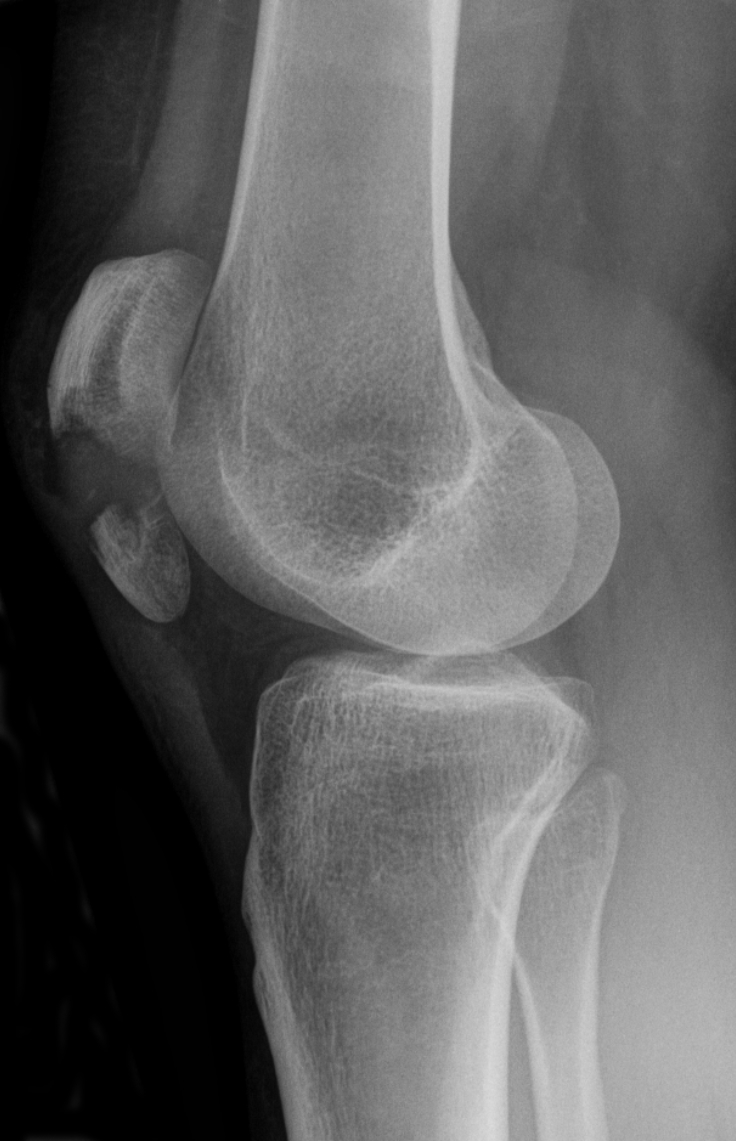
A 52-year-old man presents to the emergency department after a ground-level fall while hiking. He landed directly on his right knee. The patient reports immediate severe pain and swelling in the knee, and he is unable to bear weight on the affected leg. On physical examination, there is a large knee effusion, localized tenderness over the patella, and limited range of motion due to pain. An X-ray of the knee is shown above. Which of the following examination findings would most likely be seen in this patient?
A. Lateral collateral ligament laxity
B. Positive Lachman test
C. Quadriceps tendon rupture
D. Inability to perform a straight leg raise
E. Positive McMurray test
Answer and topic summary
The answer is D. Inability to perform a straight leg raise
A patellar fracture often disrupts the extensor mechanism of the knee, which includes the quadriceps tendon, patella, and patellar tendon. This disruption can result in the inability to actively extend the knee or perform a straight leg raise. The inability to perform this maneuver is a key diagnostic clue for a patellar fracture or quadriceps tendon rupture.
Incorrect Answer Explanations:
- A. Lateral collateral ligament laxity: This finding would be more indicative of a lateral collateral ligament (LCL) injury. It is not typically associated with a patellar fracture, as the LCL is located on the outside of the knee and is not involved in the extensor mechanism.
- B. Positive Lachman test: This test assesses the integrity of the anterior cruciate ligament (ACL). It involves anterior translation of the tibia with respect to the femur and is not related to patellar fractures.
- C. Quadriceps tendon rupture: While a quadriceps tendon rupture may present similarly with an inability to extend the knee, the question specifically mentions a patellar fracture. However, it’s important to note that both conditions could present with an inability to perform a straight leg raise, but the context of the question points toward the patellar fracture as the cause.
- E. Positive McMurray test: The McMurray test is used to diagnose meniscal tears, which involve the cartilaginous structures within the knee joint. It is not relevant to the diagnosis of a patellar fracture, which involves the bone and extensor mechanism.
View blueprint lesson
Smarty PANCE Content Blueprint Review:
Covered under ⇒ PANCE Blueprint Musculoskeletal ⇒ ⇒