

Bullous pemphigoid: The Daily PANCE Blueprint
An adult patient develops tense, stable bullae on the skin following a prodromal phase of pruritic, urticaria-like lesions. A biopsy shows autoantibodies against hemidesmosomes. What is the most likely diagnosis?
A. Bullous pemphigoid
B. Dermatitis herpetiformis
C. Erythema multiforme
D. Pemphigus vulgaris
E. Stevens-Johnson Syndrome (SJS)
The answer is A. Bullous pemphigoid
The clinical presentation and biopsy findings are classic for Bullous Pemphigoid (BP). BP is an autoimmune blistering disease that primarily affects the elderly. It is characterized by the development of tense, fluid-filled bullae that do not rupture easily (negative Nikolsky sign) because the split occurs at the dermo-epidermal junction (subepidermal). The condition often begins with a prodromal phase of intense pruritus and urticarial plaques before the blisters form. The definitive diagnosis is confirmed by immunofluorescence, which reveals IgG autoantibodies and C3 deposition targeting hemidesmosomes (specifically antigens BP180 and BP230) at the basement membrane zone.
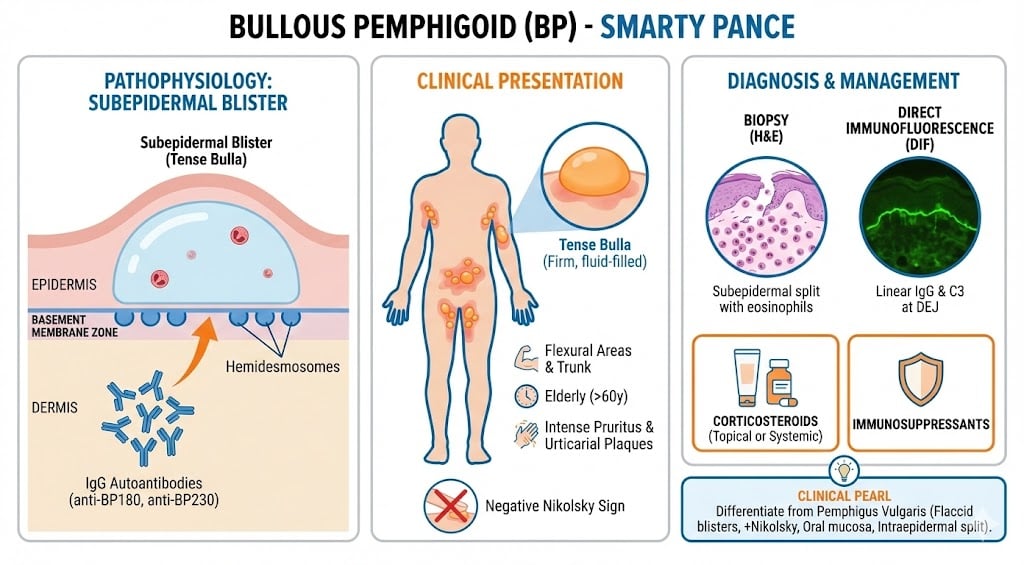
Smarty PANCE Content Blueprint Review:
Covered under ⇒ PANCE Blueprint Dermatology ⇒ Vesiculobullous disease ⇒ Bullous pemphigoid
Also covered as part of the Emergency Medicine EOR and Family Medicine EOR topic lists