

QT Prolongation: The Daily PANCE Blueprint
A 73-year-old female with a history of atrial fibrillation is admitted to the hospital with pneumonia. On hospital day 3, she develops nausea and is started on ondansetron. Her current medications include metoprolol, warfarin, and levofloxacin. A routine ECG shows a QTc of 500 ms (baseline QTc was 440 ms). Laboratory studies reveal: potassium 3.2 mEq/L, magnesium 1.4 mg/dL, calcium 8.9 mg/dL. Which of the following is the most appropriate intervention to take?
A. Discontinue QT-prolonging medications
B. Correct electrolyte abnormalities
C. Consult cardiology for an implantable cardioverter-defibrillator
D. Initiate temporary transvenous pacing
E. Both A and B
The answer is E. Both A and B
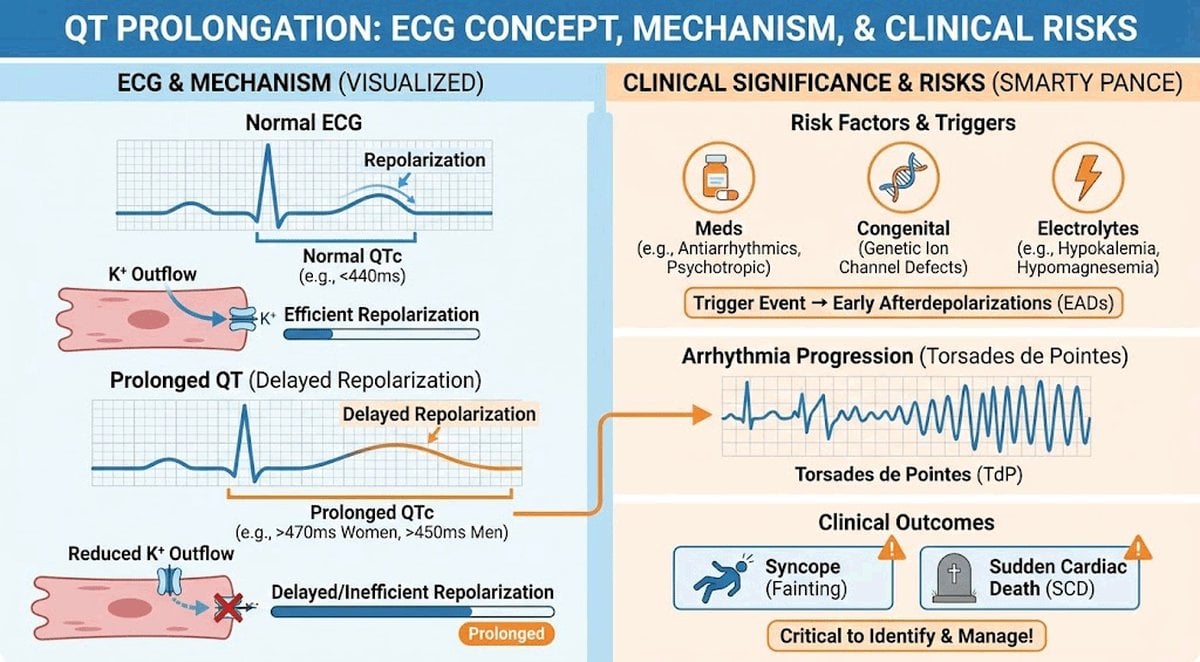
QT prolongation (QTc >450 ms in men and >460 ms in women) refers to an extended duration from the onset of ventricular depolarization to the end of ventricular repolarization on EKG (representing delayed cardiac repolarization). It’s important to take note of QT prolongation because it predisposes patients to torsades de pointes, a potentially fatal polymorphic ventricular tachycardia. Patients with QT prolongation may be asymptomatic or present with symptoms resulting from torsades de pointes, including syncope, presyncope, palpitations, dizziness, seizure-like activity, or sudden cardiac death.
QT prolongation can be congenital or acquired. Congenital long QT syndrome results from genetic mutations in ion channel genes. Acquired causes can be from medications (i.e., sotalol, antipsychotics, certain antibiotics), electrolyte issues (hypokalemia, hypomagnesemia), hypothyroidism, hypothermia, stroke, etc.
Management includes discontinuing QT-prolonging medications and correcting electrolyte issues. Long-term management includes beta-blockers for congenital or idiopathic cases, PPM in select patients, and ICD placement in high-risk individuals.
Smarty PANCE Content Blueprint Review:
Covered under ⇒ PANCE Blueprint Cardiology ⇒ Conduction Disorders/Dysrhythmias ⇒ QT Prolongation