

Sarcoidosis: The Daily PANCE Blueprint
A patient with noncaseating granulomas and ↑ACE level most likely has which lab abnormality?
A. Hypercalcemia
B. Hypocalcemia
C. Low CD4
D. High TSH
E. High uric acid
The answer is A. Hypercalcemia
In sarcoidosis, noncaseating granulomas contain activated macrophages that express extrarenal 1-alpha hydroxylase, an enzyme normally regulated tightly in the kidneys. Because this enzyme activity occurs outside the kidney, it bypasses normal feedback control, leading to unchecked conversion of 25-hydroxyvitamin D (inactive) into 1,25-dihydroxyvitamin D (active calcitriol).
Higher calcitriol levels cause:
- ↑ Intestinal calcium absorption, raising serum calcium
- ↑ Bone resorption, contributing further to hypercalcemia
- ↑ Renal calcium excretion, which can produce hypercalciuria, nephrolithiasis, or nephrocalcinosis in some patients
This mechanism is distinct from hyperparathyroidism because PTH is usually low or suppressed in sarcoidosis due to the elevated calcium.
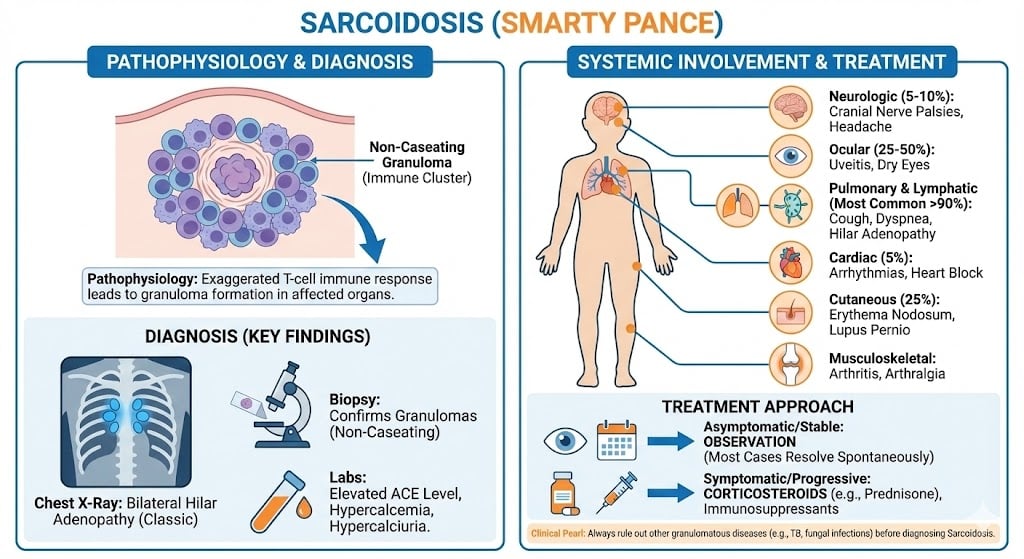
Smarty PANCE Content Blueprint Review:
Covered under ⇒ PANCE Blueprint Pulmonary ⇒ Restrictive Pulmonary Disease ⇒ Sarcoidosis
Also covered as part of the Internal Medicine PAEA EOR topic list