
PANCE Blueprint Cardiology (11%)

PANCE Blueprint Cardiology (11%)

PANCE Blueprint Cardiology (11%)

Follow along with the NCCPA™ PANCE and PANRE Cardiology Content Blueprint

Lessons

  1. Cardiovascular 145 Question Comprehensive Exam (Members Only)

    Comprehensive PANCE/PANRE Cardiovascular System Blueprint Exam
  2. Smarty PANCE Cardiology System Flashcards and Cheat Sheet

    Flashcards covering all Cardiology PANCE/PANRE NCCPA Content Blueprint topics. Download and print the flashcard cheat sheet and access our premium Quizlet flashcard sets.
    1. Additional Cardiology Flashcards

    1. EKG Interpretation (Picmonic)

    2. EKG Cram Cards

    3. EKG Pearls and Pitfalls (video)

    1. Dilated cardiomyopathy (DCM) is the most common cardiomyopathy (~90%), characterized by left ventricular (LV) dilation and systolic dysfunction (ejection fraction [EF] <40%), leading to heart failure with reduced ejection fraction (HFrEF)
      • Causes:
        • Ischemic: Coronary artery disease (CAD), myocardial infarction (MI)
        • Non-ischemic: Genetic (30–40%), viral myocarditis, alcohol, chemotherapy (e.g., doxorubicin), peripartum, endocrine disorders, toxins (e.g., cocaine), idiopathic.
      • Symptoms include dyspnea on exertion, fatigue, orthopnea, paroxysmal nocturnal dyspnea (PND), and peripheral edema
      • Physical exam may reveal  S3 gallop, displaced apical impulse, jugular venous distension, rales, hepatomegaly
      • Diagnosis is made with echocardiography (gold standard)—shows LV dilation, EF <40% (often <30%)
        • ECG may show nonspecific ST-T changes, conduction abnormalities, or arrhythmias
        • Labs: Elevated BNP/NT-proBNP; cardiac MRI for etiology if needed
      • Management includes guideline-directed medical therapy (GDMT)
      • Mnemonic: BAMD (Beta-blockers, ARNI/ACEi/ARB, MRAs, Diuretics/SGLT2i)
        • ARNI (sacubitril/valsartan): Preferred over ACEi (e.g., lisinopril) or ARB (e.g., losartan); reduces mortality/hospitalizations
        • Beta-blockers (e.g., carvedilol): Improves EF, survival
        • MRAs (e.g., spironolactone): For EF ≤35%; reduces fibrosis, mortality
        • SGLT2i (e.g., dapagliflozin): Reduces HF hospitalizations and mortality in all HFrEF patients
        • Loop diuretics (e.g., furosemide): For volume overload (edema, dyspnea)
      • Anticoagulation: For atrial fibrillation or thromboembolism risk (e.g., apixaban)
      • Devices: ICD for EF ≤35% after 3–6 months GDMT; CRT for QRS >130 ms with LBBB
      • Advanced: LVAD or cardiac transplant for end-stage HF
      • Lifestyle: Alcohol cessation, low-sodium diet (<2 g/day)
      • Complications include arrhythmias, thromboembolism, and progressive heart failure
    2. Hypertrophic Cardiomyopathy (HOCM)

      Hypertrophic Cardiomyopathy (HCM) is a genetic disorder characterized by left ventricular hypertrophy in the absence of other causes, leading to diastolic dysfunction and risk of sudden cardiac death
      • Autosomal dominant inheritance pattern
      • Most common cause of sudden cardiac death in young athletes
      • Symptoms include dyspnea, chest pain, syncope, and palpitations
      • Physical exam may reveal a harsh systolic murmur at LLSB that increases with Valsalva maneuver and standing (less blood in the chamber) and decreases with squatting (more blood in chamber)
      • Echocardiography shows asymmetric septal hypertrophy and systolic anterior motion of the mitral valve
      • ECG may show left ventricular hypertrophy, deep Q waves, and ST-T wave abnormalities
      • Management includes beta-blockers or calcium channel blockers to reduce symptoms and improve diastolic function
      • Avoidance of high-intensity sports and dehydration
      • Implantable cardioverter-defibrillators (ICDs) for patients at high risk of sudden cardiac death
      • Surgical options include septal myectomy or alcohol septal ablation for severe cases
    3. Restrictive Cardiomyopathy

      Restrictive Cardiomyopathy (RCM) is characterized by impaired ventricular filling with preserved systolic function due to rigid (stiff) ventricular walls
      • Least common type of cardiomyopathy
      • Causes include amyloidosis, sarcoidosis, hemochromatosis, scleroderma, cancer and idiopathic fibrosis
      • Symptoms include dyspnea, fatigue, and signs of right-sided heart failure (e.g., peripheral edema, ascites)
      • Physical exam may reveal jugular venous distension, hepatomegaly, and ascites
      • Echocardiography shows normal-sized ventricles with biatrial enlargement and impaired diastolic filling
      • Cardiac MRI and biopsy can help identify infiltrative causes like amyloidosis
      • ECG may show low voltage QRS complexes and nonspecific ST-T wave changes
      • Management focuses on treating the underlying cause and symptomatic relief with diuretics and aldosterone antagonists
      • Avoidance of volume overload and use of anticoagulation if atrial fibrillation is present
    4. Stress Cardiomyopathy

      Stress Cardiomyopathy (Takotsubo Syndrome) is a transient, stress-induced cardiomyopathy characterized by sudden, reversible left ventricular dysfunction, often mimicking acute coronary syndrome (ACS)
      • It primarily affects postmenopausal women, accounting for over 90% of cases
      • Common triggers include emotional or physical stress, such as grief ("broken heart syndrome"), surgery, or severe illness
      • Symptoms are indistinguishable from acute myocardial infarction -> acute chest pain, dyspnea, and sometimes syncope
      • Thought to result from catecholamine surge leading to myocardial stunning and microvascular dysfunction
      • The key distinguishing feature is an absence of obstructive coronary artery disease despite clinical and electrocardiographic features resembling myocardial infarction
      • ECG demonstrates ST-segment elevation (44%) or T-wave inversions, mimicking STEMI
      • Troponins are elevated in all patients with stress cardiomyopathy but disproportionally lower than expected for the degree of ECG changes
      • Echocardiography demonstrates apical ballooning (dyskinetic apex with hyperkinetic basal segments) or other patterns of regional wall motion abnormality not corresponding to a single coronary artery territory
      • Coronary angiography demonstrates normal coronary arteries (a key distinguishing feature from ACS)
      • Brain natriuretic peptide (BNP) levels may be elevated, which often peak later than troponin levels
      • Supportive care with beta-blockers, ACE inhibitors, anticoagulation if apical thrombus
      • Avoid inotropes -> risk of worsening outflow obstruction; IV fluids/vasopressors for hypotension
      • Treat stressors and provide emotional and physical support
      • The prognosis is excellent, with recovery in 1-4 weeks; complications include heart failure, arrhythmias, or rarely cardiogenic shock. Recurrence is rare
    1. Atrial fibrillation/flutter (ReelDx + Lecture)

      • Atrial Fibrillation: Low-amplitude fibrillatory waves without discrete P waves and an irregularly irregular pattern of QRS complexes
      • Atrial Flutter: Regular, sawtooth pattern, atrial rate 250-350 BPM, narrow QRS complex
    2. Atrial tachycardia

      Atrial Tachycardia is a supraventricular arrhythmia originating from an ectopic focus within the atria, outside the sinus node
      • Characterized by a regular rhythm with atrial rate between 100–250 bpm
      • P waves differ in morphology from sinus P waves and may be inverted or abnormally shaped depending on the ectopic focus
      • May present with palpitations, dizziness, fatigue, shortness of breath, or be asymptomatic
      • Often seen in patients with structural heart disease, digoxin toxicity, or post-surgical atrial scarring
      • Diagnosis is made with ECG, showing abnormal P wave morphology and normal QRS complexes with a regular rhythm
      • Management includes:
        • Rate control with beta-blockers or calcium channel blockers
        • Antiarrhythmic drugs (e.g., flecainide, amiodarone) for rhythm control if symptomatic
        • Catheter ablation may be curative in focal atrial tachycardia, especially if recurrent or drug-resistant
      • Differentiation from other supraventricular tachycardias (e.g., AVNRT, AVRT) is important due to differing treatments
      • Complications include tachycardia-induced cardiomyopathy if left untreated
    3. Atrioventricular block (lecture + ReelDx)

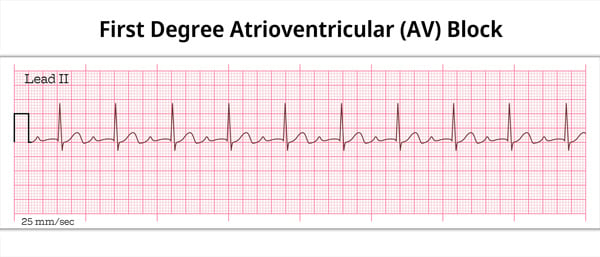
      First degree AV block: PR interval > .2 seconds.
      • First-degree heart block is actually a delay rather than a block. It is caused by a conduction delay at the AV node or bundle of His. This means that the PR Interval will be longer than normal (over 0.20 sec.).
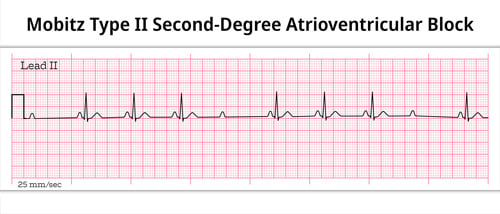
      Second degree AV block Type 1 (Wenckebach) and Type 2 (Mobitz)
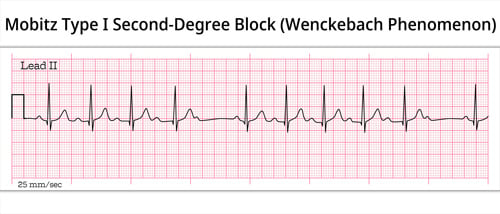
      • Second degree type 1 (Wenckebach)Longer, longer, drop now you've got a Wenckebach.
        • With second-degree heart block, Type I, some impulses are blocked but not all. More P waves can be observed vs QRS Complexes on a tracing. Each successive impulse undergoes a longer delay. After 3 or 4 beats the next impulse is blocked.
      • Second degree type 2 (Mobitz)Some get dropped some get through now you've got Mobitz 2.
        • With Mobitz Type II blocks, the impulse is blocked in the bundle of His. Every few beats there will be a missing beat but the PR Interval will not lengthen.
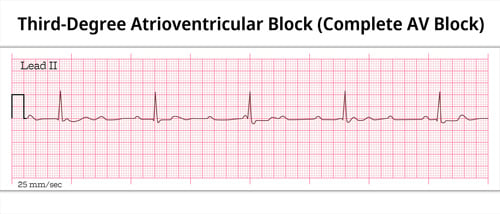
      Third degree AV block: P’s and Q’s don’t agree now the block is 3rd degree.
      • With this block, no atrial impulses are transmitted to the ventricles. As a result, the ventricles generate an escape impulse, which is independent of the atrial beat. In most cases, the atria will beat at 60-100 bpm while the ventricles asynchronously beat at 30-45 bpm.
    4. Bradycardia

      A heart rate <60 bpm that may be physiologic (e.g., athletes) or pathologic (e.g., sinus node dysfunction, medications, myocardial infarction)
      • Often asymptomatic; symptomatic cases may include fatigue, dizziness, syncope, chest pain, or heart failure signs (e.g., dyspnea, edema).
      • Types:
        • Sinus bradycardia: Slowed SA node
        • Non-sinus bradycardia: Includes AV blocks (e.g., Mobitz I/II, third-degree block)
      • Pathologic causes: Sinus node dysfunction, hypothyroidism, infections (e.g., Lyme disease), myocardial infarction, or advanced AV blocks
      • ECG is essential for identifying bradyarrhythmias and distinguishing sinus from non-sinus bradycardia
      • Labs: TSH, electrolytes to assess underlying causes
      • Additional testing: Holter monitor, cardiac imaging
      • No treatment required is asymptomatic
      • Symptomatic/unstable: Immediate IV atropine, temporary pacing, or epinephrine infusion
      • Address underlying causes, adjust medications, and consider a permanent pacemaker for persistent symptomatic bradycardia
    5. Bundle branch block

      Bundle Branch Block (BBB) is a delay or blockage along the pathway that electrical impulses travel to make the heart beat, occurring in the right or left bundle branches.
      • Right Bundle Branch Block (RBBB):
        • QRS duration ≥ 120 ms with RSR' pattern in V1-V3 ("rabbit ears")
        • Wide S wave in leads I, V5, and V6
        • May be seen in healthy individuals or associated with conditions such as pulmonary embolism or cor pulmonale
      • Left Bundle Branch Block (LBBB):
        • QRS duration ≥ 120 ms with broad, notched R waves in leads I, V5, and V6
        • Deep S wave in V1 and V2
        • Often indicates underlying heart disease, such as myocardial infarction, cardiomyopathy, or hypertension
          • A right bundle branch block is not always pathological, whereas a new left bundle branch block is always pathological and can be a sign of myocardial infarction. Left = Lousy!
      • May cause dyssynchrony of ventricular contraction leading to reduced cardiac output
      • Diagnosed with ECG showing characteristic changes in QRS morphology
      • Management focuses on the underlying cause and may include pacemaker implantation in severe cases, particularly with left bundle branch block and heart failure symptoms
    6. Idioventricular rhythm

      Idioventricular Rhythm (IVR) is a slow regular ventricular rhythm with a rate of less than 50 bpm, absence of P waves, and a prolonged QRS interval. It occurs when the sinoatrial node is blocked or suppressed, activating latent pacemakers that generate escape beats. When the ventricles take over as the pacemaker, it is termed Idioventricular Rhythm. Often referred to as "slow ventricular tachycardia," it resembles ventricular tachycardia but with a slower rate. If the rate is 50-100 bpm, it is classified as Accelerated Idioventricular Rhythm (AIVR).
      • Characteristics:
        • Heart rate: Slow (< 50 bpm for IVR; 50-100 bpm for AIVR)
        • ECG findings:
          • Wide QRS complexes (≥120 ms)
          • Absent or dissociated P waves with a regular rhythm
      • Symptoms: Fatigue, dizziness, syncope, or hypotension
      • Causes:
        • Myocardial infarction: Especially post-reperfusion or inferior wall MI
        • Bradyarrhythmias: Complete heart block
        • Post-cardiac arrest or reperfusion therapy (e.g., PCI)
        • Electrolyte disturbances: Hyperkalemia
        • Drug toxicity: Beta-blockers, calcium channel blockers
      • Treatment:
        • Stable patients: Monitor closely and address underlying causes (e.g., MI, electrolytes)
        • Unstable patients: Immediate treatment with atropine, temporary pacing, or inotropic support
        • Symptomatic AIVR: Manage with beta-blockers, antiarrhythmics, or ablation if indicated
        • Complete heart block: Avoid suppressing ventricular pacemakers to prevent asystole
    7. Paroxysmal supraventricular tachycardia

      Paroxysmal Supraventricular Tachycardia (PSVT) is a rapid heart rate originating above the ventricles, characterized by sudden onset and termination
      • Commonly caused by reentrant circuits, including AV nodal reentrant tachycardia (AVNRT) and AV reentrant tachycardia (AVRT) 
        • AV Nodal Reentrant Tachycardia (AVNRT):
          • AVNRT is the most common type of PSVT, resulting from a reentry circuit within or near the AV node
          • It is typically seen in young, otherwise healthy individuals and is often triggered by premature atrial contractions
          • The ECG during an episode may show a pseudo-R' wave in lead V1, representing the retrograde P wave
        • AV Reentrant Tachycardia (AVRT):
          • AVRT involves a reentry circuit that includes an accessory electrical conduction pathway (e.g., the bundle of Kent fibers) between the atria and the ventricles, separate from the AV node
          • It is associated with conditions like Wolff-Parkinson-White (WPW) syndrome, where an accessory pathway allows for early depolarization of the ventricles
          • The ECG may show a delta wave (slurred upstroke in the QRS complex) in WPW, indicating pre-excitation.
      • Symptoms include palpitations, dizziness, shortness of breath, and chest discomfort
      • ECG typically shows a narrow QRS complex tachycardia with a regular rhythm
      • Vagal maneuvers (e.g., Valsalva maneuver, carotid sinus massage), which temporarily block the AV node, can terminate episodes by increasing vagal tone
      • Acute management includes adenosine for rapid termination if vagal maneuvers are unsuccessful
      • Long-term management options include beta-blockers or calcium channel blockers to prevent recurrences
      • Catheter ablation is a potential curative treatment for patients with recurrent or symptomatic PSVT
      • Avoidance of triggers such as caffeine, alcohol, and stress can help reduce the frequency of episodes
    8. Junctional rhythms

      Junctional rhythms occur when the AV node or Bundle of His takes over as the heart’s pacemaker due to SA node dysfunction or suppression.
      • Causes:
        • Medications: Beta-blockers, calcium channel blockers (e.g., diltiazem), digoxin
        • Other: Myocardial infarction, hypoxia, hyperkalemia, hypothyroidism, Lyme disease
      • Symptoms range from asymptomatic to fatigue, dizziness, syncope, and palpitations
      • Classification:
        • Junctional bradycardia: <40 bpm
        • Junctional escape rhythm: 40–60 bpm
        • Accelerated junctional rhythm: 60–100 bpm
        • Junctional tachycardia: >100 bpm
      • ECG features:
        • Junctional rhythm with a rate of 40-60 bpm
        • Narrow QRS complexes (< 120 ms)
        • P waves are absent, inverted (retrograde conduction), or buried in the QRS complex
      • Treatment:
        • Asymptomatic: Often requires no treatment
        • Symptomatic or unstable:
          • Atropine: 0.5 mg IV push for bradycardia
          • Temporary pacing or dopamine/epinephrine infusion if atropine fails
          • Discontinue bradycardia-inducing drugs (e.g., diltiazem, beta-blockers)
          • Treat systemic causes (e.g., hypoxia, hypothyroidism, MI)
        • Persistent cases: Permanent pacemaker for sinus node dysfunction or heart block
    9. Premature beats

      • PVC: Early wide "bizarre" QRS, no p wave seen
      • PAC: Abnormally shaped P wave
      • PJC: The QRS complex will be narrow, usually measured at 0.10 sec or less, no p wave or inverted p wave
    10. QT Prolongation

       Prolonged QTc interval on ECG, which should be measured manually in lead II or V5/V6; monitor for ventricular arrhythmias like TdP
      • Corrected QT (QTc) is prolonged if
        • > 440-450 ms in men
        • > 460-470 ms in women
      • QTc > 500 is associated with an increased risk of torsades de pointes
      • QTc is abnormally short if < 350 ms
      • IV magnesium sulfate is first-line for torsades de pointed even if magnesium levels are normal
    11. Sick sinus syndrome (sinus node dysfunction)

      Collective term used to describe dysfunction in the sinus node's automaticity and impulse generation
      • Sinus bradycardia: Sinus rhythm with a resting heart rate of < 60 bpm in adults, or below the normal range for age in children
      • Sinus pause: pause < 3 seconds
      • Sinus arrest: pause > 3 seconds
      • Tachy-Brady Syndrome: Episodes of alternating sinus tachycardia and bradycardia
    12. Sinus arrhythmia

      Sinus arrhythmia represents normal, minimal variations in the SA Node's pacing rate in association with the phases of respiration. Heart rate frequently increases with inspiration, decreases with expiration
    13. Torsade de pointes (Lecture)

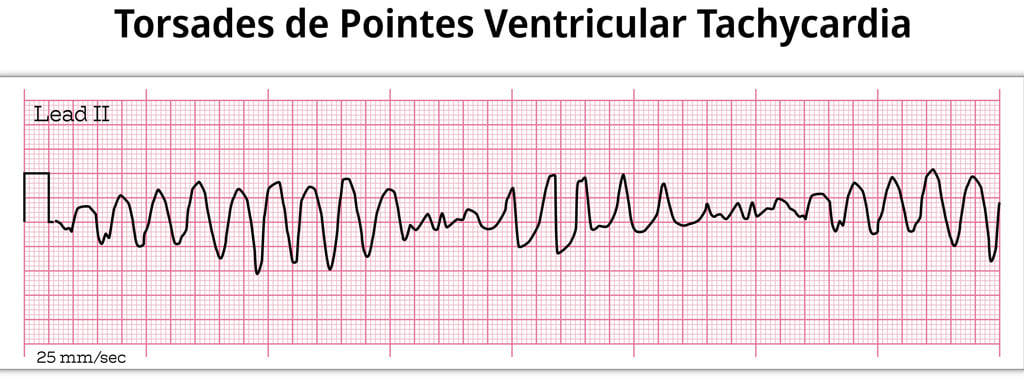
      Torsade de Pointes is a specific type of polymorphic ventricular tachycardia characterized by a twisting of the QRS complexes around the baseline, often associated with a prolonged QT interval
      • Can lead to sudden cardiac death if not promptly treated
      • Triggered by factors that prolong the QT interval, such as certain medications (e.g., antiarrhythmics, antibiotics, antipsychotics), electrolyte imbalances (e.g., hypokalemia, hypomagnesemia), and congenital long QT syndrome
      • Symptoms include palpitations, dizziness, syncope, and, in severe cases, cardiac arrest
      • ECG findings show polymorphic ventricular tachycardia with a characteristic twisting QRS morphology around the isoelectric line
      • Management includes immediate cessation of QT-prolonging medications, correction of electrolyte imbalances, and administration of magnesium sulfate as the first-line treatment
      • Defibrillation is necessary in cases of hemodynamic instability
      • Beta-blockers may be used in congenital long QT syndrome, and temporary pacing may be required to prevent recurrence
      Torsades de pointes
    14. Ventricular fibrillation (Lecture)

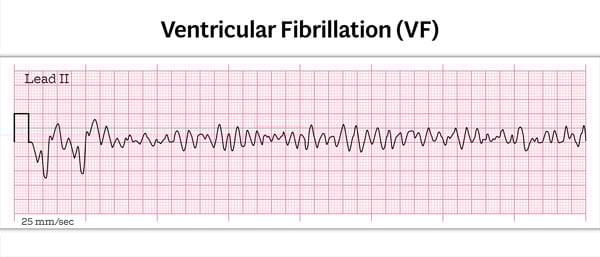
      Ventricular Fibrillation (VF) is a life-threatening arrhythmia characterized by rapid, erratic electrical impulses, resulting in ineffective ventricular contractions.
      • Causes include acute myocardial infarction, cardiomyopathy, electrolyte imbalances, and drug toxicity
      • Presents with sudden cardiac arrest, loss of consciousness, and no palpable pulse
      • Diagnosed by ECG showing chaotic, irregular waves with no identifiable P waves, QRS complexes, or T waves
      • CPR and Immediate defibrillation (AKA non-synchronized cardioversion) is the treatment of choice
      • After resuscitation, treat underlying cause and consider implantable cardioverter-defibrillator (ICD) for secondary prevention
      • Amiodarone or lidocaine may be used for recurrent VF or during resuscitation
      Ventricular Fibrillation (image by Adobe Stock)
    15. Ventricular tachycardia (ReelDx + Lecture)

      EKG: Wide complex tachycardia with three or more consecutive ventricular premature beats
      • Stable: Treat with amiodarone → lidocaine → procainamide (in this order)
      • Unstable: Treat with CPR and defibrillation synchronized direct current (DC) cardioversion
    1. Atrial septal defect

      Atrial Septal Defect (ASD) is an opening in the interatrial septum causing a left to right shunt and volume overload of the right atrium and right ventricle
      • Noncyanotic—foramen ovale fails to close
      • Wide fixed split-second heart sound (S2)
      • Systolic ejection murmur at the second left intercostal space with an early to mid-systolic rumble
      • May present with right atrial and ventricular enlargement
      • Increased risk of stroke due to paradoxical embolism
      • Frequent respiratory infections due to increased pulmonary blood flow and pulmonary congestion
      • Easy fatigue due to inefficient blood oxygenation and circulation, especially during physical activities
      • Diagnosed with echocardiography, showing right atrial and ventricular dilation and a left-to-right shunt. ECG may show right axis deviation and right ventricular hypertrophy. Surgical or catheter-based closure for large or symptomatic defects.
    2. Coarctation of the aorta

      Coarctation of the Aorta is a congenital narrowing of the aorta, most commonly just distal to the origin of the left subclavian artery
      • The classic clinical sign of coarctation of the aorta is higher blood pressure in the arms than in the legs and pulses that are bounding in the arms but decreased in the legs
      • Systolic murmur best heard over the back or left interscapular area
      • May present with rib notching on chest X-ray due to collateral circulation
      • Left ventricular hypertrophy due to increased afterload
      • Associated with Turner syndrome and bicuspid aortic valve
      • Diagnosed with echocardiography, showing the narrowing of the aorta. MRI or CT angiography can further delineate the anatomy. ECG may show left ventricular hypertrophy
      • Treatment involves surgical repair or balloon angioplasty with or without stent placement, depending on the severity and age of the patient
      Coarctation of the Aorta
    3. Patent ductus arteriosus

      Patent Ductus Arteriosus (PDA) is a condition in which the ductus arteriosus fails to close after birth, resulting in a left ⇒ right shunt between the aorta and the pulmonary artery.
      • Continuous "machine-like" murmur best heard at the left infraclavicular area (upper left sternal border)
      • Bounding pulses and widened pulse pressure
      • Failure to thrive, poor feeding, and respiratory distress in infants
      • Increased risk of infective endocarditis
      • May present with signs of congestive heart failure if large and untreated
      • Diagnosed with echocardiography, showing the patent ductus and left heart enlargement. Chest X-ray may show cardiomegaly and increased pulmonary vascular markings.
      • Treatment options include indomethacin or ibuprofen to induce closure in preterm infants, and surgical ligation or catheter-based closure for term infants and older children if significant
    4. Patent foramen ovale (Lecture)

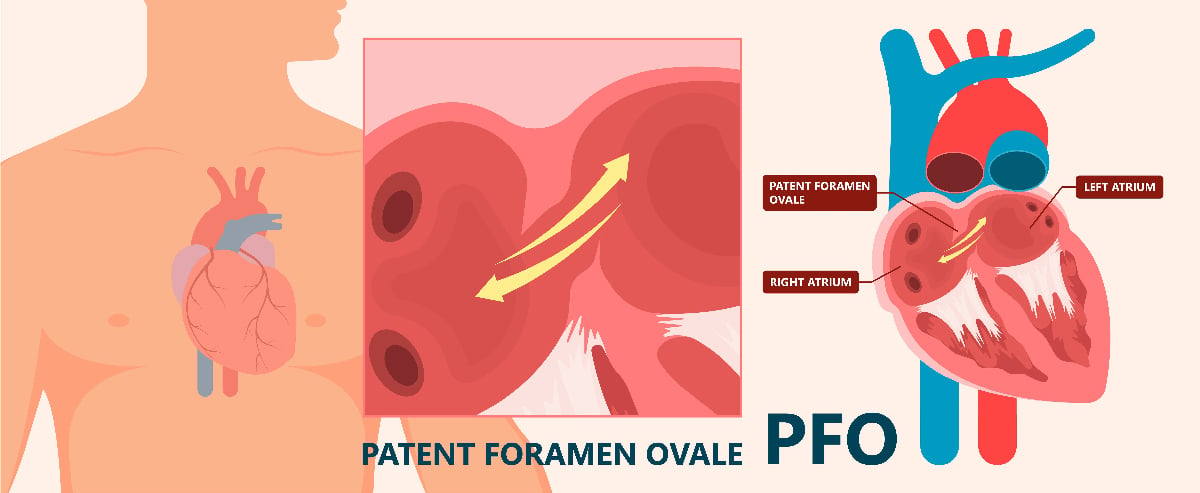
      Patent Foramen Ovale (PFO) is a small, flap-like opening in the atrial septum that persists after birth, allowing blood flow between the right and left atria, causing right to left shunting
      • Usually asymptomatic and often discovered incidentally
      • PFO vs. ASD: PFOs are a normal remnant of fetal circulation, while ASDs are congenital heart defects.  PFOs typically have a flap-like valve that can allow right-to-left shunting, while ASDs allow left-to-right shunting
      • It may be associated with paradoxical embolism, leading to stroke or transient ischemic attack (TIA)
      • Cryptogenic stroke (stroke with unknown origin) is commonly linked to PFO
      • Can cause migraine with aura in some individuals
      • Diagnosed with echocardiography, particularly transesophageal echocardiography (TEE) with bubble study, which can demonstrate right-to-left shunting
      • Treatment options include antiplatelet or anticoagulant therapy for stroke prevention and percutaneous closure for patients with recurrent strokes despite medical therapy
      A patent foramen ovale (PFO)
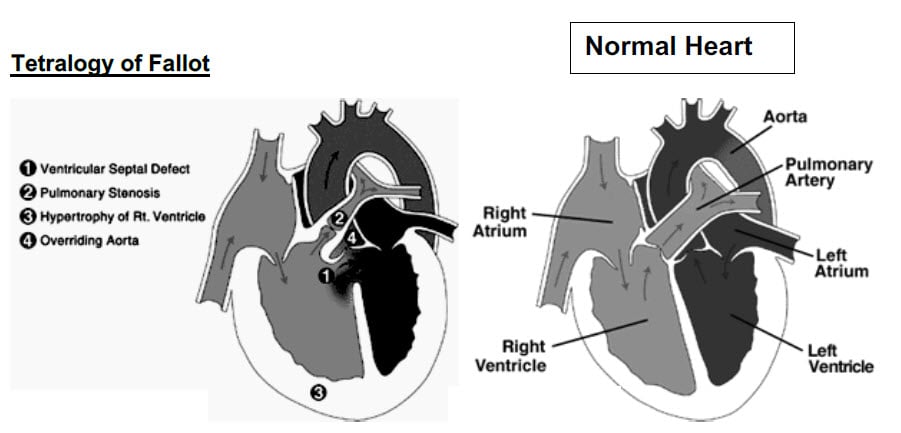
    5. Tetralogy of Fallot is a congenital heart defect comprising four anatomical abnormalities which can be remembered by the mnemonic PROVe": Pulmonary Stenosis, Right ventricular hypertrophy, Overriding aorta, and Ventricular septal defect
      • Cyanosis due to right-to-left shunt
      • Tet spells - baby with cyanosis and loss of consciousness with crying
      • Harsh systolic ejection murmur at the left upper sternal border
      • Boot-shaped heart on chest X-ray due to right ventricular hypertrophy
      • Digital clubbing and polycythemia in chronic cases
      • Diagnosed with echocardiography, showing the characteristic anatomical defects. ECG may show right ventricular hypertrophy. Cardiac catheterization can further delineate anatomy and hemodynamics.
      • Treatment involves surgical repair, typically performed in infancy, including closure of the VSD and relief of the right ventricular outflow obstruction. Palliative procedures, such as the Blalock-Taussig shunt, may be used initially in severely cyanotic newborns.
      Tetralogy of Fallot
    6. Ventricular septal defect

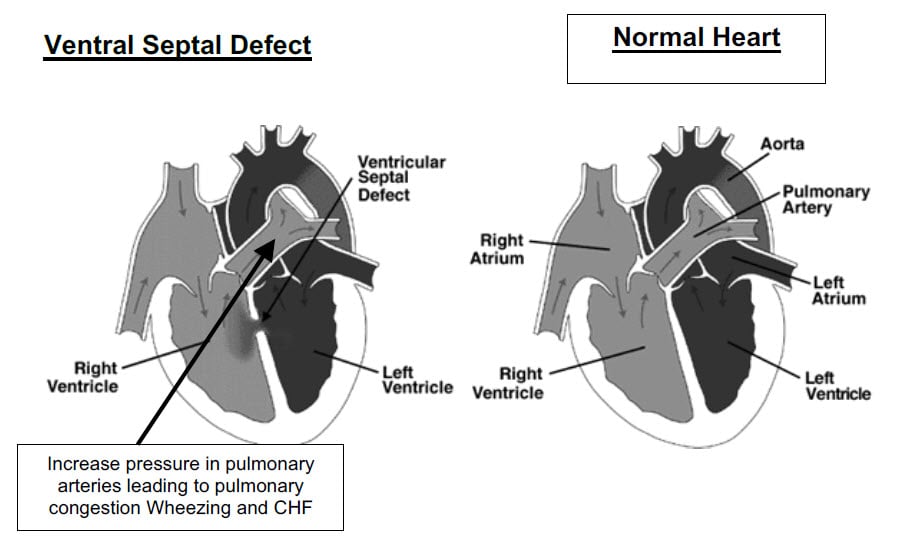
      Ventricular Septal Defect (VSD) is an opening in the interventricular septum causing a left ⇒ right shunt and increased pulmonary blood flow
      •  VSD is the most common pathologic murmur in childhood
      • Loud, harsh, pansystolic murmur at the lower left sternal border
      • Signs of congestive heart failure in large defects, including tachypnea, poor feeding, and failure to thrive
      • Increased risk of infective endocarditis
      • Can lead to pulmonary hypertension and Eisenmenger syndrome if left untreated
      • Diagnosed with echocardiography, showing the size and location of the defect, as well as shunt flow. Chest X-ray may show cardiomegaly and increased pulmonary vascular markings. ECG may show left ventricular hypertrophy or biventricular hypertrophy in large defects.
      • Small VSDs may close spontaneously (most close by age 6), while large or symptomatic defects require surgical repair or catheter-based intervention
      Ventral Septal Defect
    7. Transposition of the great vessels (TGV)

      Transposition of the great vessels (TGV) is a congenital heart defect where the aorta arises from the right ventricle and the pulmonary artery arises from the left ventricle, resulting in two parallel circulatory systems
      • The aorta arises from the right ventricle and the pulmonary artery arises from the left ventricle, resulting in two separate circuits:
        • Deoxygenated blood circulates through the body
        • Oxygenated blood circulates through the lungs without reaching systemic circulation
      • Severe cyanosis at birth, often unresponsive to oxygen therapy (differentiates from pulmonary causes), worsening as the ductus arteriosus closes
        • Tachypnea, poor feeding, failure to thrive, and signs of hypoxia
        • Associated with a single loud S2 due to the anteriorly positioned aorta
      • Postnatal diagnosis is typically made via echocardiogram
        • A chest radiograph may show an “egg shaped silhouette” or “egg on a string” appearance
      • Surgery with arterial switch operation (Jatene procedure) performed within the first few weeks of life to correct the defect
        • Initial treatment consists of prostaglandin E1 infusion to maintain PDA and allow mixing of oxygenated blood
        • Balloon Atrial Septostomy is performed to stabilize patients with severe hypoxemia
  3. Coronary Artery Disease (PEARLS)

    1. Acute Coronary Syndrome (ACS)

      Acute Coronary Syndrome (ACS) is an umbrella term for acute myocardial ischemia caused by plaque rupture and thrombosis, including unstable angina, NSTEMI, and STEMI.
      • Caused by a sudden reduction in coronary blood flow due to a ruptured atherosclerotic plaque and subsequent thrombus formation
      • Symptoms include chest pain (pressure or tightness) lasting >20 minutes, often radiating to the left arm, neck, or jaw, associated with dyspnea, nausea, diaphoresis, or syncope
      • STEMI: Characterized by ST elevation on ECG and elevated cardiac biomarkers (e.g., troponin)
      • NSTEMI: No ST elevation but positive troponin
      • Unstable angina: Similar symptoms but normal troponin levels
      • Diagnosis includes ECG, serial troponins, and clinical assessment
      • Immediate management (MONA-B): Morphine, Oxygen (if hypoxic), Nitrates, Aspirin, Beta-blockers
      • Reperfusion therapy for STEMI includes emergent PCI or fibrinolytics (if PCI unavailable); NSTEMI/unstable angina managed with antiplatelet therapy, anticoagulation, and risk stratification for early invasive intervention
      • Long-term management includes dual antiplatelet therapy (DAPT), statins, beta-blockers, ACE inhibitors, and lifestyle modification
      • Complications include arrhythmias, heart failure, cardiogenic shock, and ventricular wall rupture
    2. Acute myocardial infarction (PEARLS)

      1. Non-ST-Segment Elevation MI (NSTEMI) ReelDx

        Non-ST-Segment Elevation Myocardial Infarction (NSTEMI) is a type of acute coronary syndrome characterized by myocardial ischemia without ST-segment elevation on ECG, indicating partial or subtotal occlusion of a coronary artery
        • Evidence of myocardial necrosis (cardiac markers in blood; troponin I or troponin T and elevated CK) without acute ST-segment elevation or Q wavesECG changes may include ST-segment depression, T-wave inversion, or no specific changes
        • Elevated cardiac biomarkers (troponins) confirm myocardial injury
        • Symptoms include chest pain or discomfort (pressure, squeezing, or burning), which may radiate to the arms, neck, jaw, or back
        • Other symptoms can include dyspnea, diaphoresis, nausea, and fatigue
        • Risk factors include atherosclerosis, hypertension, hyperlipidemia, diabetes, smoking, and family history of coronary artery disease
        • Initial management includes antiplatelet therapy (aspirin and P2Y12 inhibitors), anticoagulation, and anti-ischemic therapy (beta-blockers, nitrates)
        • Risk stratification using tools like the TIMI or GRACE scores to guide further treatment
        • Coronary angiography and revascularization (PCI or CABG) for high-risk patients
        • Secondary prevention includes lifestyle modifications and long-term medications (statins, ACE inhibitors, beta-blockers)
      2. ST-Segment Elevation Myocardial Infarction (Lecture)

        ST segment elevations > 1 mm in > 2 contiguous leads on ECG and evidence of myocardial necrosis (cardiac markers in blood; troponin I or troponin T and elevated CK)
        • ST elevation: acute ischemia
        • T wave depression: myocardial injury
        • Q wave: Infarct
        Characteristic symptoms of myocardial infarction include pain in the substernal region of the chest that radiates to the left armshortness of breath, and diaphoresis
        • The underlying pathologic process of myocardial infarction is plaque rupture with the adhesion of platelets and platelet aggregation
        Location of heart:
        • Lateral (I, aVL, V5, V6): Left circumflex
        • Anterior (V2-V4): Left anterior descending
        • Septal (V1, V2): Left anterior descending
        • Anterolateral (V4, V5, V6): Left main
        • Posterior (V1, V2: ST depression): Right coronary artery
        • Inferior (II, III, aVF): Right coronary artery
        Serial cardiac enzymes:
        • Troponins: Most specific test, appears at 4-8 hours, peaks at 12-24 hours, and lasts for 7-10 days
        • Myoglobin: Elevate in 1- 4 hours
        • CK-MB: Appears at 4-6 hours, peaks at 12-24 hours, and lasts for 3-4 days
        Treatment includes Beta Blockers + NTG + Aspirin + Heparin + ACEI + REPERFUSION
        • PCI (Percutaneous Coronary Intervention) GOLD STANDARD - best if within 3 hours of sx onset (especially 90 minutes), PCI is superior to thrombolytics
        • Thrombolytic therapy - Done if no access to cath lab or surgery is contraindicated
          • TPA
          • Streptokinase
        Absolute contraindications for fibrinolytic use in STEMI include the following:
        • Prior intracranial hemorrhage (ICH)
        • Known structural cerebral vascular lesion
        • Known malignant intracranial neoplasm
        • Ischemic stroke within 3 months
        • Suspected aortic dissection
        • Active bleeding or bleeding diathesis (excluding menses)
        Upon discharge - ACE inhibitors have been shown to decrease left ventricular hypertrophy and remodeling to allow for a greater ejection fraction.
    3. Angina pectoris (PEARLS)

      1. Prinzmetal variant angina (vasospastic angina)

        Prinzmetal variant angina (vasospastic angina) is a form of angina caused by transient coronary artery vasospasm, leading to reversible myocardial ischemia.
        • Occurs at rest, often at night or early morning
        • Not precipitated by exertion
        • Causes transient ST-segment elevation during episodes
        • Chest pain typically relieved by nitrates
        • Coronary arteries are usually normal or minimally diseased on angiography
        • Strongly associated with smoking, cocaine use, and vasospastic disorders
        • Diagnosis is clinical with ECG changes during pain; angiography may show spasm with provocation
        • Treatment: Calcium channel blockers (first-line) and nitrates
        • Beta-blockers are contraindicated, as they may worsen vasospasm
      2. Stable angina

        Stable Angina is chest pain due to myocardial ischemia caused by fixed atherosclerotic coronary artery obstruction, resulting in a mismatch between oxygen supply and demand.
        • Predictable chest pain triggered by exertion or emotional stress
        • Relieved by rest or nitroglycerin
        • Classically described as substernal pressure, tightness, or squeezing, may radiate to left arm, neck, or jaw
        • Caused by ≥70% coronary artery stenosis
        • No myocardial necrosisnormal cardiac troponins
        • Diagnosis with exercise stress testing or stress imaging; coronary angiography for high-risk or refractory cases
        • ECG during pain may show ST-segment depression
        • Management includes beta-blockers, nitrates, calcium channel blockers, and antiplatelet therapy (aspirin)
        • Risk factor modification is essential: statins, smoking cessation, blood pressure and diabetes control
        • Revascularization (PCI or CABG) indicated for refractory symptoms or high-risk anatomy
      3. Unstable angina (ReelDx)

        Unstable Angina is an acute coronary syndrome caused by myocardial ischemia without infarction, due to plaque rupture and partial coronary artery occlusion.
        • Previously stable and predictable symptoms of angina that are now more frequent, increasing, or present at restand are not fully relieved by nitroglycerin
        • No myocardial necrosisnormal cardiac biomarkers (troponin negative)
        • ECG may show ST depression or T-wave inversion, but no ST elevation
        • Caused by platelet aggregation and thrombus formation over a ruptured atherosclerotic plaque
        • Diagnosis is clinical, supported by ECG changes and negative troponins
        • Initial management includes MONA-B (morphine, oxygen if hypoxic, nitrates, aspirin, beta-blocker)
        • Requires anticoagulation (e.g., heparin) and antiplatelet therapy
        • High risk of progression to myocardial infarction → requires urgent cardiology evaluation
        • Definitive management may include coronary angiography and revascularization
    4. Atherosclerosis

      Atherosclerosis is a chronic, progressive disease characterized by the buildup of lipid-rich plaques in the arterial walls, leading to narrowing and reduced blood flow
      • Major risk factors include smoking, diabetes, hypertension, dyslipidemia, and advanced age
      • Most commonly affects the coronary, carotid, cerebral, and peripheral arteries
      • Pathophysiology involves endothelial injury, lipid accumulation, inflammatory cell infiltration, smooth muscle proliferation, and eventual fibrous plaque formation
        • Fatty streaks (earliest lesion) → fibrous cap atheromas → necrotic lipid cores → calcified plaques
      • Symptoms depend on the affected vascular bed:
        • Coronary arteries: chest pain or myocardial infarction
        • Carotid/cerebral arteries: TIA or stroke
        • Peripheral arteries: claudication or critical limb ischemia
      • Diagnosis includes clinical assessment (ASCVD risk calculator) and imaging such as Doppler ultrasound, CT angiography, coronary angiography, or ankle-brachial index (ABI) for PAD
      • Management focuses on risk factor modification: smoking cessation, statins, antihypertensives, antiplatelets, and glycemic control
      • Surgical interventions may include angioplasty with stenting, endarterectomy, or bypass surgery in advanced disease
      • Complications include thrombosis, aneurysm formation, plaque rupture, and organ ischemia or infarction
  4. Heart Failure (ReelDx)

    Heart failure (HF) is a clinical syndrome in which the heart cannot pump enough blood to meet the body's metabolic demands, leading to congestion and poor perfusion
    • Classified by LVEF:
      • HFrEF (≤40%) – reduced EF (systolic dysfunction)
      • HFmrEF (41–49%) – mildly reduced EF
      • HFpEF (≥50%) – preserved EF (diastolic dysfunction)
    • Other types (not EF-based):
      • Right-Sided HF: Due to RV dysfunction, often secondary to LHF or pulmonary hypertension. Presents with JVD, peripheral edema, hepatomegaly, and ascites — typically no pulmonary congestion
      • High-Output HF: Cardiac output is elevated or normal but still insufficient due to increased systemic demand (e.g., anemia, thyrotoxicosis, AV fistula, beriberi)
    • Common causes include ischemic heart disease, hypertension, valvular disease, and cardiomyopathy
    • Symptoms include dyspnea on exertion, orthopnea, paroxysmal nocturnal dyspnea, fatigue, and lower extremity edema
    • Signs may include elevated JVP, rales, hepatomegaly, and ascites
      • S3 gallop → suggests HFrEF (rapid ventricular filling during early diastole is the mechanism responsible for the S3)
      • S4 gallop → suggests HFpEF
    • Diagnosis involves echocardiography to assess ejection fraction and structural abnormalities; BNP or NT-proBNP is elevated and helpful in diagnosis
    • CXR may show cardiomegaly, pulmonary edema, Kerley B lines, and pleural effusions
    • Management of HFrEF includes 4 pillars of GDMT ARNI (or ACEi/ARB)- Beta-blockers (carvedilol, bisoprolol, metoprolol succinate)- mineralocorticoid receptor antagonists (MRA) (spironolactone/eplerenone)- SGLT2i (dapagliflozin/empagliflozin)
      • Diuretics are used as needed for volume overload
    • HFmrEF uses same medications as HFrEFSGLT2 inhibitors have the strongest evidence. Other meds may be considered, especially if there's evidence of structural disease or symptoms
    • HFpEF treatment focuses on SGLT2i (empagliflozin/dapagliflozin)- diuretics for congestion- Control of comorbidities: HTN, AF, CAD, obesity
    • Right-Sided HF & High-Output HF: Treat underlying cause
    • Lifestyle modifications include low-sodium diet, fluid restriction, daily weight monitoring, and exercise as tolerated
    • Advanced therapies may include ICD, CRT, or heart transplantation in select patients
  5. Hypertension (PEARLS)

    1. Essential hypertension

      Primary (essential) hypertension is defined as a resting systolic BP ≥ 130 mm Hg or diastolic BP ≥ 80 mm Hg, confirmed by at least two readings on at least two separate visits (preferably also verified with home BP monitoring [HBPM] or 24-hour ambulatory BP monitoring [ABPM]) and no identifiable secondary cause. 2025 Hypertension Guidelines:
      • BP Classification: The blood pressure categories are unchanged:
        • Normal: <120/80 mm Hg
        • Elevated: 120-129/<80 mm Hg
        • Stage 1 HTN: 130-139 or 80-89 mm Hg
        • Stage 2 HTN: ≥140 or ≥90 mm Hg
      • Primary Goal: The overarching treatment goal for all adults is a blood pressure of <130/80 mm Hg.
      • New Risk Calculator: Risk stratification is now based on the PREVENT™ 10-year CVD risk calculator, which replaces the old Pooled Cohort Equations (PCEs).
      • When to Start Medication:
        • Stage 2 HTN (≥140/90): Initiate antihypertensive medication immediately, in addition to lifestyle interventions.
        • Stage 1 HTN (130-139/80-89) - HIGH RISK: Initiate medication if the patient has clinical CVD, diabetes, CKD, or a 10-year PREVENT™ risk ≥7.5%.
        • Stage 1 HTN (130-139/80-89) - LOW RISK: Recommend a 3- to 6-month trial of lifestyle modification if the 10-year PREVENT™ risk is <7.5%. Initiate medication if BP remains ≥130/80 mm Hg after the trial.
      • How to Start Medication:
        • For Stage 2 HTN, it is preferred to start with two first-line agents from different classes, ideally in a single-pill combination (SPC).
        • First-line agents include thiazide-type diuretics, long-acting dihydropyridine CCBs, ACE inhibitors, and ARBs.
      • New Terminology: "Hypertensive Urgency" is now called "Severe Hypertension" (BP >180/120 mmHg).
        • Hypertensive Emergency (+ TOD): BP >180/120 mmHg WITH acute TOD. Requires ICU admission for continuous monitoring and parenteral (IV) therapy.
        • Severe Hypertension (- TOD): BP >180/120 mmHg WITHOUT acute TOD. Manage in the outpatient setting by initiating or intensifying oral medications with close follow-up. Aggressive, rapid BP reduction in this setting is not recommended and may be harmful.
    2. Hypertensive emergencies (ReelDx)

      Hypertensive Urgency (severe asymptomatic hypertension)
      • Very high blood pressure (systolic ≥ 180 or diastolic ≥ 120) WITHOUT target-organ damage
      • BP at these levels can be worrisome; however, acute complications are unlikely, so immediate BP reduction is NOT required. However, patients should be started on a 2-drug oral combination, and close evaluation (with an evaluation of treatment efficacy) should be continued on an outpatient basis
      Hypertensive Emergency
      • Severe hypertension (SBP ≥ 180 and/or DBP ≥ 120) WITH signs of damage to target organs - retinal hemorrhages, papilledema, encephalopathy, acute and subacute kidney injury, intracranial hemorrhage, aortic dissection, pulmonary edema, unstable angina or MI.
      • BP must be reduced within 1 hour by approximately 10 to 20 percent to prevent the progression of end-organ damage or death and a further 5 to 15 percent over the next 23 hours.
      • This often results in a target blood pressure of <180/<120 mmHg for the first hour and <160/<110 mmHg for the next 23 hours
      Hypertensive emergencies can be further classified into these two clinical syndromes:
      • Hypertensive retinopathy (formerly called malignant HTN)
        • Characterized by retinal hemorrhages, exudates, and papilledema
      • Hypertensive encephalopathy 
        • Hypertensive encephalopathy refers to the presence of signs and/or symptoms of cerebral edema caused by severe and/or sudden rises in BP
        • S&s include the insidious onset of headache, nausea, and vomiting, followed by nonlocalizing neurologic symptoms such as restlessness, confusion, and if the hypertension is not treated, seizures and coma.
    3. Secondary hypertension

      Secondary Hypertension is high blood pressure caused by an identifiable underlying condition
      • Accounts for 5-10% of hypertension cases
      • Common causes include renal artery stenosis (MC correctable cause), primary aldosteronism, pheochromocytoma, Cushing's syndrome, hypothyroidism, hyperthyroidism, obstructive sleep apnea, and certain medications (e.g., NSAIDs, oral contraceptives)
      • Suspect secondary hypertension in patients with resistant hypertension despite multiple antihypertensive medications, sudden onset of hypertension, or hypertension before age 30 or after age 55
      • Clinical clues: Abdominal bruit (renal artery stenosis), episodic headaches, sweating, and palpitations (pheochromocytoma), hypokalemia (primary aldosteronism), and signs of Cushing's syndrome (e.g., moon face, central obesity, purple striae)
      • Diagnosed with targeted laboratory tests (e.g., aldosterone-renin ratio, plasma metanephrines, cortisol levels) and imaging studies (e.g., renal Doppler ultrasound, CT/MRI)
      • Treatment involves managing the underlying condition: angioplasty or stenting for renal artery stenosis, adrenalectomy for primary aldosteronism or pheochromocytoma, and appropriate medical therapy for other conditions
      • Reduce BP to < 140/90 mm Hg for everyone < 60, including those with a kidney disorder or diabetes
      • Reduce BP to < 150/90 mm Hg for everyone ≥ 60
  6. Hypotension (PEARLS)

    1. Orthostatic hypotension (ReelDx)

      Orthostatic hypotension is an excessive fall in BP when an upright position is assumed
      • The accepted definition is a drop of ≥ 20 mm Hg systolic, 10 mmHg diastolic, or both, within two to five minutes of quiet standing (after a five-minute period of supine rest)
      • Common causes include dehydration, medications (e.g., diuretics, antihypertensives), autonomic dysfunction, and aging
      • Symptoms include dizziness, lightheadedness, blurred vision, and fainting upon standing
      • Management includes addressing underlying causes, such as discontinuing or adjusting medications, increasing fluid and salt intake, and using compression stockings
      • Medications like fludrocortisone or midodrine may be used for patients with persistent symptoms despite lifestyle modifications
      • Patient education on slow position changes and avoiding prolonged standing or sudden movements is crucial
    2. A sudden drop in heart rate and blood pressure leading to fainting, often in reaction to a stressful trigger
      • Upright tilt-table study can reproduce the symptoms in susceptible people
      • Treatment usually involves trigger avoidance, but may on rare occasions include β-blockers and disopyramide or a pacemaker
    1. Hypercholesterolemia

      Four groups most likely to benefit from statin therapy are identified:
      • Patients with any form of clinical atherosclerotic cardiovascular disease (ASCVD)
      • Patients with primary LDL-C levels of 190 mg per dL or greater.
      • Patients with diabetes mellitus, 40 to 75 years of age, with LDL-C levels of 70 to 189 mg per dL.
      • Patients without diabetes, 40 to 75 years of age, with an estimated 10-year ASCVD risk ≥ 7.5%
    2. Hypertriglyceridemia

      Obtain fasting lipid panel beginning at age 20 and repeated every 5 years
      • Normal <150 mg/dL
      • Mild hypertriglyceridemia  150 to 499 mg/dL
      • Moderate hypertriglyceridemia 500 to 886 mg/dL
      • Very high or severe hypertriglyceridemia 886 mg/dL
      Treatment
      • Triglyceride level should be reduced to < 500 mg/dL to prevent this pancreatitis
      • Isolated triglycerides are treated with Fibrates (gemfibrozil and fenofibrate) and Niacin
      • Niacin may cause hyperglycemia so caution in patients with DM
      • Flushing treated with daily aspirin, will have a beneficial effect on HDL cholesterol
  7. Shock (PEARLS)

    1. Cardiogenic shock

      Cardiogenic shock is a life-threatening condition caused by severe cardiac dysfunction (pump failure), leading to inadequate tissue perfusion despite normal or elevated filling pressures
      • Common causes include acute myocardial infarction (most common), heart failure, arrhythmias, severe valvular disease, cardiomyopathy
      • Hypotension (SBP <90mmg), cyanosis, cool extremities, altered mental status, and crackles
      • JVD, pulmonary crackles, weak pulses, pulmonary edema
      • Hemodynamic profile:
        • Decreased CO: Failing pump reduces forward flow
        • Increased SVR: Compensatory vasoconstriction
        • Elevated PCWP: Backflow congestion from left ventricular failure
      • Diagnosed by ECG (ischemia/infarction), echocardiography (cardiac function/structural abnormalities), Swan-Ganz catheter (critical monitoring)
        • Labs: Elevated lactate, BNP, and cardiac enzymes
      • Treat with oxygen, cautious IV fluids, vasopressors (norepinephrine), inotropes (dobutamine)
        • Treat the cause: PCI or CABG for MI, valve repair/replacement, correct arrhythmias.
      • Mechanical support: IABP or VADs for refractory cases
    2. Distributive shock

      Distributive shock is characterized by profound vasodilation and maldistribution of blood flow, leading to inadequate tissue perfusion despite normal or increased cardiac output.
      • Causes:
        • Septic shock: Most common, due to systemic infection
        • Anaphylactic shock: Severe allergic reaction causing histamine release
        • Neurogenic shock: Loss of sympathetic tone from spinal cord injury
      • Hypotension, warm extremities (early stages), tachycardia, altered mental status, oliguria
      • Bounding pulses (early septic shock), flushing (anaphylaxis), bradycardia and hypotension (neurogenic shock)
      • Hemodynamic profile:
        • Decreased SVR: Profound vasodilation
        • Increased CO: Early septic shock; may normalize or decrease in late stages
        • Normal/low CVP: Reduced venous return
      • Diagnosis:
        • Septic shock: Positive cultures, elevated lactate, procalcitonin
        • Anaphylaxis: Allergen exposure with respiratory distress, angioedema, urticaria
        • Neurogenic shock: Spinal injury with bradycardia and hypotension
        • Adrenal crisis: Confirmed cortisol deficiency (ACTH test)
      • Treatment
        • Septic shock: Early antibiotics, fluids, norepinephrine
        • Anaphylactic shock: Epinephrine, airway management, antihistamines, steroids
        • Neurogenic shock: Fluids, vasopressors, spinal stabilization
        • Adrenal crisis: IV hydrocortisone, fluid resuscitation
    3. Hypovolemic shock

      Hypovolemic shock is a life-threatening condition caused by significant intravascular volume loss, leading to inadequate tissue perfusion and oxygen delivery
      • Types:
        • Hemorrhagic (blood loss): Trauma, GI bleeding, ruptured aneurysm
        • Non-hemorrhagic (fluid loss): Severe dehydration, burns, third-spacing
      • Hypotension, tachycardia, cold clammy skin, oliguria, altered mental status
      • Flattened neck veins, dry mucous membranes, delayed capillary refill
      • Hemodynamic profile:
        • Decreased cardiac output (CO): Less venous return and reduced stroke volume
        • Decreased preload: Low CVP and PCWP due to volume loss
        • Increased SVR: Compensatory vasoconstriction
      • Diagnosis: Clinical assessment, elevated lactate, metabolic acidosis, anemia, BUN/creatinine. Imaging (e.g., FAST) for internal bleeding.
      • Treat by restoring volume with crystalloids (NS/LR) and blood products for hemorrhagic shock
        • Control source: Surgery, endoscopy, or treat underlying fluid loss causes
    4. Obstructive shock

      Obstructive Shock is a life-threatening condition caused by physical obstruction to blood flow, resulting in inadequate cardiac output and tissue perfusion.
      • Causes include: 
        • Cardiac tamponade: Fluid accumulation in the pericardium impedes filling
        • Tension pneumothorax: Air in the pleural space compresses the heart and vessels
        • Massive PE: Obstructs pulmonary circulation, reducing left ventricular preload
        • Other: Aortic stenosis or mechanical obstructions
      • Hypotension, tachycardia, dyspnea, chest pain, altered mental status, cold extremities
      • Physical findings (by cause):
        • Tamponade: Beck’s triad (hypotension, JVD, muffled heart sounds)
        • Pneumothorax: Tracheal deviation, decreased breath sounds, hyperresonance
        • Massive PE: Tachypnea, hypoxemia, clear lung fields, unilateral leg swelling (DVT)
      • Hemodynamic profile:
        • Decreased CO: Obstruction limits cardiac output
        • Elevated CVP and SVR: Due to compensatory vasoconstriction and venous congestion
        • Variable pulmonary pressures: Depends on the specific obstruction
      • Diagnosed with bedside ultrasound, CT pulmonary angiography (PE), ECG, and chest X-ray, D-dimer, ABGs
      • Treatment for obstructive shock focuses on rapidly relieving the obstruction (e.g., pericardiocentesis, needle decompression, thrombolysis) and stabilizing the patient with oxygen, fluids, and vasopressors as needed
  8. Traumatic, infectious, and inflammatory heart conditions (PEARLS)

    1. Acute bacterial endocarditis: Infection of normal valves with a virulent organism (S. aureus) Subacute bacterial endocarditis: Indolent infection of abnormal valves with less virulent organisms (S. viridans)
      • Duke's criteria (major and minor), staph aureus in acute and IV drug users, strep viridans in subacute
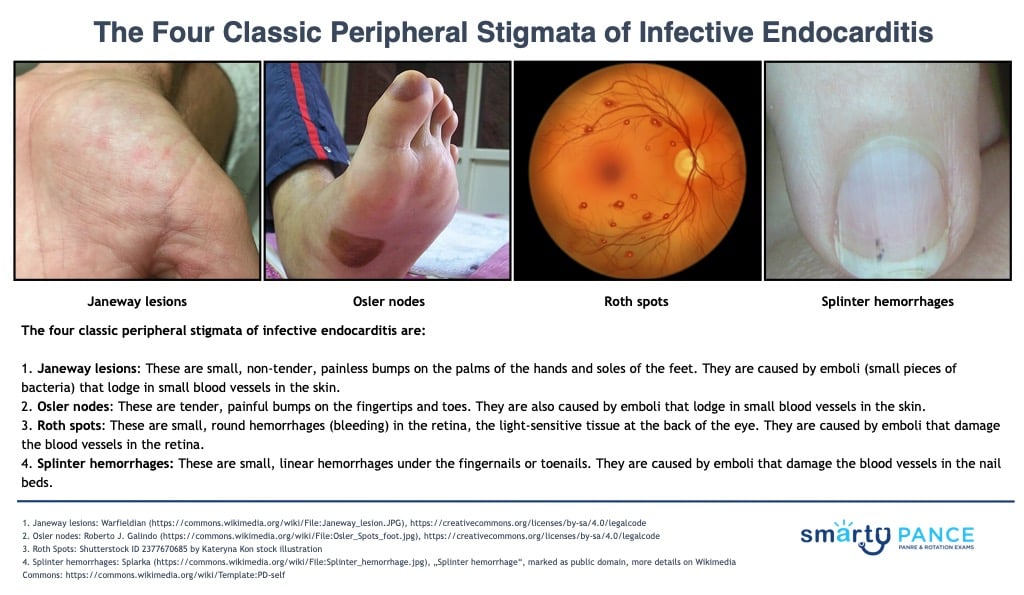
      • The four classic peripheral stigmata of infective endocarditis are:
        • Osler's nodes - tender (ouchy) nodules
        • Janeway lesions - painless macules
        • Roth spots on the retina
        • Splinter hemorrhages on the nail bed
      The Four Classic Peripheral Stigmata of Infective Endocarditis
    2. Acute pericarditis (ReelDx)

      Chest pain that is relieved by sitting and/or leaning forward worse when lying down
      • Dressler's syndrome is pericarditis 2-5 days after an acute myocardial infarctions
      • Pericardial friction rub heard best with patient upright and leaning forward
      • EKG will demonstrate diffuse, ST segment elevations in the precordial leads
    3. Cardiac tamponade (ReelDx + Lecture)

      Beck’s triad on physical exam: jugular venous distention, hypotension, muffled heart sounds
      • Pulsus paradoxus is a classic finding (drop 10 mmHg in systolic pressure on inspiration), narrow pulse pressure
      • EKG will show electrical alternans (when consecutive, normally-conducted QRS complexes alternate in height) and low voltage QRS complex
      • Chest x-ray finding – water bottle heart - heart shaped like a canteen
      • Treatment: Pericardiocentesis
    4. Pericardial effusion (ReelDx)

      Pericardial Effusion is the accumulation of fluid in the pericardial cavity, which can compromise cardiac function
      • Distant or muffled heart sounds on auscultation
      • May present with dyspnea, chest pain, or cough
      • Pulsus paradoxus (exaggerated decrease in systolic blood pressure during inspiration) can be seen in pericardial effusion but is more specific and sensitive for cardiac tamponade
      • Jugular venous distension (JVD) and hypotension in severe cases
      • Electrical alternans and low voltage QRS complexes on ECG
      • Water-bottle-shaped heart on chest X-ray
      • Diagnosed with echocardiography, showing the extent and location of the effusion. Pericardiocentesis may be performed for both diagnostic and therapeutic purposes
      • Management depends on the size and symptoms: observation for small, asymptomatic effusions; pericardiocentesis or surgical drainage for large or symptomatic effusions
      • Cardiac tamponade is a common complication of a pericardial effusion - the pericardial pressure becomes high enough to impede cardiac filling, and the cardiac function becomes impaired
    5. Acute myocarditis (Lecture)

      Myocarditis is an inflammation of the myocardium, often caused by viral infections, leading to myocardial injury
      • Viral infections are the most common cause (e.g., Coxsackievirus, adenovirus)
      • Symptoms include chest pain, fever, fatigue, dyspnea, and palpitations
      • May present with signs of heart failure, including peripheral edema and orthopnea
      • Elevated cardiac enzymes (troponins) and inflammatory markers (CRP, ESR)
      • ECG changes may include ST-segment and T-wave abnormalities
      • Echocardiography may show ventricular dysfunction and wall motion abnormalities
      • Cardiac MRI can provide detailed imaging to assess inflammation and scarring
      • Endomyocardial biopsy is the gold standard for definitive diagnosis but is rarely performed
      • Treatment includes supportive care with medications such as ACE inhibitors, beta-blockers, and diuretics. Immunosuppressive therapy may be considered in specific cases.
      • Antiviral therapy may be used if a specific viral cause is identified
  9. Valvular Disorders (PEARLS)

    1. Aortic stenosis (ReelDx)

      Aortic Stenosis is a condition characterized by the narrowing of the aortic valve, leading to obstructed blood flow from the left ventricle to the aorta
      • Most common causes include calcific degeneration, congenital bicuspid valve, and rheumatic heart disease
      • Classic triad of symptoms: angina, syncope, and dyspnea on exertion
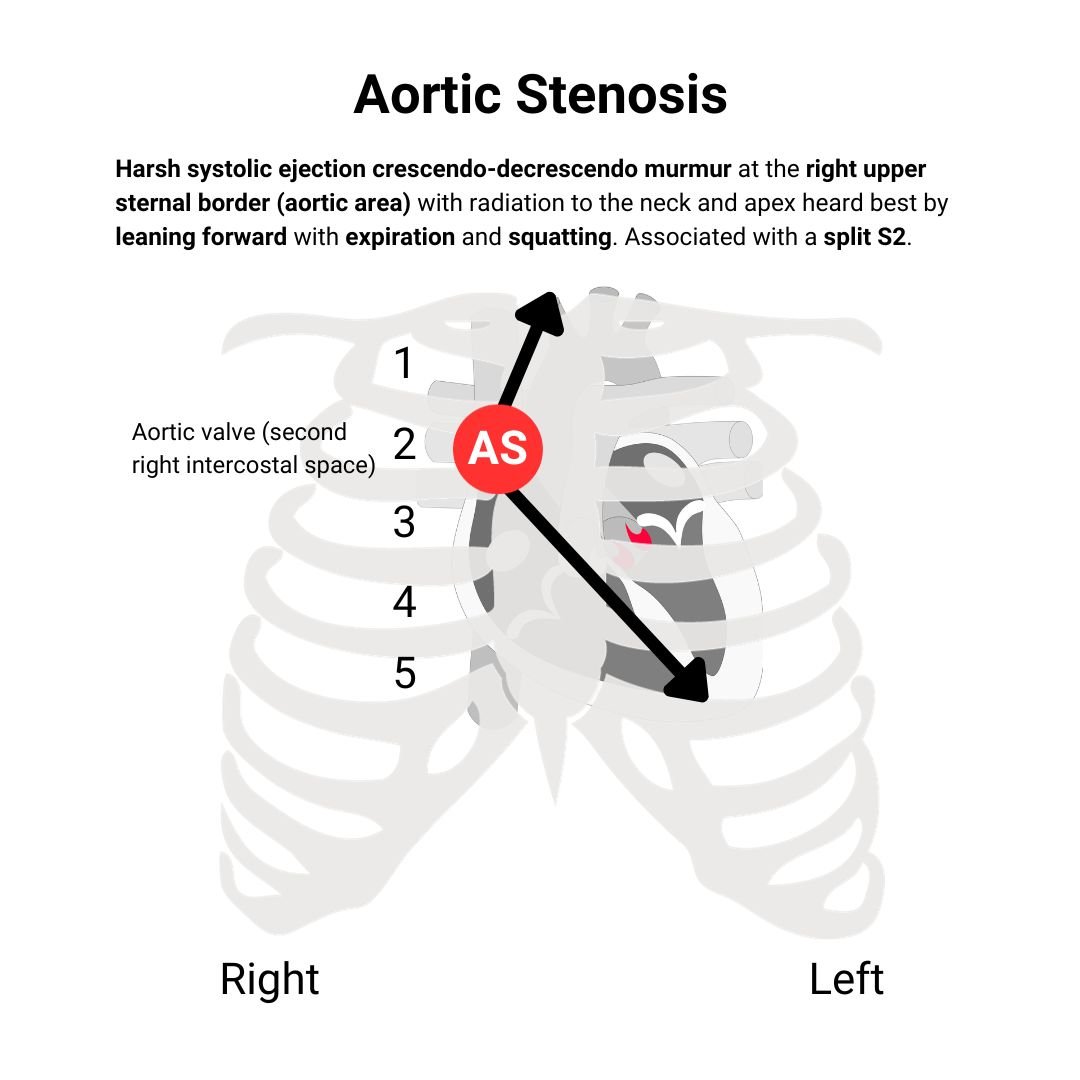
      • Harsh, crescendo-decrescendo systolic murmur best heard at the right upper sternal border, radiating to the carotids
      • Harsh systolic ejection crescendo-decrescendo murmur at the right upper sternal border (aortic area) with radiation to the neck and apex (carotids) is heard best by leaning forward with expiration and squatting. Associated with a split S2. 
      • Delayed and diminished carotid pulses (pulsus parvus et tardus)
      • Exertional syncope due to fixed cardiac output and inability to increase blood flow during exercise
      • Echocardiography is the diagnostic test of choice, showing valve area, pressure gradient, and left ventricular hypertrophy
      • ECG may show left ventricular hypertrophy and strain patterns
      • Management includes valve replacement surgery (either surgical or transcatheter aortic valve replacement, TAVR) for symptomatic patients or those with severe stenosis
      • Avoidance of strenuous activities and careful management of concurrent conditions
      Aortic Stenosis (AS) Murmur Auscultation
    2. Aortic regurgitation (Diastolic)

      Aortic Regurgitation (AR) is the diastolic backflow of blood from the aorta into the left ventricle due to an incompetent aortic valve
      • Causes include rheumatic heart disease, endocarditis, bicuspid aortic valve, and aortic root dilation (e.g., Marfan syndrome)
      • Symptoms include dyspnea, fatigue, palpitations, and angina
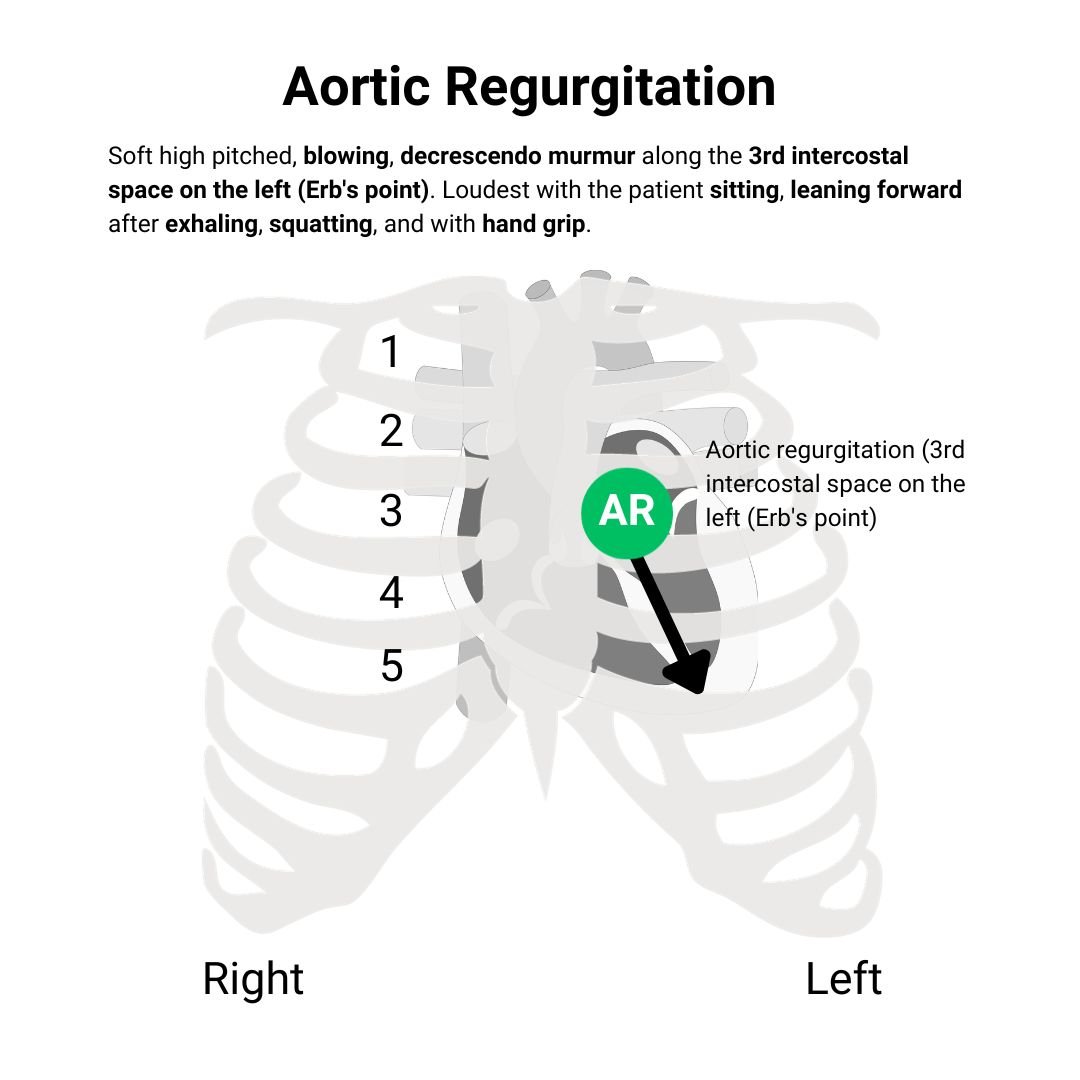
      • Soft, high-pitched, blowing, diastolic, decrescendo murmur along the left sternal border at the 3rd intercostal space on the left (Erb's point). Loudest with the patient sitting, leaning forward after exhaling, squatting, and with hand grip.
      •  The Austin Flint murmur is a rumbling diastolic murmur best heard at the apex of the heart that is associated with severe aortic regurgitation
      • Bounding pulses and widened pulse pressure due to increased stroke volume
      • Head bobbing (de Musset sign) and nail bed pulsations (Quincke's sign) may be present
      • Echocardiography is diagnostic, showing regurgitant jet and left ventricular dilation
      • Chest X-ray may show cardiomegaly and pulmonary edema
      • ECG may reveal left ventricular hypertrophy
      • Management includes afterload reduction with ACE inhibitors or ARBs, and surgical valve replacement for symptomatic patients or those with significant left ventricular dysfunction
      Aortic Regurgitation Murmur Auscultation
    3. Mitral stenosis (Diastolic)

      Mitral Stenosis is a narrowing of the mitral valve orifice, impeding blood flow from the left atrium to the left ventricle
      • Most commonly caused by rheumatic heart disease
      • Symptoms include dyspnea, fatigue, orthopnea, and hemoptysis
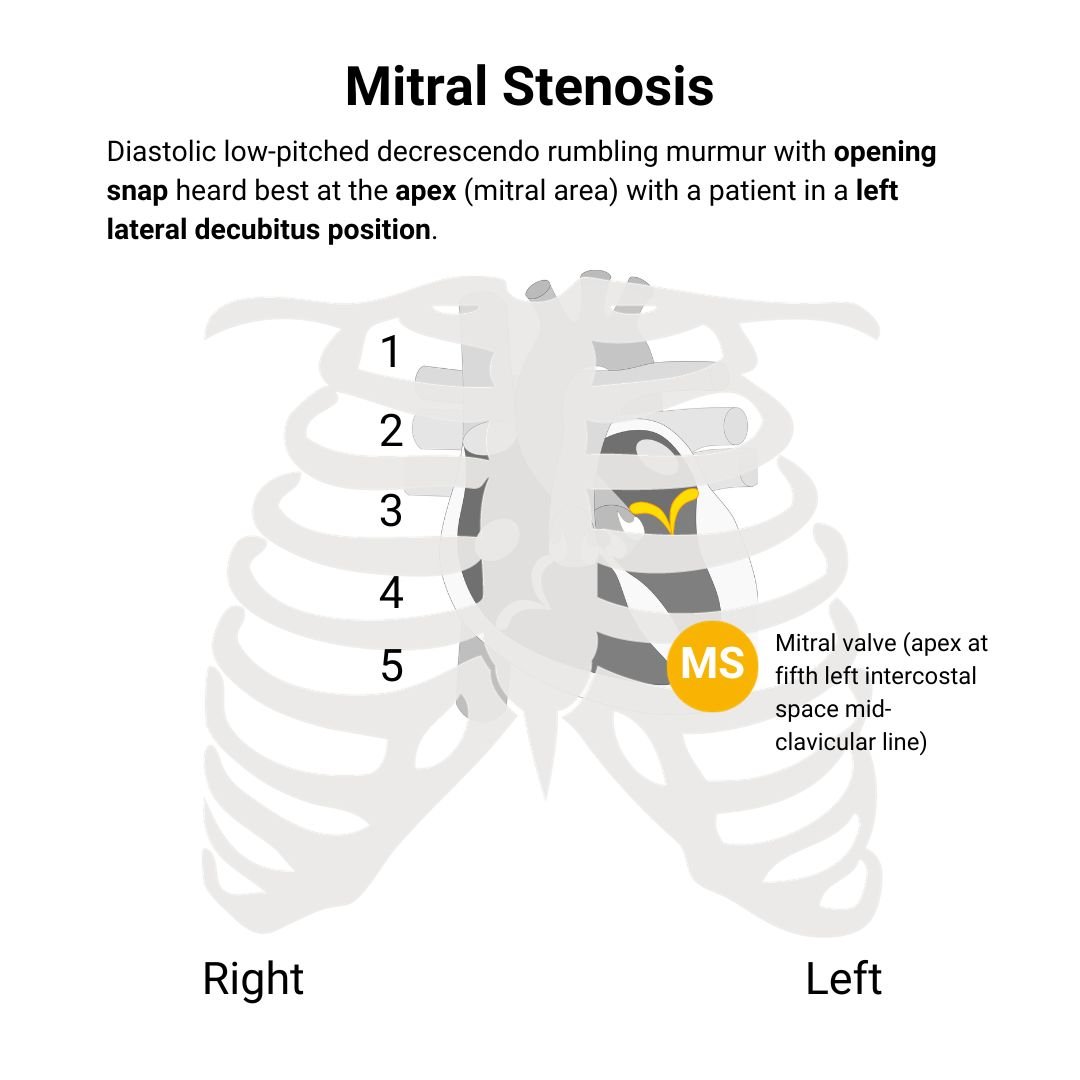
      • Diastolic low-pitched decrescendo rumbling murmur with opening snap heard best at the apex (mitral area) often with a loud S1. Hear best with the patient in a left lateral decubitus position
      • Can lead to atrial fibrillation due to left atrial enlargement and increased pressure
      • Increased risk of thromboembolism and stroke
      • Echocardiography is the diagnostic test of choice, showing thickened, immobile mitral valve leaflets and decreased mitral valve area
      • Chest X-ray may show left atrial enlargement and pulmonary congestion
      • Management includes diuretics for symptom relief, anticoagulation for atrial fibrillation, and rate control
      • Percutaneous balloon mitral valvotomy or mitral valve replacement for severe cases
      Mitral Stenosis (MS) Murmur Auscultation
    4. Mitral regurgitation

      Mitral Regurgitation (MR) is a condition where the mitral valve does not close properly, leading to the backflow of blood from the left ventricle into the left atrium
      • Common causes include mitral valve prolapse, rheumatic heart disease, ischemic heart disease, and infective endocarditis
      • Presents with symptoms of heart failure: dyspnea, fatigue, orthopnea, and palpitations
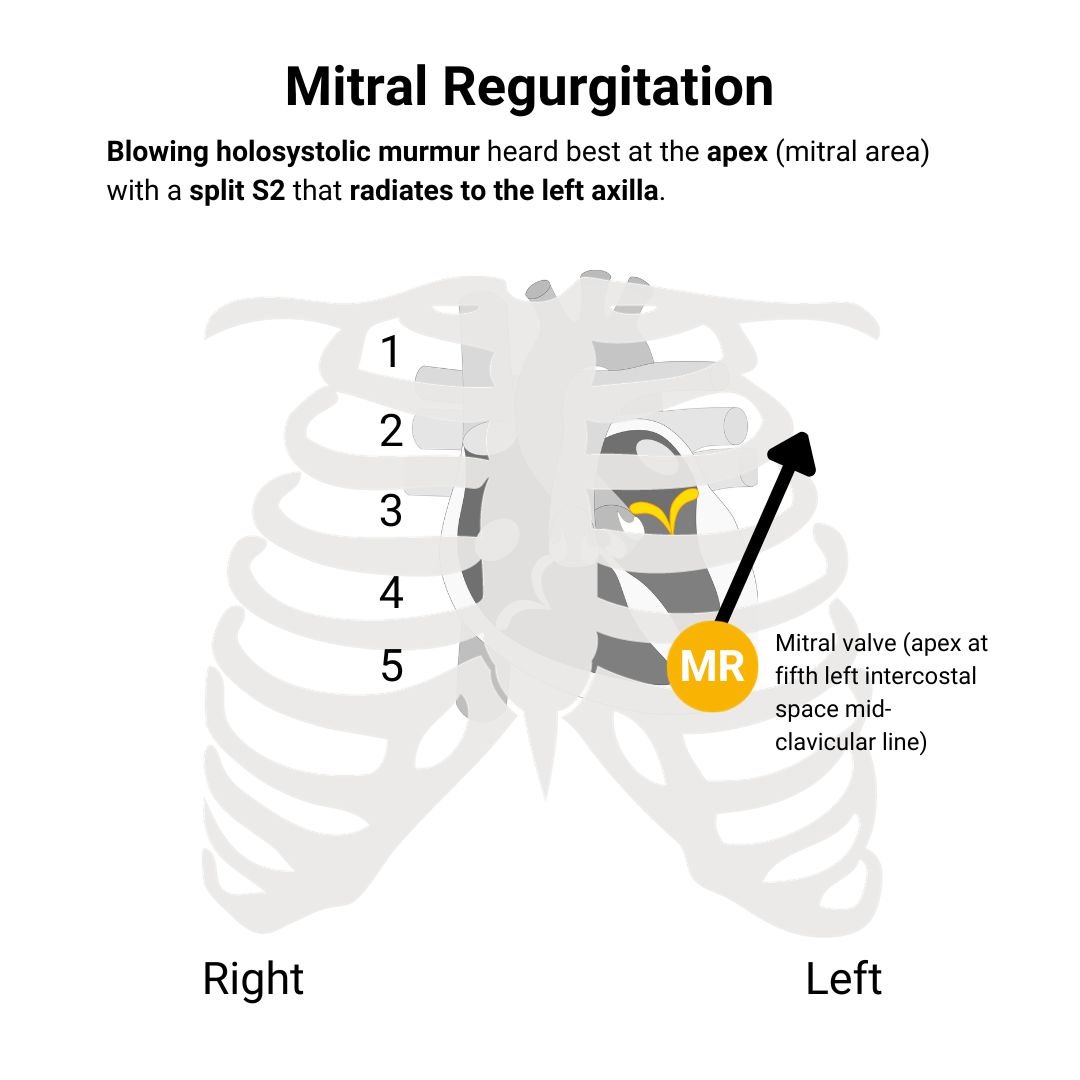
      • BLOWING HOLOSYSTOLIC murmur at APEX (mitral area) with a SPLIT S2 radiates to the left axilla
      • May be accompanied by a third heart sound (S3)
      • Echocardiography is key for diagnosis, showing mitral valve dysfunction, left atrial enlargement, and increased left ventricular end-diastolic volume
      • Chest X-ray may show cardiomegaly and pulmonary congestion
      • ECG may show left atrial enlargement and left ventricular hypertrophy
      • Management includes medical therapy (ACE inhibitors, diuretics, beta-blockers) for symptom relief and afterload reduction
      • Surgical intervention (mitral valve repair or replacement) is indicated for severe cases or symptomatic patients with reduced left ventricular function
      Mitral Regurgitation (MR) Murmur Auscultation
    5. Mitral valve prolapse

      Mitral Valve Prolapse (MVP) is a condition where the mitral valve leaflets bulge into the left atrium during systole
      • Most common valvular heart disorder in the United States
      • Often asymptomatic but may present with palpitations, chest pain, dyspnea, or syncope
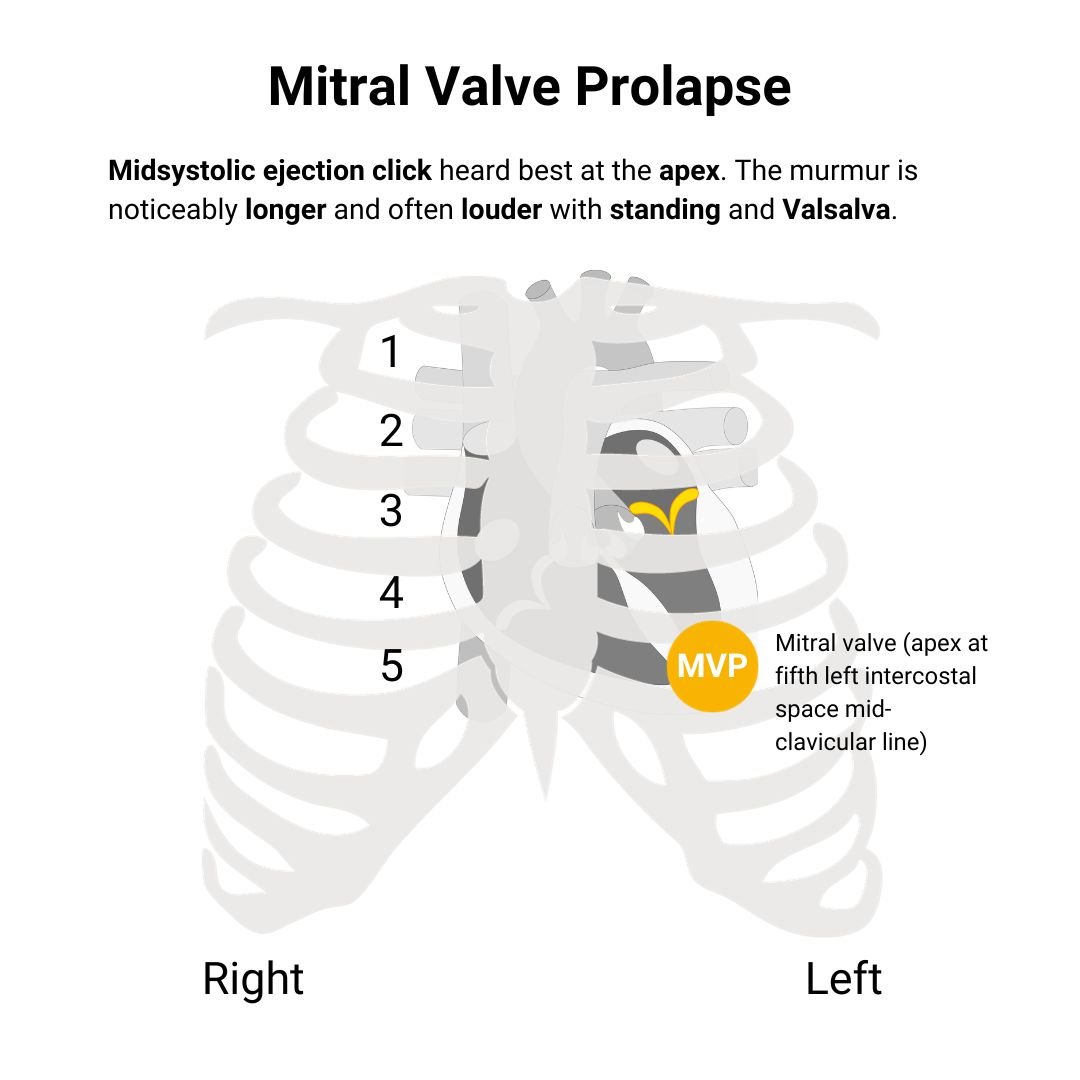
      • MIDSYSTOLIC EJECTION CLICK  followed by a late systolic murmur, best heard at APEX (mitral area). The murmur is noticeably longer and louder with standing and Valsalva
      • Symptoms may worsen with dehydration or reduced blood volume, which increases the click and murmur intensity
      • Associated with Marfan syndrome (50%), Ehlers-Danlos syndrome, and other connective tissue disorders
      • Echocardiography confirms the diagnosis, showing prolapse of the mitral leaflets and possible mitral regurgitation
      • Management focuses on reassurance for asymptomatic patients and lifestyle modifications, including hydration and avoidance of stimulants
      • Beta-blockers for symptomatic relief of palpitations and chest pain
      • Surgical repair or replacement may be necessary for severe mitral regurgitation or symptomatic patients not responding to medical therapy
      Mitral Valve Prolapse (MVP) Murmur Auscultation
    6. Tricuspid stenosis (Diastolic)

      Tricuspid Stenosis is a narrowing of the tricuspid valve opening, leading to obstructed blood flow from the right atrium to the right ventricle
      • Most commonly caused by rheumatic heart disease
      • May also result from congenital heart defects or carcinoid syndrome
      • Symptoms include fatigue, abdominal discomfort, hepatomegaly, and peripheral edema
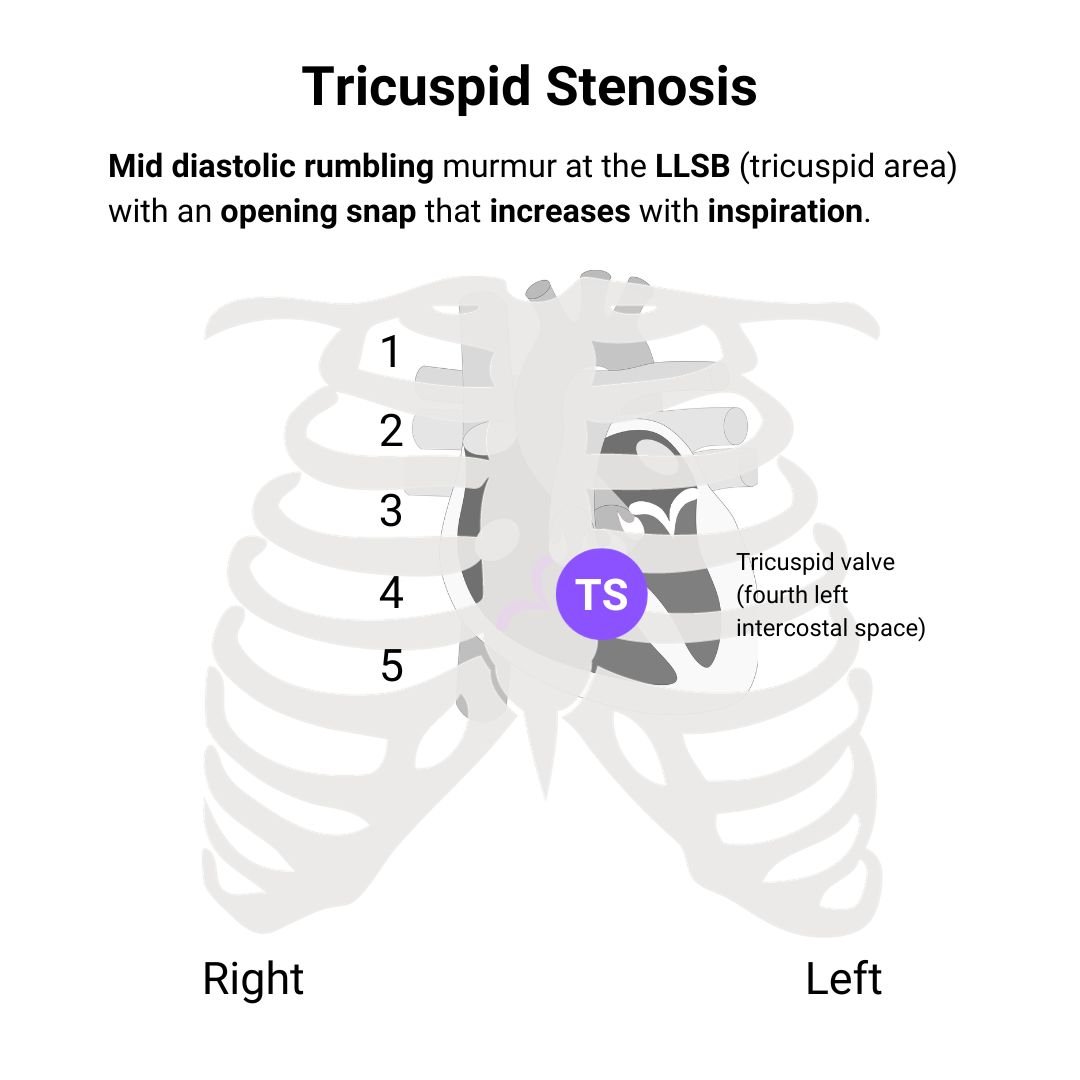
      • MID DIASTOLIC RUMBLING murmur at LLSB (tricuspid area) with OPENING SNAP, which intensifies with inspiration (Carvallo's sign)
      • Jugular venous distension and a prominent "a" wave may be observed
      • Echocardiography shows tricuspid valve thickening and restricted motion with elevated pressure gradient
      • ECG may show right atrial enlargement
      • Management includes diuretics for symptom relief and sodium restriction
      • Balloon valvuloplasty or surgical valve replacement for severe or symptomatic cases
      Tricuspid Stenosis (TS) Murmur Auscultation
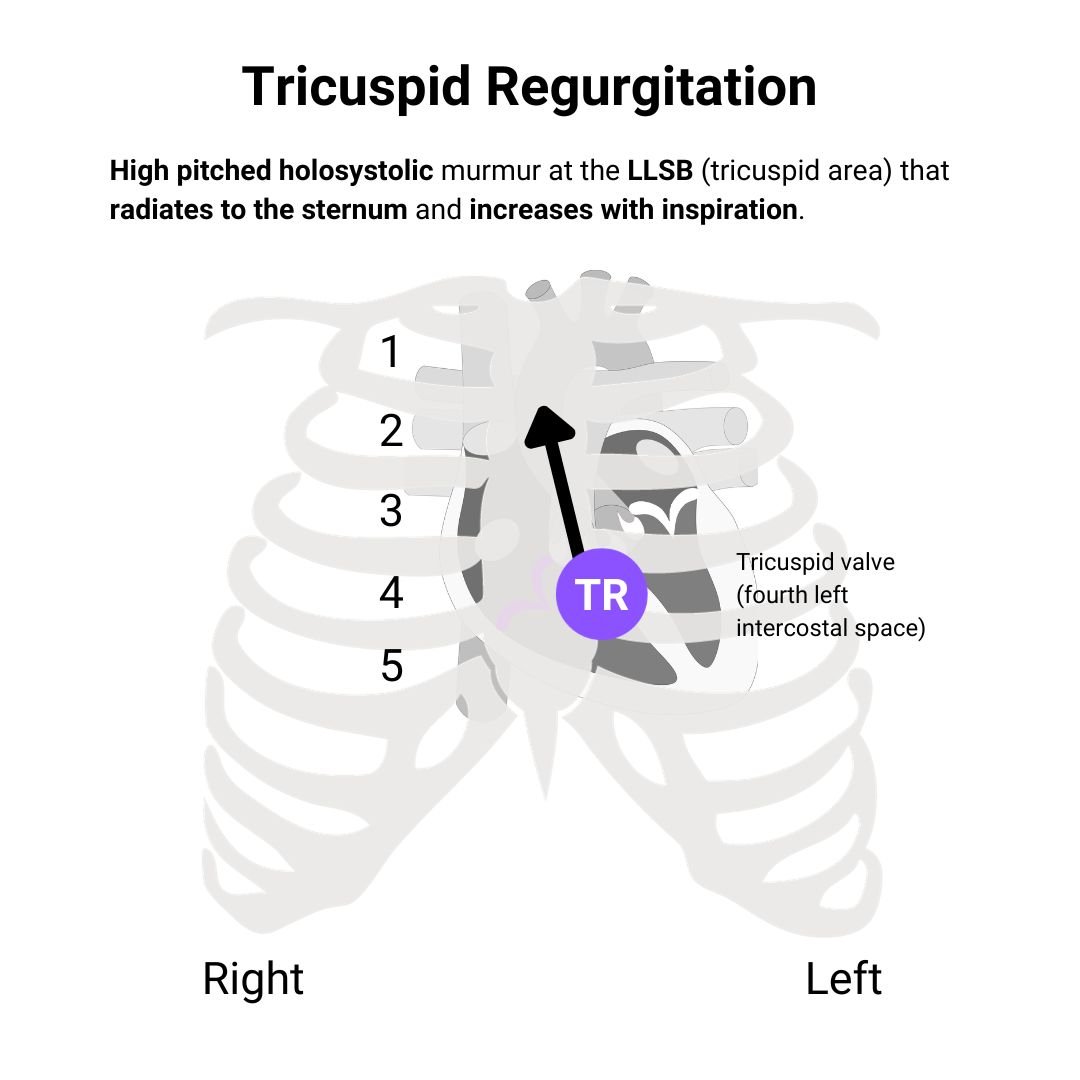
    7. Tricuspid regurgitation

      Tricuspid Regurgitation (TR) is the backflow of blood from the right ventricle into the right atrium during systole, often due to tricuspid valve dysfunction
      • Causes include right ventricular dilation, pulmonary hypertension, and rheumatic heart disease
      • Secondary TR is more common than primary and often results from left-sided heart failure, pulmonary hypertension, or dilated cardiomyopathy
      • Symptoms include fatigue, ascites, and peripheral edema due to systemic venous congestion
      • HIGH-PITCHED HOLOSYSTOLIC murmur at LLSB (tricuspid area) radiates to the sternum and increases with inspiration (Carvallo’s sign)
      • Jugular venous distension and pulsatile liver may also be present
      • Echocardiography is key for diagnosis, showing right atrial and ventricular dilation, as well as tricuspid valve morphology and function
      • Management includes addressing the underlying cause, diuretics for symptom relief, and surgical repair or replacement of the tricuspid valve in severe cases
      • Annuloplasty is commonly performed for tricuspid valve repair
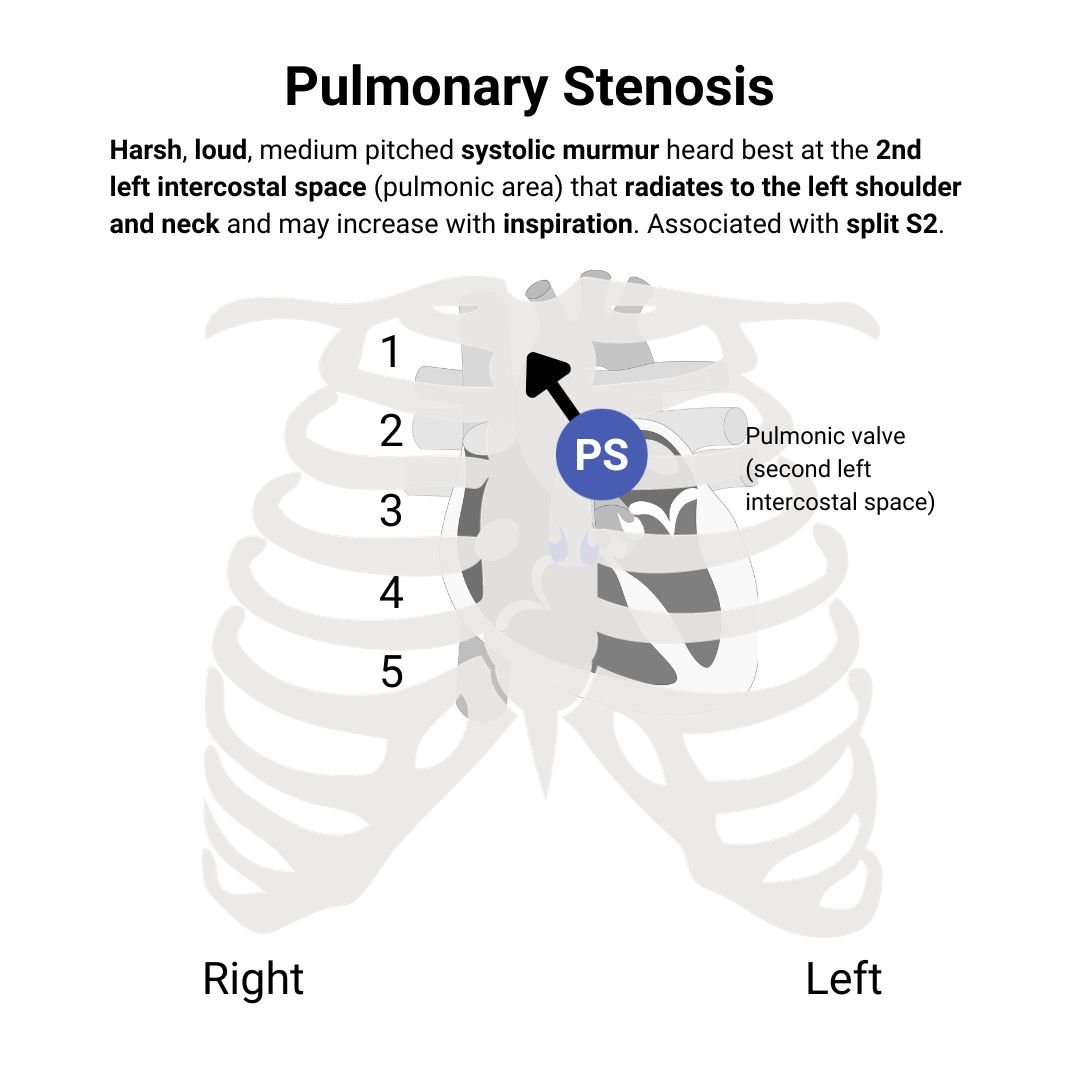
    8. Pulmonary stenosis

      Pulmonary Stenosis is a congenital heart defect characterized by the narrowing of the pulmonary valve or the pulmonary artery, which obstructs blood flow from the right ventricle to the lungs
      • Most commonly congenital but can also be acquired
      • Types include valvular, subvalvular, and supravalvular stenosis
      • Symptoms range from asymptomatic to severe, including dyspnea, fatigue, and cyanosis in critical cases
      • Physical exam reveals a systolic ejection murmur heard best at the left upper sternal border, often associated with a systolic ejection click
      • Harsh, loud, medium-pitched systolic murmur heard best at the 2nd /3rd left intercostal space (pulmonic area) that may increase with inspiration. Often associated with a systolic ejection click and a split s2.
      • May present with right ventricular hypertrophy due to increased afterload
      • Diagnosis is confirmed with echocardiography, showing the degree of stenosis and right ventricular hypertrophy. ECG may show right axis deviation and right ventricular hypertrophy.
      • Management depends on the severity: mild cases may require only monitoring, while severe cases may require balloon valvuloplasty or surgical intervention
      Pulmonary Valve Stenosis (PS) Murmur Auscultation
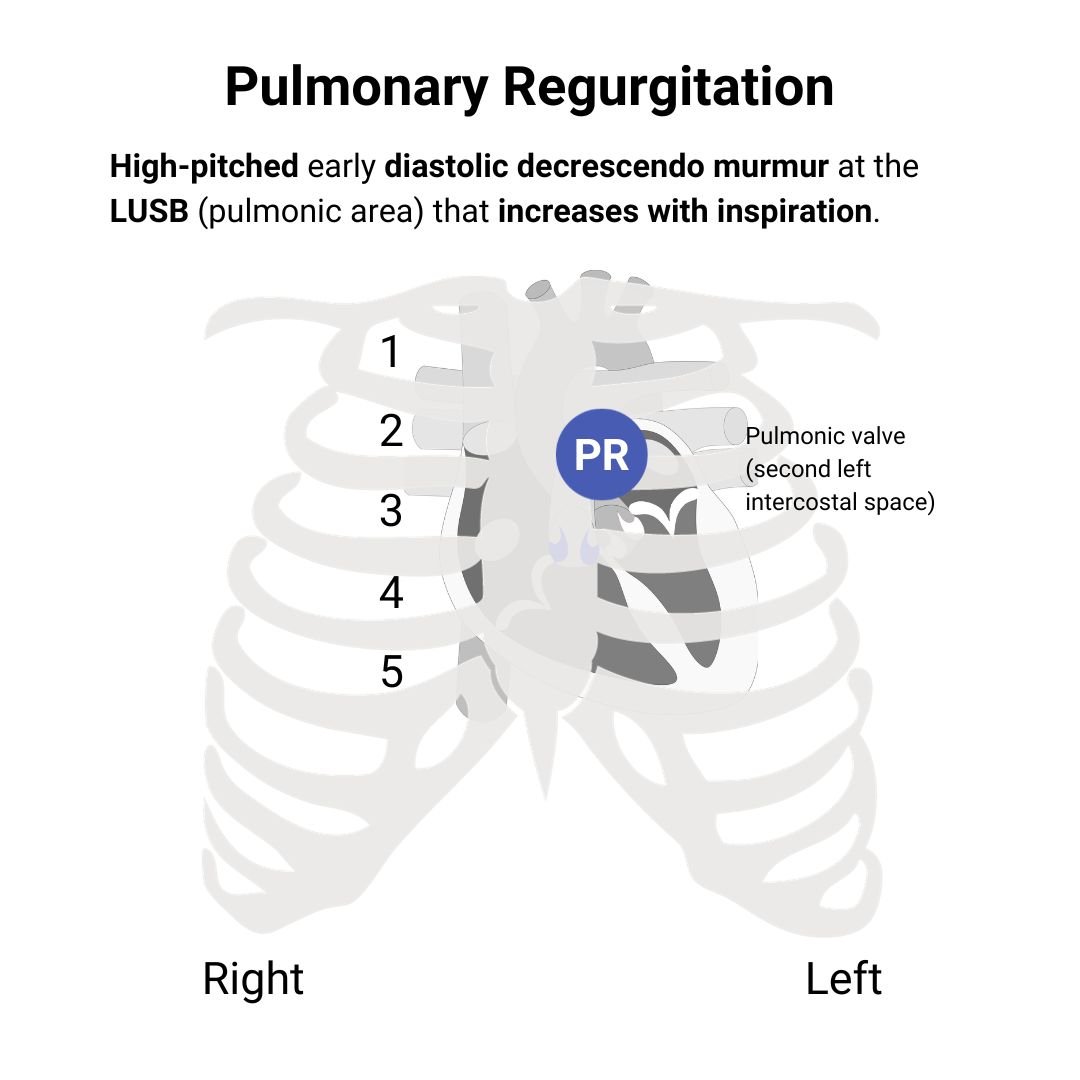
    9. Pulmonary regurgitation (diastolic)

      Pulmonary Regurgitation (PR) is the backflow of blood from the pulmonary artery into the right ventricle during diastole due to incompetent pulmonary valve
      • Often asymptomatic, but can lead to right ventricular volume overload over time
      • Causes include congenital valve abnormalities, pulmonary hypertension, infective endocarditis, and surgical or procedural interventions (e.g., tetralogy of Fallot repair)
      • High-pitched diastolic decrescendo murmur at the left upper sternal border (LUSB) that increases with inspiration
      • Signs of right-sided heart failure may develop, including peripheral edema, hepatomegaly, and jugular venous distension
      • Diagnosed with echocardiography, which shows the regurgitant flow and assesses right ventricular size and function. Cardiac MRI may be used for detailed anatomical and functional assessment.
      • ECG may show right ventricular hypertrophy or right atrial enlargement
      • Management depends on the severity and underlying cause; often conservative for mild cases, but may include surgical valve repair or replacement for significant cases with symptoms or right ventricular dysfunction
      Pulmonary Regurgitation (PR) Murmur Auscultation
  10. Vascular Disease (PEARLS)

    1. Aortic aneurysm and aortic dissection

      Abdominal Aortic Aneurysm (AAA) is a localized dilation of the abdominal aorta, typically defined as a diameter of 3.0 cm or greater
      • Most commonly occurs infrarenally
      • Often asymptomatic until rupture
      • Classic presentation: pulsatile abdominal mass, abdominal or back pain, and hypotension in case of rupture
      • Risk factors include age > 65, male gender, smoking, hypertension, and family history
      • Screening is recommended with abdominal ultrasound for men aged 65-75 who have ever smoked
      • CT angiography used for detailed preoperative planning
      • Management involves surveillance for small aneurysms (4.0-5.4 cm) and surgical repair (open or endovascular) for large (>5.5 cm men or > 5.0 cm women), rapidly expanding, or symptomatic aneurysms
      Aortic Dissection is a tear in the inner layer of the aorta, creating a false lumen through which blood flows, leading to a separation of the layers of the aortic wall
      • Sudden onset of severe, tearing chest or back pain (between scapulas), often radiating to the neck or abdomen
      • Asymmetrical blood pressures between arms. Diminished pulses
      • New diastolic murmur if aortic valve involvement (aortic regurgitation)
      • Hypertension is a major risk factor; may also present in patients with connective tissue disorders (e.g., Marfan syndrome)
      • Widened mediastinum on chest X-ray
      • Diagnosed with CT angiography as the preferred initial imaging modality. Transesophageal echocardiography (TEE) or MRI can also be used.
      • Immediate management includes blood pressure control with beta-blockers (e.g., labetalol) to reduce shear stress. Surgical intervention is required for Type A dissections (involving the ascending aorta), while Type B dissections (involving the descending aorta) may be managed medically unless complications arise.
    2. Arterial embolism/thrombosis

      Caused by a sudden arterial occlusion - The P's of arterial emboli: PAIN, PALLOR, PULSELESSNESS, PARESTHESIA, PARALYSIS, POIKILOTHERMIA
      • Atrial fibrillation and mitral stenosis are common causes of thrombus formation
      • Angiography is considered the gold standard for diagnosis
      • Treat with IV heparin then call vascular surgeon
    3. Arteriovenous malformation is an abnormal connection between arteries and veins, bypassing the capillary system.
      • In about half of all brain AVMs, intracranial hemorrhage is the first sign
      • Signs and symptoms may also include seizure, headache and focal neurologic deficit
      • Angiography is the diagnostic gold standard
      • Surgical excision is the mainstay of treatment along with radiosurgery and endovascular embolization
    4. Giant cell arteritis

      Inflammation of large and medium vessels: Jaw claudication and headache, thickened temporal artery scalp pain elicited by touching the scalp or combing the hair, acute vision disturbances  Amaurosis fugax (temporary monocular blindness) secondary to anterior ischemic optic neuritis
      • ESR > 100
      • Diagnosed with Temporal artery biopsy
      • Treat with high dose prednisone – do urgently to prevent blindness (Do not wait for biopsy results)
      • Associated with polymyalgia rheumatica
    5. Peripheral artery disease

      Peripheral Artery Disease (PAD) is a common circulatory problem in which narrowed arteries reduce blood flow to the limbs, typically caused by atherosclerosis
      • Symptoms include intermittent claudication (pain or cramping in the legs during exercise, relieved by rest), atrophic skin, rubor, hair loss, decreased pulses, or non-healing ulcers
      • Physical exam may reveal diminished or absent pulses, cool skin, and muscle atrophy
      • Diagnosis with Ankle-Brachial Index (ABI) showing < 0.9; a value of 0.4 to 0.9 suggests mild to moderate PAD, and < 0.4 indicates severe disease
      • Angiography is the gold standard for diagnosis and assessment of the extent and location of arterial occlusions
      • Management includes lifestyle modifications (smoking cessation, exercise), antiplatelet agents (aspirin, clopidogrel), and statins
      • β-blockers are contraindicated in isolated PAD as they may worsen claudication
      • Revascularization procedures such as angioplasty, stenting, or bypass surgery may be indicated in severe cases
    6. Phlebitis/thrombophlebitis

      Spontaneous or after trauma, IV/PICC lines - dull pain, erythema, induration of vein, palpable cord
      • Venous duplex ultrasound Gold Standard for diagnosis
      • NSAIDs, warm compress
    7. Varicose veins

      Varicose Veins are dilated, tortuous superficial veins due to venous valve incompetence, commonly affecting the legs
      • Visible, twisted, enlarged veins often in the legs
      • Aching pain, heaviness, or discomfort in the legs, worse after prolonged standing or sitting
      • Swelling and itching around the veins
      • Skin changes such as hyperpigmentation or eczema in chronic cases
      • Risk factors include prolonged standing, pregnancy, obesity, and family history
      • Diagnosed with clinical examination and confirmed by duplex ultrasonography, showing venous reflux
      • Conservative treatment includes compression stockings, leg elevation, and exercise
      • Procedural treatments include sclerotherapy, endovenous laser therapy (EVLT), radiofrequency ablation (RFA), and surgical stripping for severe cases
    8. Venous insufficiency (ReelDx)

      Chronic Venous Insufficiency (CVI) is a condition characterized by impaired venous return due to valve dysfunction, leading to venous hypertension and venous stasis
      • Commonly associated with varicose veins, deep vein thrombosis (DVT), and obesity
      • Symptoms include leg swelling, aching, and heaviness, which worsen with prolonged standing
      • Physical exam may reveal leg edema, skin changes (e.g., stasis dermatitis, hyperpigmentation, lipodermatosclerosis), and venous stasis ulcers above the medial malleolus
      • Diagnosis is primarily clinical, supported by duplex ultrasonography showing venous reflux or obstruction. Ankle-Brachial Index (ABI) to rule out arterial insufficiency, with normal ABI in CVI. Brodie-Trendelenburg test to assess vein valve competency and superficial vein filling
      • Management includes compression therapy, leg elevation, and exercise to improve venous return
      • Medical treatments include venotonic agents (e.g., flavonoids) and diuretics for edema
      • Interventional treatments may involve sclerotherapy, endovenous thermal ablation, or surgical options like vein stripping for severe cases
    9. Venous thrombosis (ReelDx)

      Unilateral (ASYMMETRICAL) swelling of lower extremity
      • Virchow’s triad: stasis, vascular injury, hypercoagulable state (OCP, cancer, surgery, factor V Leiden)
      • D-dimer, venous duplex ultrasound first line imaging, venography gold standard
      • Homan signdiscomfort behind the knee on forced dorsiflexion of the foot

Have you tried the NEW Smarty PANCE QBANK? It's FREE with EVERY membership purchase 😀!

X