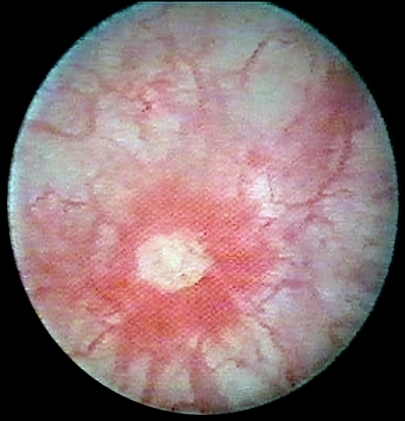

The NCCPA™ PANCE Genitourinary Content Blueprint covers six types of infectious GU conditions
| Cystitis | Patient will present as → a 34-year-old woman with a 3-day history of hematuria, dysuria, increased urinary frequency, and nocturia. She has had no fever, chills, or back pain. On examination, she does not look ill. Her temperature is 37.5 ° C. Her abdomen is nontender. There is no CVA tenderness. Cystitis is inflammation of the bladder, typically caused by a bacterial infection leading to symptoms of pelvic pain, frequent and urgent urination, and hematuria
DX: Urine dipstick: nitrite, leukocyte esterase
Treat with Nitrofurantoin (not over age 65), Bactrim, Fosfomycin
Lower UTI in pregnancy
💡 If a board question asks for the "next step" in a pregnant patient with asymptomatic bacteriuria (found on routine screening), the answer is Treatment. Pregnancy is one of the few instances where we treat a patient who has a positive culture but no clinical symptoms to prevent progression to pyelonephritis. Interstitial cystitis: A chronic inflammation of the bladder wall, characterized by pelvic pain, urinary frequency, and urgency, which can severely impact quality of life
|
| Epididymitis | Patient will present as → a 25-year-old male presents with gradual onset of unilateral scrotal pain and swelling over the last two days. He reports associated dysuria and a low-grade fever of 100.2°F. On physical examination, the scrotum is erythematous and tender to palpation localized to the posterior aspect of the testis. The Cremasteric reflex is intact, and there is a positive Prehn’s sign (relief of pain with scrotal elevation). A scrotal ultrasound reveals increased blood flow to the affected epididymis. Epididymitis is characterized by dysuria, unilateral scrotal pain, and swelling The pathogen is based on the patient's age and risk factors
+ Prehn's sign (elevation RELIEVES pain) = epididymitis; Negative Prehn’s = torsion. Doppler US: increased flow = epididymitis; absent flow = torsion! TX: < 35 years, or suspected STD etiology
≥ 35 years, with suspected enteric organism
Epididymitis vs Testicular Torsion Epididymitis
Testicular Torsion
PEARL: Time = Testicle — surgical detorsion within 6 hours is critical to salvage viability. |
| Fournier gangrene | Patient will present as → a 65-year-old male with diabetes mellitus comes to the emergency department complaining of severe pain and swelling in the genital area. He reports that the symptoms started suddenly a few days ago and have progressively worsened. The affected area appears red and swollen with patches of black, necrotic tissue. He also has a fever and a foul-smelling discharge. Fournier gangrene is a rapidly progressing necrotizing fasciitis affecting the genitalia and perineal regions
DX: Clinical diagnosis supported by laboratory and imaging studies
TX: Surgical debridement is a critical first step; removing all necrotic and infected tissue is essential and often needs to be repeated
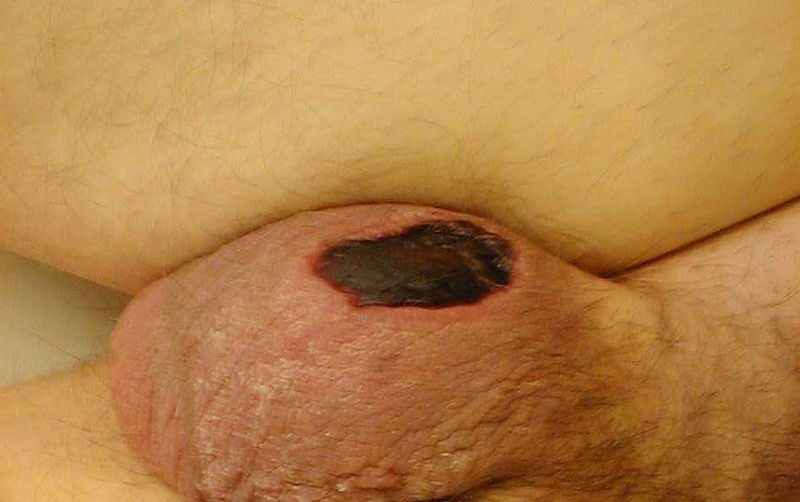 Fournier gangrene of genital. |
| Orchitis | Patient will present as → a 14-year-old male is brought to the clinic for sudden onset of right-sided scrotal pain and significant swelling that began this morning. His mother mentions that he recovered from a fever and painful swelling under his jaw about five days ago. On physical examination, the right testicle is enlarged, firm, and exquisitely tender to palpation. The overlying scrotum is warm and erythematous. The Cremasteric reflex is present and there is no relief of pain with scrotal elevation (negative Prehn’s sign). His immunization records are unavailable. Orchitis is the inflammation of one or both testicles, often causing pain and swelling. It commonly results from bacterial infections, sexually transmitted infections, or viral infections like the mumps virus
DX: Clinical: Based on history of parotitis and physical exam
TX: bed rest, NSAIDS, scrotal support, ice, and antibiotics (if bacterial)
Comparison Reminder:
|
| Prostatitis | Patient will present as → a 63-year-old man with a history of benign prostatic hyperplasia who reports 3-days of fever, chills, and pain with urination. He was recently catheterized during admission to the hospital. Physical exam reveals a tender and enlarged prostate on digital rectal exam. Urinalysis reveals pyuria and hematuria. Sudden onset of fever, chills, and low back pain combined with urinary frequency, urgency, and dysuria DX: Urinalysis will reveal pyuria (↑ WBC in acute) +/- hematuria
TX:
|
| Pyelonephritis | Patient will present as → a 32-year-old female presents with fever, chills, nausea, and flank pain for 24 hours. She developed dysuria and urinary frequency 3 days prior and states that both have worsened. On physical exam, you note suprapubic abdominal pain and CVA tenderness. The urinalysis reveals white blood cell casts. Irritative voiding + fever + flank Pain + nausea and vomiting + CVA tenderness
DX: Urinalysis
💡 WBC casts on UA = pyelonephritis (pathognomonic) OR acute interstitial nephritis — always distinguish by clinical context (fever + CVA tenderness vs. drug exposure). TX: An oral regimen is considered the best initial outpatient treatment (7 days of outpatient treatment is equivalent to longer treatment regimens)
IV antibiotics are indicated for inpatients who are toxic or unable to tolerate oral antibiotics
Management of acute pyelonephritis in pregnant women includes hospital admission for parenteral antibiotics.
 "The decision to hospitalize a patient is usually clear in the setting of critical illness or sepsis. Otherwise, general indications for inpatient management include persistently high fever (eg, >101°F/>38.4°C) or pain, marked debility, inability to maintain oral hydration or take oral medications, suspected urinary tract obstruction, and concerns regarding adherence to therapy." |
| Urethritis | Patient will present as → a 22-year-old heterosexual male who recently started having unprotected intercourse with his new girlfriend. He now reports a painful itching and burning sensation with urination and discomfort in the urethra. He says that sometimes in the morning it appears that the walls of the meatus are stuck together with evidence of dried secretions. On exam, there is no purulent discharge. The meatus does appear red. His girlfriend does not have any symptoms. Urethritis is an infection of the urethra with bacteria (or with protozoa, viruses, or fungi) and occurs when organisms that gain access to it acutely or chronically colonize the numerous periurethral glands in the bulbous and pendulous portions of the male urethra and in the entire female urethra
DX First-void or first-catch urine and sometimes urine culture
TX:
|