

 Lecture
Patient will present as → an elderly bed-bound patient with impaired mental function and poor fluid/fiber intake who complains of incontinence of liquid stool. He also reports rectal pressure and lower abdominal pain. The pain is cramping in quality and the patient’s abdomen is “bloated.” Digital rectal examination reveals a large amount of stool in the rectum.

To watch this and all of Joe Gilboy PA-C's video lessons you must be a member. Members can log in here or join now.
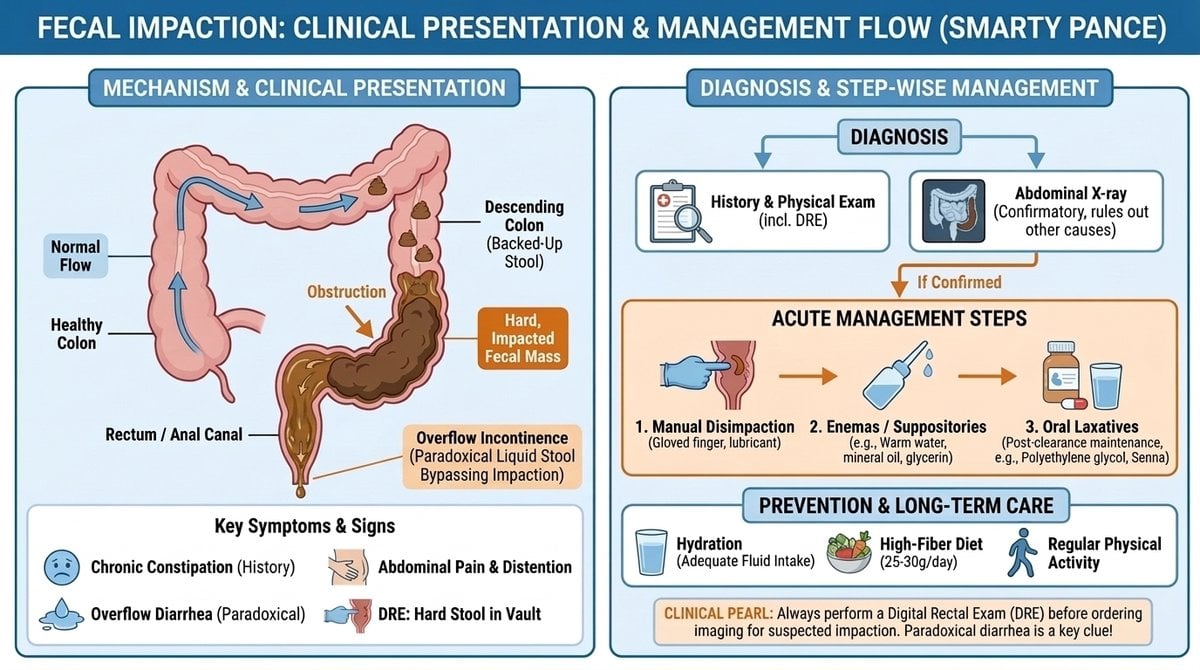
Fecal impaction is a large mass of hard, retained stool
- It generally occurs in the rectum but also may occur higher in the colon
- Classic patient: older, immobile or bedbound, dementia or neurologic disease, opioids or anticholinergics, poor fluid and fiber intake
- Overflow (paradoxical) diarrhea: liquid stool leaks around the impaction, so do a rectal exam before treating "diarrhea" in an older patient
- Complications include overflow incontinence, urinary retention, stercoral colitis (pressure ulcer of the colon wall → ischemia or perforation), and rectal prolapse
Rock hard stool in the rectal vault on examination is diagnostic of distal impaction
- Imaging is not routine; abdominal X-ray or CT if the impaction is higher up, disimpaction fails, or obstruction, perforation, or stercoral colitis is suspected (CT: fecaloma with bowel wall thickening and fat stranding)
- The elderly are at greater risk for developing chronic constipation
- Colonoscopy if there are alarm features, new constipation at age 45 or older, or the patient is not up to date on colorectal cancer screening (impaction alone is not an indication)
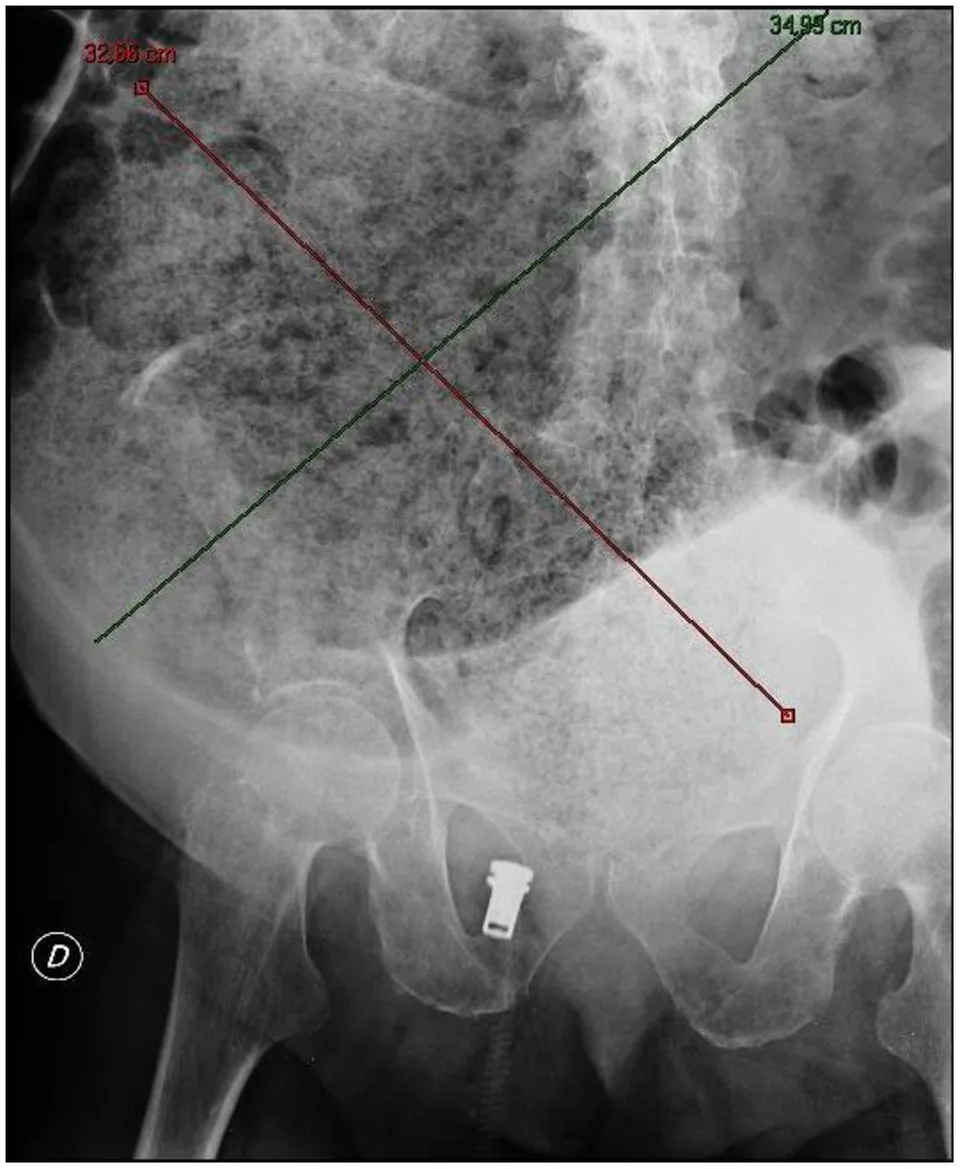
Abdominal X-ray done in the emergency room showing a huge fecal impaction extending from the pelvis upwards to the left subphrenic space and from the left towards the right flank, measuring over 40 cm in length and 33 cm in width. Image: Di Saverio S et al., CC BY 2.5, via Wikimedia Commons.
Distal (rectal) impaction: manual disimpaction first, then clear the colon with warm tap-water enemas (for up to 3 days) or oral PEG-electrolyte solution once obstruction is excluded
- More proximal impaction or failed disimpaction → water-soluble contrast enema under fluoroscopy (excludes obstruction and helps clear stool); sigmoidoscopy can break up stool beyond the finger
- Avoid sodium phosphate (Fleet) enemas in older adults (hyperphosphatemia, hypocalcemia, kidney injury) and soap-suds enemas (colitis); use magnesium laxatives with caution in kidney disease
- Prevent recurrence: daily PEG 3350 for a stool at least every other day, toileting after meals, a bisacodyl or glycerin suppository if no bowel movement in 2 days, and stop constipating drugs when possible
- Bedbound or dementia: extra fiber can make it worse; scheduled enemas once or twice weekly can help
Question 1 |
Clostridioides difficile colitis Hint: C. difficile follows antibiotic exposure and causes frequent watery stools with fever and leukocytosis; always do a rectal exam first in an older immobile patient. | |
Fecal impaction with overflow | |
Ischemic colitis Hint: Ischemic colitis causes sudden crampy pain followed by bloody diarrhea. | |
Laxative overuse Hint: He has no laxative exposure; his opioid and anticholinergic both cause constipation. | |
Viral gastroenteritis Hint: Viral gastroenteritis is acute, with vomiting and diarrhea, and is not tied to immobility and constipating drugs. |
Question 2 |
Abdominal CT with contrast Hint: CT is reserved for impaction higher in the colon, failed disimpaction, or suspected obstruction, perforation, or stercoral colitis. | |
Barium enema Hint: Barium can harden and worsen an impaction; a water-soluble contrast enema is used only if disimpaction fails. | |
Colonoscopy Hint: Colonoscopy is not the first step; it is done later if there are alarm features or screening is not current. | |
Digital rectal examination | |
Upright abdominal radiograph Hint: Plain films are not needed when the rectal exam shows a rectal impaction; they are used if the exam is unrevealing or complications are suspected. |
Question 3 |
Manual disimpaction | |
Milk of magnesia Hint: Oral laxatives work poorly against a hard rectal mass and can cause cramping; they are used after disimpaction. | |
Nasogastric tube placement Hint: A nasogastric tube is not used for a distal colonic or rectal impaction. | |
Oral sodium phosphate Hint: Sodium phosphate can cause severe hyperphosphatemia, hypocalcemia, and kidney injury in older adults and should be avoided. | |
Sigmoid colectomy Hint: Surgery is only for complications such as perforation or ischemia. |
Question 4 |
Bisacodyl suppository Hint: Bisacodyl suppositories are safe and useful when there has been no bowel movement for 2 days. | |
Glycerin suppository Hint: Glycerin suppositories are safe and help trigger a bowel movement. | |
Oral polyethylene glycol Hint: PEG is the preferred osmotic laxative in older adults and is safe in kidney disease. | |
Sodium phosphate enema | |
Warm tap-water enema Hint: Warm tap-water enemas are the preferred enema after disimpaction. |
Question 5 |
Daily docusate Hint: Docusate is a weak stool softener that is not recommended because it does not prevent constipation or impaction. | |
Daily loperamide Hint: Loperamide slows the bowel and would cause another impaction. | |
Daily polyethylene glycol 3350 with scheduled toileting | |
Twice-weekly sodium phosphate enemas Hint: Sodium phosphate enemas are avoided in older adults because of electrolyte and kidney risks. | |
Weekly magnesium citrate Hint: Weekly magnesium citrate does not keep stool moving daily and risks hypermagnesemia in older adults. |
|
List |
References: Merck Manual · UpToDate