
 Lecture


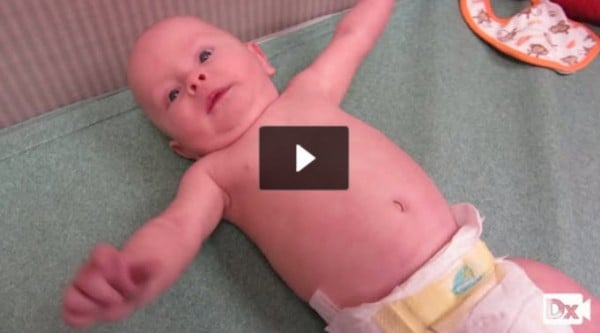
Patient will present as → a 5-month-old infant with a three-day history of a mild respiratory tract infection with serous nasal discharge, fever of 38.5 C, and decreased appetite. Physical exam reveals a tachypneic infant with audible wheezing and a respiratory rate of 65. Nasal flaring, use of accessory muscles, and subcostal and intercostal retractions are noted. Expiratory wheezes and a cough are present.

To watch this and all of Joe-Gilboy PA-C's spectacular video lessons you must be a member. Members can log in here or join now.
RSV is the most common cause of lower respiratory tract infections in children worldwide. Virtually all children contract it by the age of three.
- It's the leading cause of pneumonia and bronchiolitis in infants. It may play a major role in the pathogenesis of asthma bronchiolitis
- Highest risk in infants <6 months, with severe disease also in adults ≥75 or high-risk 50–74
Distinct symptoms of RSV bronchiolitis include:
- Rhinorrhea
- Wheezing and coughing can persist for several months
- Low-grade fever
- Nasal flaring and retractions
- Nail Bed cyanosis
Diagnosed clinically (URI → wheeze/crackles + ↑ work of breathing)
- PCR (nasopharyngeal swab/aspirate) if needed
- CXR not routine (may show hyperinflation, peribronchial thickening, and/or diffuse interstitial infiltrates
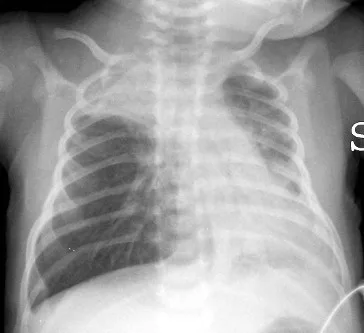
Chest X-ray of an infant with respiratory syncytial virus bronchiolitis demonstrating lung hyperinflation with a flattened diaphragm and bilateral atelectasis in the right apical and left basal regions. Image: Matteo Di Nardo et al., CC BY 2.0, via Wikimedia Commons.
Treatment is supportive with nasal suctioning, hydration, and antipyretics (humidified air or mist has not been shown to help)
- Patients with hурохеmiа should receive supplemental οxygen by nasal cannula, face mask, or hood
- Variable thresholds are used for starting oxygen therapy in infants with bronchiolitis, most commonly SpO2 <90 to <92 percent
- Bronchodilators (e.g., albuterol via nebulizer) are not recommended in bronchiolitis (per AAP)
- Systemic steroids are not recommended, except in cases of RSV-associated bronchial reactivity or pre-existing asthma
- Symptoms typically peak at days 3-5 and resolve within 7-10 days
- Indications for hospitalization include moderate tachypnea with feeding difficulties, visible retractions, and oxygen desaturation
Vaccination (view current CDC guidelines)
- RSV vaccination for ≥75 years or 60–74 years with risk factors (shared decision-making)
- Pregnant individuals (32–36 weeks of gestation, September–January):
- 1 dose of maternal RSV vaccine to provide passive immunity to the infant
- If maternal vaccination occurs ≥ 14 days before delivery, the infant does not require monoclonal antibody prophylaxis
RSV Immunoprophylaxis for Infants and Young Children
Protect every infant in the first RSV season: mother OR baby (usually not both)
- Maternal RSV vaccine (RSVpreF) at 32–36 weeks of pregnancy during RSV season protects the infant if given at least 14 days before delivery
- If the mother was not vaccinated, was vaccinated less than 14 days before delivery, or her status is unknown: one IM dose of a long-acting RSV monoclonal antibody (nirsevimab or clesrovimab) for all infants <8 months born during or entering their first RSV season
- Timing: within the first week of life if born during the season; just before the season (usually October) if born earlier; any time during the season if it was missed. It can be given with routine vaccines.
- Second season (8–19 months): one dose of nirsevimab only for high-risk children: chronic lung disease of prematurity needing medical support in the 6 months before the season, severe immunocompromise, cystic fibrosis with severe lung disease or weight-for-length <10th percentile, and American Indian or Alaska Native children (clesrovimab is not used for the second season)
- Healthy infants who reach 8 months without a dose do not need catch-up; high-risk infants do
- Palivizumab (Synagis), the old monthly, high-risk-only antibody, has been discontinued in the United States and is no longer the board answer
- Nirsevimab and clesrovimab are prevention, not treatment; active RSV infection is managed with supportive care
 Osmosis |
|
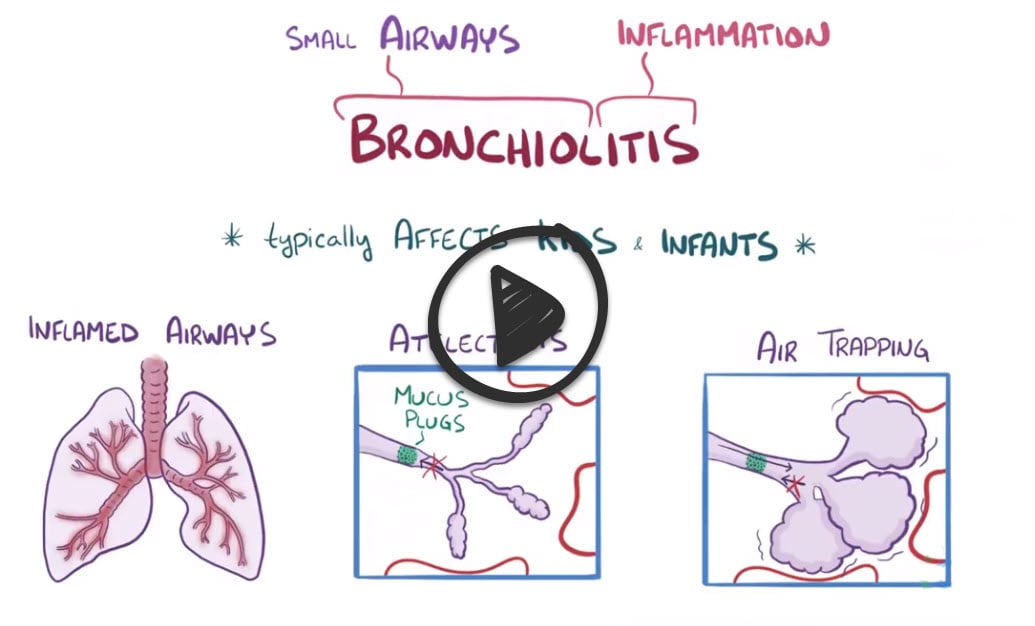 |

RSV, or respiratory syncytial virus, is a viral infection that infects upper airway epithelial cells, leading to copious secretions, coughing, sneezing, and wheezing in patients. It primarily affects infants and young children, with a peak incidence between 2 and 7 months of age. It affects more males than female infants, occurs less frequently in breastfed infants, and has a peak incidence during winter and spring. RSV causes most cases of bronchiolitis.
Play Video + QuizRespiratory Syncytial Virus (RSV) Interventions
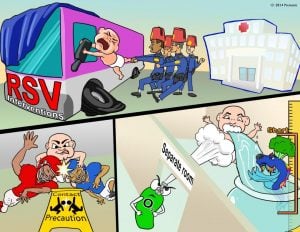
The management of caring for a child with RSV includes providing supplemental oxygen, maintaining fluid intake and nutrition, maintaining the airway, and administering medications.
Question 1 |
Respiratory syncytial virus (RSV) infects nearly all children by 2 years of age. Which of the following infants is at the greatest risk of severe RSV disease requiring hospitalization?
A 14-month-old term infant who was breastfed Hint: Breastfeeding is protective, and a healthy toddler is at low risk of severe disease. | |
A 3-year-old with mild intermittent asthma Hint: Children older than 2 years usually have mild upper respiratory illness with RSV; mild asthma does not place them at the highest risk. | |
A 6-week-old infant born at 29 weeks gestation | |
A 9-month-old term infant in daycare Hint: Daycare increases exposure, but a healthy term infant at 9 months is at lower risk of severe disease than a very young preterm infant. | |
An 18-month-old with an older sibling in school Hint: School-age siblings increase exposure, but age older than 12 months in a healthy child is low risk. |
RSV, an enveloped RNA virus spread by droplets and contaminated hands and surfaces, is the leading cause of bronchiolitis and viral pneumonia in infants, peaking in late fall and winter. Nearly every child is infected by age 2, and reinfection occurs throughout life. The highest risk of severe disease is in young infants (especially under 6 months) and infants born prematurely, plus those with chronic lung disease of prematurity, hemodynamically significant congenital heart disease, immunodeficiency or neuromuscular disease. Older adults (65 and older) and adults with chronic heart or lung disease are also at risk.
Question 2 |
A 2-month-old infant is admitted in December with bronchiolitis and an oxygen saturation of 88% on room air. The hospital needs to know whether he has RSV so he can be placed with other RSV-positive infants. Which of the following is the most appropriate test?
Blood culture Hint: Blood cultures detect bacteremia, which is rare in bronchiolitis, and do not identify RSV. | |
Chest radiograph Hint: A chest radiograph shows hyperinflation and patchy atelectasis but cannot identify the virus. | |
Nasopharyngeal swab for RSV nucleic acid amplification (PCR) | |
Serum RSV antibody titer Hint: Serology is not used for diagnosis; maternal antibodies confuse results in young infants. | |
Viral culture of sputum Hint: Viral culture is slow and insensitive, and infants cannot produce sputum. |
RSV bronchiolitis is diagnosed clinically, and routine viral testing is not needed in outpatients. When identifying the virus will change management, such as cohorting hospitalized infants, deciding on further workup in a very young febrile infant, or confirming RSV in an adult, the test of choice is a nasopharyngeal swab for RSV nucleic acid amplification (RT-PCR), often in a multiplex panel. Rapid antigen tests are less sensitive, especially in older children and adults. Hospitalized infants are placed on contact precautions.
Question 3 |
A previously healthy 4-month-old infant is hospitalized with RSV bronchiolitis. Respiratory rate is 64/min, he has subcostal retractions, and oxygen saturation is 87% on room air. He is feeding poorly. Which of the following is the most appropriate treatment?
Inhaled ribavirin Hint: Ribavirin is not routinely used for RSV bronchiolitis; it is expensive, hard to give and of uncertain benefit, reserved at most for severely immunocompromised patients. | |
Nebulized albuterol Hint: Bronchodilators are not recommended for bronchiolitis because they do not improve outcomes. | |
Nirsevimab Hint: Nirsevimab is a monoclonal antibody that prevents RSV disease; it does not treat active infection. | |
Oral prednisolone Hint: Systemic corticosteroids do not shorten illness or hospital stay in bronchiolitis. | |
Supplemental oxygen, nasal suctioning and fluid support |
Treatment of RSV bronchiolitis is supportive: supplemental oxygen when saturation stays below 90%, gentle nasal suctioning, and nasogastric or IV fluids when the infant cannot feed. Heated high-flow nasal cannula or CPAP is used for increasing work of breathing. Do not routinely use albuterol, epinephrine, corticosteroids, antibiotics, chest physiotherapy or ribavirin. Nirsevimab and clesrovimab prevent RSV but do not treat it. Admission is indicated for apnea, persistent hypoxemia, moderate to severe respiratory distress, inability to maintain hydration, or very young or high-risk infants.
Question 4 |
A healthy infant is born at 38 weeks gestation in late October. His mother did not receive the RSV vaccine during pregnancy. Which of the following is the most appropriate way to protect him from RSV this season?
Maternal RSV vaccine given to the mother after delivery Hint: The maternal RSV vaccine protects the infant only when it is given during pregnancy (32 to 36 weeks) at least 14 days before delivery. | |
Monthly palivizumab injections through the season Hint: Palivizumab, the older monthly antibody, was discontinued in the United States at the end of 2025. | |
No prevention, because he was born at term Hint: All infants younger than 8 months entering their first RSV season need protection, not only preterm or high-risk infants. | |
One intramuscular dose of nirsevimab before discharge | |
Oral ribavirin prophylaxis during the season Hint: Ribavirin does not prevent RSV infection. |
Every infant younger than 8 months born during or entering their first RSV season is protected by either maternal vaccination or an infant monoclonal antibody (usually not both). The maternal RSV vaccine is given at 32 to 36 weeks of pregnancy during RSV season; if it was given at least 14 days before delivery, the infant usually does not need an antibody. Otherwise the infant receives one intramuscular dose of nirsevimab or clesrovimab, in the first week of life if born during the season or just before the season starts. A second dose of nirsevimab is given only to high-risk children 8 to 19 months old entering their second season. Palivizumab has been discontinued in the United States. These antibodies prevent RSV disease; they do not treat active infection.
|
List |
References: Merck Manual · UpToDate