

 Lecture
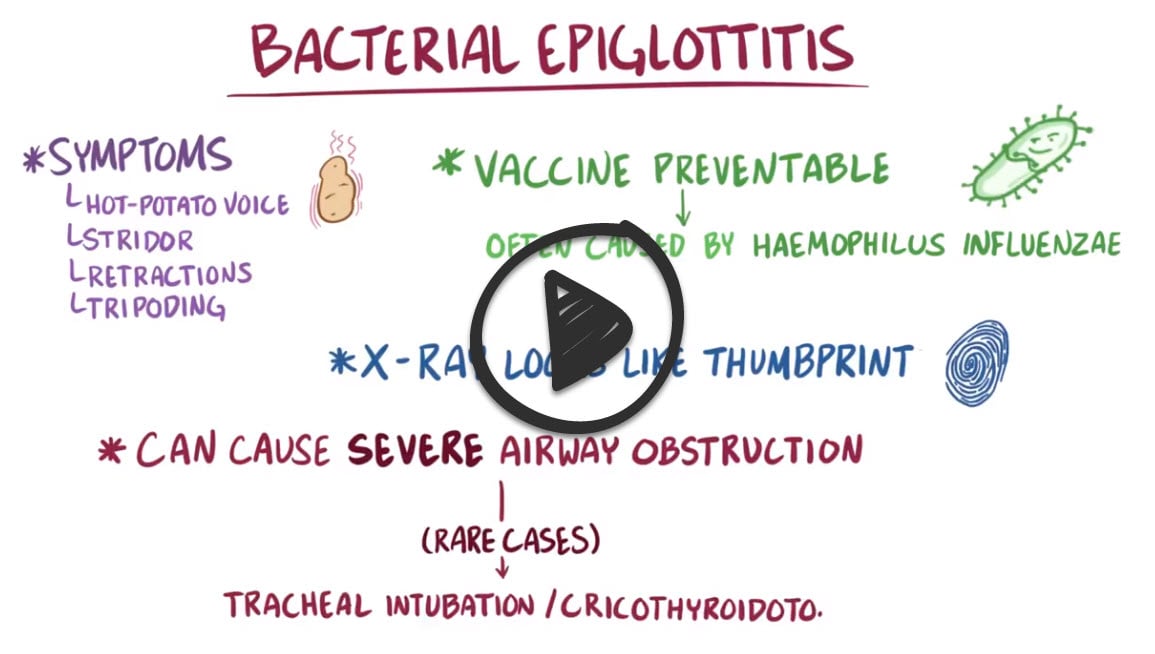
The adult patient (now the most common) will present as → a 45-year-old man with one to two days of severe sore throat and painful swallowing out of proportion to a normal-appearing oropharynx. He has a muffled "hot potato" voice, fever, and tenderness over the anterior neck at the hyoid. He is vaccinated, and stridor and drooling are absent — their appearance would signal impending airway obstruction.
 To watch this and all of Joe-Gilboy PA-C's video lessons you must be a member. Members can log in here or join now.
Epiglottitis is a rapidly progressive bacterial infection of the epiglottis and supraglottic tissues that can cause sudden, complete airway obstruction — a medical emergency
- Hib is the classic cause in unvaccinated children and under-vaccinated regions (Hib vaccine at 2, 4, ± 6 months + booster at 12–15 months) — in the vaccine era, most cases are Streptococcus pneumoniae, group A strep, and Staph aureus (including MRSA), and epiglottitis is now more common in adults
- Key test clue: severe throat pain with minimal oropharyngeal findings + drooling/stridor = epiglottitis until proven otherwise
- Tripod or "sniffing" posture (sitting forward, neck extended to maximize the airway)
- vs. croup — epiglottitis is abrupt, high fever, toxic, drooling, no cough; croup has a barking cough, hoarseness, and the steeple sign
- Dysphagia
- Drooling
- Respiratory Distress
High suspicion or an unstable patient goes straight to the OR — laryngoscopy is the definitive diagnosis (edematous, "cherry-red" epiglottis) and secures the airway in the same controlled setting
- Stable patients only: lateral neck X-ray → classic thumbprint sign; never send an unstable patient to radiology, and avoid CT — lying flat can obstruct the airway
- Blood and epiglottic cultures after the airway is secured

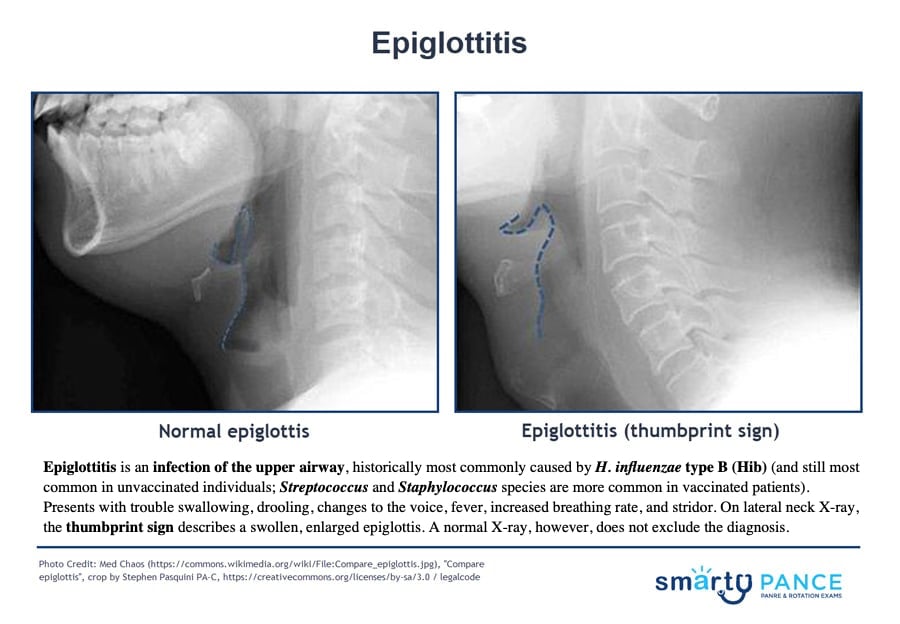
Airway management, first and foremost — anticipate tracheal intubation in a controlled setting (OR, with ENT/anesthesia); if intubation is impossible, needle or surgical cricothyroidotomy
- ⚠️ Keep the child calm — no tongue-depressor throat exam, no IV sticks, no supine positioning until the airway is secure — agitation can precipitate complete obstruction
- Once the airway is stable: third-generation cephalosporin (ceftriaxone or cefotaxime) + an antistaphylococcal agent (vancomycin, per local MRSA prevalence); corticosteroids are often given to reduce swelling, though evidence is limited
- All patients are admitted (usually ICU) for airway monitoring — never outpatient
- Prevention — Hib immunization; rifampin prophylaxis for unvaccinated close contacts when Hib is the cause
 Osmosis Osmosis |
|
 |
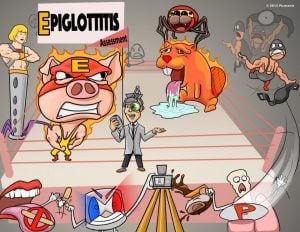
Epiglottitis is supraglottic inflammation/obstruction of the airway historically due to infection with Haemophilus influenzae. The Hib vaccine is available to protect against Haemophilus influenzae type b and should be given to infants in three to four divided doses starting at the age of two months. Signs and symptoms of epiglottitis include inspiratory stridor, restlessness, cough, dyspnea, fever, and drooling. It is important to note that the throat should not be examined if epiglottitis is suspected, as this could cause spasm and complete closure of the airway. Assessment of the throat should only be done when immediate endotracheal intubation is possible. Epiglottitis requires emergency treatment.
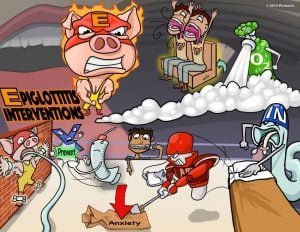
Epiglottitis Interventions
Question 1 |
Croupy cough and drooling | |
Thick gray, adherent exudate Hint: Thick gray adherent exudate is suggestive of diphtheria. | |
Beefy red uvula, palatal petechiae, white exudate Hint: Beefy red uvula, palatal petechiae, and white exudate are findings suggestive of streptococcal pharyngitis. | |
Inflammation and medial protrusion of one tonsil Hint: Inflammation with medial protrusion of the tonsil is suggestive of a peritonsillar abscess. |
Question 2 |
Rhinovirus Hint: Causes upper respiratory infections but not a common cause of epiglottitis. | |
Streptococcus pneumoniae Hint: Can infect the respiratory tract but not a prime cause of epiglottitis. | |
Neisseria meningitidis Hint: Associated with meningitis more than epiglottitis. | |
Haemophilus influenzae type B | |
Group A Streptococcus Hint: Leads to pharyngitis and tonsillitis more often than epiglottitis. |
Question 3 |
Throat culture Hint: Difficult to obtain and does not provide specific information in this case. | |
Lateral neck X-ray | |
Complete blood count Hint: Not specific for diagnosing epiglottitis. | |
Monospot test Hint: Checks for EBV infection unrelated to this child's presentation. | |
Rapid streptococcal test Hint: Useful for pharyngitis but not epiglottitis. |
Question 4 |
Intravenous antibiotics Hint: Treat the underlying infection but do not address the airway obstruction. | |
Nebulized racemic epinephrine Hint: May transiently improve stridor but intubation is still required. | |
Intubation | |
Oral corticosteroids Hint: Do not improve the airway obstruction requiring intubation | |
Cool mist humidification Hint: May provide some symptomatic relief but does not address need for intubation. |
|
List |
References: Merck Manual · UpToDate