

 Lecture



90 y/o with cough and fever
Patient will present as → a 71-year-old male who was admitted to the acute care hospital two days following a massive CVA with a possible brainstem infarct. Because he was also experiencing secondary respiratory failure, he was intubated and placed on mechanical ventilation. He was subsequently transferred to the neurointensive care unit, where he was stabilized. His present vital signs are respiratory rate 14 (ventilator rate), temperature 100.4 F. His SpO2 is 95%. His rating on the Glasgow Coma Scale is 5.

To watch this and all of Joe-Gilboy PA-C's video lessons you must be a member. Members can log in here or join now.
Patients will present with fever, dyspnea, tachycardia, tachypnea, cough +/- sputum
Presentation and risk factors depend on the etiology
- S. Pneumoniae: Rust-colored sputum, common in patients with splenectomy
- S. Aureus: Salmon-colored sputum, lobar, after influenza, MRSA treat with vancomycin
- Pseudomonas: Ventilators, Cystic fibrosis, patients become sick fast - treat with 2 antibiotics
- Legionella: Air conditioning, aerosolized water, low NA+ (hyponatremia), GI symptoms (diarrhea), and high fever
- Mycoplasma: Young people living in dorms, (+) cold agglutinins, bullous myringitis, walking pneumonia, low temp
- Klebsiella: Alcohol abuse, currant jelly sputum, aspiration
- Pneumocystis jiroveci HIV CD4 <200, immunosuppressed
- Haemophilus influenzae: COPD, smokers, postsplenectomy
- Histoplasma capsulatum caused by bat droppings -looks like sarcoidosis on CXR
- Coccidioides (valley fever) in dry states
- Chlamydia pneumoniae: College kids, sore throat, long prodrome
- Poor dental hygiene is associated with pneumonia caused by anaerobes
- Influenza pneumonia is characterized by a more precipitous onset and fulminant course
- An indolent course suggests atypical pneumonia - Mycoplasma is the most common atypical agent
- Lobar consolidation is seen in community-acquired pneumonia
- Apical infiltration is seen in tuberculosis
Patients with pneumonia will have physical exam finding of
- (+) egophony - Transmission of vocal sounds through consolidation leads to the changes heard with egophony.
- (+) tactile fremitus - Consolidation would increase the transmission of vocal vibrations and manifest as increased tactile fremitus.
- (+) dullness to percussion
Empyema is the accumulation of pus in the pleural space - It is a known complication of pneumonia. The risk of this complication increases in patients with COPD, diabetes, GERD, and pleural effusions.
CXR: patchy, segmental, lobar, or multilobar consolidation
- A new infiltrate on CXR confirms the diagnosis. Outpatients need no routine cultures; for severe CAP or risk factors for MRSA or Pseudomonas, obtain blood cultures x 2 and sputum Gram stain and culture (plus urinary pneumococcal and Legionella antigens in severe CAP)

A chest X-ray showing a very prominent wedge-shaped area of airspace consolidation in the right lung, characteristic of bacterial pneumonia.
Risk-stratify CAP (e.g., CURB-65/PSI) to decide outpatient vs inpatient care
Outpatient therapy (antibiotics)
- Low risk or no comorbidities and low risk for P. aeruginosa or MRSA
- Amoxicillin 1 g PO TID x 5 days
- Doxycycline 100 mg PO BID x 5 days
- Azithromycin 500 PO once, then 250 mg PO daily x 4 days (if local pneumococcal resistance is < 25%)
- Significant comorbidities (chronic heart, lung, liver, or renal disease, diabetes, EtOH, active cancer, immunosuppression, asplenia)
- Amoxicillin/clavulanate (Augmentin) 875 BID or Cefuroxime 500 mg PO BID PLUS Azithromycin 500 PO once, then 250 mg PO daily x 4 days or Doxycycline 100 mg BID x 5 days
- Levofloxacin 750 mg PO daily x 5 days
- Moxifloxacin 400 mg PO daily x 5 days
Inpatient (hospitalize for CURB-65 of 2 or more or a high PSI class, hypoxemia, unstable vital signs, confusion, or inability to take oral medication)
- Treatment regimens depend on various factors, which include severity, prior hospitalization, and prior abx use. Common options include:
- Non-severe, general ward: ceftriaxone (or another beta-lactam) + azithromycin (or doxycycline), or a respiratory fluoroquinolone alone; add vancomycin or linezolid only for MRSA risk and an antipseudomonal beta-lactam only for Pseudomonas risk
- Levofloxacin, Moxifloxacin, Cefepime, Piperacillin/Tazobactam, Vancomycin, and Meropenem (alone and in various combinations)

 Osmosis |
|
 |
| Picmonic | |
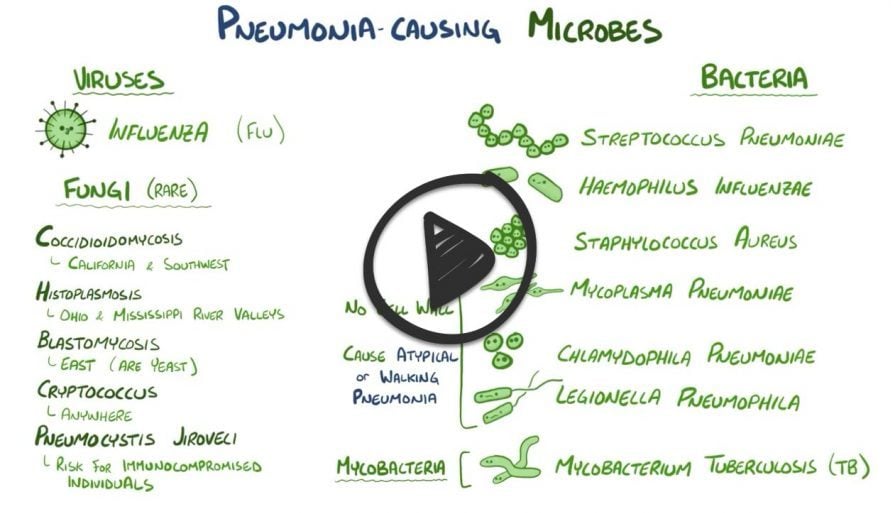
| Pneumonia is an acute or chronic lung condition defined as inflammation of the alveoli or filling of the alveoli with fluid. It is usually caused by bacteria, fungi, viruses and sometimes by physical and chemical irritants. It typically presents with fever, chest congestion, difficulty breathing, cough, and sputum. | |
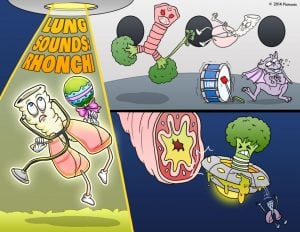 |
Rhonchi develops due to airway obstruction, increased secretions, and bronchospasms. Rhonchi can be auscultated near the trachea and bronchi and sound like a low pitched rumbling and gurgling sound. Play Video + Quiz |
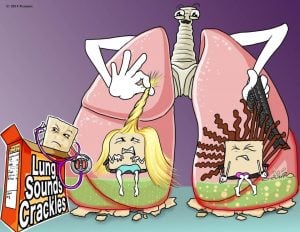 |
Crackles are caused by sudden reinflation of groups of alveoli or disruptive passage of air through small airways. Fine crackles are high-pitched and heard during the end of inspiration. Coarse crackles are loud, bubbly sounds heard during inspiration. Play Video + Quiz |
 |
Common Causes of Pneumonia: Neonates (less than 4 Weeks Old) - In neonates, common causes of pneumonia include Group B Streptococci and E. coli Play Video + Quiz |
 |
Common Causes of Pneumonia: Children (4 Weeks - 18 Years) - In children, viruses (RSV, rhinovirus, human metapneumovirus, influenza) are the most common causes, followed by Streptococcus pneumoniae (the leading bacterial cause) and, in school-age children and teens, Mycoplasma and Chlamydophila pneumoniae Play Video + Quiz |
 |
Common Causes of Pneumonia: Adults (18 - 40 Years Old) - In adults ages 18-40 years, common causes of pneumonia include Mycoplasma, Chlamydia pneumoniae and Streptococcus pneumoniae. Play Video + Quiz |
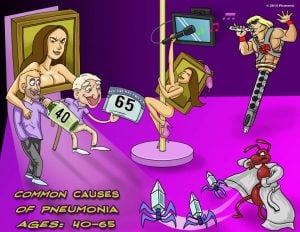 |
Common Causes of Pneumonia: Middle-Aged Adults (40 - 65 Years Old) - In middle-aged adults, common causes include Streptococcus pneumoniae, Haemophilus influenzae, anaerobes, viruses, and Mycoplasma Play Video + Quiz |
 |
Common Causes of Pneumonia: Elderly (65+ Years Old) - In older adults common causes are Streptococcus pneumoniae, influenza virus, anaerobes, H. influenzae, and gram-negative rods. Play Video + Quiz |
 |
Streptococcus pneumoniae is a gram-positive, lancet-shaped diplococci that is a major cause of pneumonia, meningitis, and otitis media in individuals. Pneumonia caused by this bacterial pathogen causes a rusty sputum, which can help with clinical diagnosis. The bacteria can also cause acute bacterial sinusitis, and can cause sepsis in patients with splenectomies Play Video + Quiz |
 |
Legionella is a gram-negative bacilli named after an outbreak among people attending a convention of the American Legion. Although the bacteria is characterized as a gram-negative bacteria, is often difficult to visualize due to poor gram staining. It requires special medium for growth called charcoal yeast extract. Legionella requires special medium because it requires the presence of iron and cysteine to grow, which is not in common blood agar media and can be readily visualized with silver stain. Legionella is known to be water loving and transmitted via inhalation of mist droplets containing bacteria. Common sources include cooling towers, hot water systems, and fountains. Individuals that are smokers, over 65 years of age, and heavy drinkers are at moderately increased risk of disease. In patients, the organism is commonly detected in the urine using the Legionella Urinary Antigen. Play Video + Quiz |
 |
Mycoplasma pneumoniae is a small bacterium with a unique cell structure that causes mycoplasma pneumonia. This species lacks a peptidoglycan cell wall, and instead has a cell membrane with sterol compounds that it obtains from the host serum. Because it requires sterols for replication, it requires special growing medium called Eaton's agar, and also has a distinctive growth pattern, forming characteristic mulberry colonies. This organism causes mycoplasma pneumonia, also known as walking pneumonia, which is an atypical pneumonia spread through respiratory droplet transmission. It is called an atypical pneumonia because there is a protracted course, lack of sputum production, and extra-pulmonary symptoms as compared to typical pneumonia. This form of pneumonia is more common in adolescents and people in close quarters like military recruits. Mycoplasma pneumonia is also characterized by the presence of IgM antibodies directed against red blood cells, leading to a cold autoimmune hemolytic anemia in some patients. Complications of this disease also include erythema multiforme, which can progress to Stevens-Johnson syndrome. Because the causative organism lacks a cell wall, it does not gram stain and is also resistant to the effects of penicillins and beta-lactam antibiotics, which have bactericidal effects by disrupting the cell wall. Therefore, macrolides (azithromycin) or doxycycline are used instead. Play Video + Quiz |
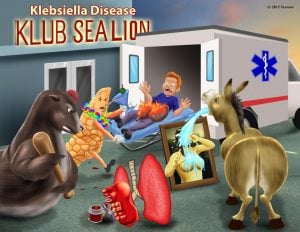 |
Klebsiella is a gram-negative, oxidase-negative bacilli with a prominent polysaccharide capsule. Infections can lead to wide range of diseases, including pneumonia and nosocomial urinary tract infections. Klebsiella pneumoniae is a form of pneumonia commonly associated with aspiration in alcoholics. People with diabetes are also more susceptible to Klebsiella infections. Patients with Klebsiella pneumoniae often cough up characteristic sputum described as red currant jelly. Severe pneumonia can also lead to lung abscesses. Besides pneumonia, Klebsiella is also associated with urinary tract infections, especially in the hospital setting. Play Video + Quiz |
 |
Pseudomonas aeruginosa is a gram-negative, aerobic bacilli that has been increasingly recognized as an opportunistic human pathogen that can cause a wide variety of infections including infections in burn patients, osteomyelitis, endocarditis, pneumonia, and urinary tract infections. P. aeruginosa most commonly infects the pulmonary tract, causing a diffuse bronchopneumonia in patients. Individuals with cystic fibrosis are especially at risk for Pseudomonas infections in the lungs. It is the most common cause of infections in burn injuries and can lead to hemorrhage and necrosis of infected tissue. It is also a common cause of hot tub folliculitis, which is caused by lack of proper, periodic attention to water quality. This organism is a frequent colonizer of medical devices including catheters and can cause nosocomial urinary tract infections. It is also frequently associated with osteomyelitis in IV drug users and also puncture wounds of the foot, thought to result from exposure to the organism via the foam padding found in tennis shoes. Diabetic patients are particularly at high risk for osteomyelitis occurring via this mechanism. This organism is implicated in corneal infections in contact lens users and can cause endocarditis when in the blood stream. Pseudomonas is also associated with purple-black skin lesions called ecthyma gangrenosum. Play Video + Quiz |
 |
Haemophilus influenzae is a gram-negative coccobacillus that can cause several diseases, including meningitis, pneumonia, otitis media, and epiglottitis. Most strains of H. influenzae live in their host without causing disease, and only cause problems when the host has reduced immune function or inflammation in the area. Naturally acquired disease can occur in infants and young children. Type b Haemophilus influenzae can cause pneumonia and bacterial meningitis. It can also cause otitis media and epiglottitis. Hib is the classic cause of epiglottitis (thumbprint sign on X-ray) in unvaccinated children; ceftriaxone is commonly used for severe H. influenzae infections. Play Video + Quiz |
Question 1 |
A 58-year-old man with hypertension presents with 2 days of fever, shaking chills, pleuritic chest pain and a cough productive of rust-colored sputum. Temperature is 39.2°C (102.6°F), heart rate is 108/min, respiratory rate is 24/min and oxygen saturation is 94% on room air. Chest radiograph shows right lower lobe consolidation. Which of the following is the most likely causative organism?
Haemophilus influenzae Hint: H. influenzae is a common cause of community-acquired pneumonia in smokers and in patients with COPD, but it is not the most common cause overall. | |
Legionella pneumophila Hint: Legionella is suggested by GI symptoms (diarrhea), hyponatremia, high fever with relative bradycardia, or exposure to contaminated water. It causes a minority of cases. | |
Mycoplasma pneumoniae Hint: Mycoplasma causes a gradual, "walking" pneumonia in young adults with dry cough and patchy or interstitial infiltrates, not abrupt lobar consolidation with rust-colored sputum. | |
Staphylococcus aureus Hint: S. aureus pneumonia is classically seen after influenza, in people who inject drugs, or with cavitating or multilobar infiltrates. | |
Streptococcus pneumoniae |
Streptococcus pneumoniae (pneumococcus) is the most common bacterial cause of community-acquired pneumonia (CAP) at every age after the newborn period. The classic picture is abrupt fever with a single shaking chill, pleuritic chest pain, rust-colored sputum and lobar consolidation. Gram stain shows gram-positive diplococci (lancet-shaped). Respiratory viruses are found about as often as pneumococcus when molecular testing is done, but pneumococcus remains the leading bacterial cause and the board answer for typical lobar pneumonia.
Question 2 |
A 46-year-old woman presents with 3 days of fever, cough productive of yellow sputum and right-sided pleuritic chest pain. Temperature is 38.6°C (101.5°F), respiratory rate is 22/min and oxygen saturation is 95% on room air. There are crackles and egophony at the right base. Which of the following is the most appropriate test to confirm the diagnosis?
Chest radiograph | |
Procalcitonin level Hint: Procalcitonin is not used to decide whether to start antibiotics in suspected pneumonia, and it cannot confirm the diagnosis. | |
Spirometry Hint: Spirometry measures airflow obstruction (asthma, COPD) and has no role in diagnosing pneumonia. | |
Sputum Gram stain and culture Hint: Sputum studies identify the organism in selected (usually hospitalized or severe) patients, but they do not confirm that pneumonia is present. | |
Urinary pneumococcal antigen Hint: Urine antigen testing is reserved for severe pneumonia; a positive result names the organism but does not establish the diagnosis of pneumonia. |
Pneumonia is suspected clinically (fever, cough, sputum, pleuritic pain, crackles, egophony, dullness) but is confirmed by a new infiltrate on chest radiograph. A chest radiograph is required to diagnose community-acquired pneumonia and to look for complications such as a parapneumonic effusion, cavitation or multilobar disease. Outpatients with mild disease usually need no sputum culture, blood cultures or urinary antigens; those tests are added for patients who are hospitalized with severe disease or who have risk factors for MRSA or Pseudomonas.
Question 3 |
A 32-year-old man with no medical problems presents with 2 days of fever, productive cough and right-sided pleuritic chest pain. He has not taken antibiotics in the past 3 months. Temperature is 38.4°C (101.1°F), heart rate is 96/min, respiratory rate is 20/min, blood pressure is 124/78 mmHg and oxygen saturation is 97% on room air. He is alert. Chest radiograph shows a right middle lobe infiltrate. Which of the following is the most appropriate treatment?
Amoxicillin | |
Ceftriaxone plus azithromycin Hint: A beta-lactam plus a macrolide is the regimen for patients hospitalized on a general ward, not a healthy outpatient with a low severity score. | |
Levofloxacin Hint: Respiratory fluoroquinolones are reserved for outpatients with comorbidities (or beta-lactam allergy) because of their adverse effects and to limit resistance. | |
Piperacillin-tazobactam plus vancomycin Hint: Broad coverage for Pseudomonas and MRSA is reserved for severe pneumonia or patients with specific risk factors for those organisms. | |
Supportive care without antibiotics Hint: Bacterial community-acquired pneumonia is treated with antibiotics; supportive care alone is appropriate for viral acute bronchitis, not radiographically confirmed pneumonia. |
This healthy adult has community-acquired pneumonia with a CURB-65 score of 0, so he is treated as an outpatient. For outpatients with no comorbidities and no risk factors for resistant organisms, first-line therapy is high-dose amoxicillin. Doxycycline is an alternative, and a macrolide (azithromycin or clarithromycin) is used only where pneumococcal macrolide resistance is below 25%. Outpatients with comorbidities (chronic heart, lung, liver or kidney disease, diabetes, alcohol use disorder, cancer, asplenia) receive amoxicillin-clavulanate or a cephalosporin plus a macrolide or doxycycline, or a respiratory fluoroquinolone alone. Most outpatients are treated for 5 days.
Question 4 |
tuberculosis. Hint: Most children with pulmonary tuberculosis are asymptomatic with few physical examination findings. The results of the diagnostic studies do not support tuberculosis as the most likely diagnosis. | |
mycoplasma pneumonia. | |
pneumococcal pneumonia. Hint: The clinical presentation of bacterial pneumonias in children is variable, but usually involves fever of acute onset. The WBC count is also usually elevated, making this a less likely diagnosis. | |
staphylococcal pneumonia. Hint: See C for explanation. |
Gradual onset over a week or more in a teen or young adult, sore throat, headache and a dry, persistent cough with patchy interstitial infiltrates that look worse than the patient ("walking pneumonia") and a normal white count point to Mycoplasma pneumoniae, the most common atypical cause of pneumonia. Extrapulmonary clues include bullous myringitis, erythema multiforme and hemolytic anemia. Cold agglutinins are nonspecific and are no longer used for diagnosis; when testing is needed, nucleic acid amplification (PCR) of a respiratory specimen is preferred. Treatment is a macrolide (azithromycin) or doxycycline, since Mycoplasma lacks a cell wall and is not killed by beta-lactams.
Question 5 |
Administer nebulized corticosteroids Hint: Inhaled corticosteroids are not utilized in the management of community-acquired pneumonia. | |
Admit to the hospital | |
Oral antimicrobial therapy Hint: Due to the age of the patient, comorbid diseases, and current signs of respiratory distress, intravenous not oral antimicrobial therapy is indicated. | |
Endotracheal intubation Hint: Endotracheal intubation is indicated for respiratory failure unresponsive to conservative management. |
Question 6 |
A 42-year-old man with a 20 pack-year smoking history is admitted to a general medical ward with community-acquired pneumonia. Temperature is 38.8°C (101.8°F), respiratory rate is 24/min, blood pressure is 118/72 mmHg and oxygen saturation is 92% on room air. He has no risk factors for MRSA or Pseudomonas and is started on intravenous ceftriaxone. Which of the following is the most appropriate antibiotic to add?
Azithromycin | |
Clindamycin Hint: Clindamycin adds anaerobic coverage, which is needed only for lung abscess or empyema, not routine aspiration risk. | |
Gentamicin Hint: Aminoglycosides are not part of empiric therapy for community-acquired pneumonia on a general ward. | |
Metronidazole Hint: Metronidazole covers anaerobes only and adds nothing for the pathogens of community-acquired pneumonia. | |
Vancomycin Hint: Vancomycin is added only for severe pneumonia or when there are risk factors for MRSA, such as prior MRSA isolation or recent hospitalization with IV antibiotics. |
Patients hospitalized on a general ward with non-severe community-acquired pneumonia are treated with a beta-lactam (ceftriaxone, cefotaxime or ampicillin-sulbactam) plus a macrolide (azithromycin), or with a respiratory fluoroquinolone (levofloxacin or moxifloxacin) alone. The macrolide is added to cover atypical organisms (Legionella, Mycoplasma, Chlamydophila); the beta-lactam covers pneumococcus and H. influenzae. Vancomycin or linezolid (MRSA) and antipseudomonal agents are added only for severe disease or specific risk factors.
Question 7 |
Children at any age with a history of asthma Hint: Asthma alone is not an indication. Pediatric patients with cystic fibrosis, sickle cell disease, immunocompromise, or other high-risk conditions are candidates, and only once they are at least 2 years old. | |
All children at 2,4,6 and 12-18 months of age Hint: All infants routinely receive a pneumococcal conjugate vaccine (PCV15 or PCV20), not the polysaccharide vaccine, at 2, 4, and 6 months with a booster at 12-15 months. | |
All children at 12-23 months of age in a two dose series Hint: PPSV23 is never given routinely to all children. When it is used in a high-risk child it is given at least 8 weeks after the conjugate series, and a second dose (or PCV20) follows 5 years later only in immunocompromised children. | |
Children age 24-59 months at high risk for invasive pneumococcal disease |
A high-risk child who completed the conjugate series with PCV13 or PCV15 receives PPSV23 at least 8 weeks later; a child who receives PCV20 needs no PPSV23 at all, and PCV20 is now the preferred approach. All infants receive a conjugate vaccine (PCV15 or PCV20) at 2, 4, 6, and 12 to 15 months.
Question 8 |
Azithromycin | |
Ceftriaxone Hint: Ceftriaxone is a third-generation cephalosporin that may be safely used in children, however is not indicated for the treatment of Chlamydial pneumonia. | |
Doxycycline Hint: Doxycycline is a tetracycline and is contraindicated in children under eight years of age secondary to damaging effects on bone and teeth enamel. | |
Levofloxacin Hint: Levofloxacin is a fluoroquinolone and is contraindicated for use in children under 18 years of age secondary to damaging effects that may occur with growing cartilage. |
Chlamydia trachomatis pneumonia of infancy (afebrile "staccato" cough at 1 to 3 months of age, often with conjunctivitis and eosinophilia, acquired during vaginal delivery) is treated with a macrolide. Oral azithromycin for 3 days is preferred; erythromycin for 14 days is the alternative but carries a higher risk of infantile hypertrophic pyloric stenosis, so infants given either drug are watched for vomiting. Doxycycline is avoided in young children and fluoroquinolones are not used, and ceftriaxone does not treat Chlamydia. The mother and her partner(s) also need testing and treatment.
Question 9 |
Resonant to percussion Hint: Physical examination findings that are consistent with a diagnosis of lobar pneumonia include dullness to percussion, increased tactile fremitus and a trachea that is midline. | |
Late inspiratory crackles | |
Decreased tactile fremitus Hint: Physical examination findings that are consistent with a diagnosis of lobar pneumonia include dullness to percussion, increased tactile fremitus and a trachea that is midline. | |
Tracheal shift toward uninvolved side Hint: Physical examination findings that are consistent with a diagnosis of lobar pneumonia include dullness to percussion, increased tactile fremitus and a trachea that is midline. |
Question 10 |
Nafcillin Hint: Nafcillin is classified as a penicillinase-resistant penicillin, however would not be effective against methicillin- resistant strains of Staphylococcus aureus. | |
Vancomycin | |
Clindamycin Hint: Clindamycin is primarily utilized in treatment of severe anaerobic infections, but is not indicated for the treatment of methicillin-resistant Staphylococcus aureus. | |
Doxycycline Hint: Doxycycline is a tetracycline and is only utilized to treat respiratory infections that are susceptible to tetracycline, such as Mycoplasma or Chlamydial pneumonias. |
Empiric or directed therapy for MRSA pneumonia is intravenous vancomycin or linezolid. Nafcillin and other antistaphylococcal penicillins do not cover methicillin-resistant strains, doxycycline is not adequate for serious MRSA pneumonia, and clindamycin is used only for susceptible isolates and is not a first-line choice for severe disease. Risk factors for MRSA include prior MRSA colonization or infection, recent hospitalization with IV antibiotics, post-influenza necrotizing pneumonia and injection drug use.
Question 11 |
Decreased red blood cells Hint: The presence or absence of red blood cells is not a criterion for determining the adequacy of a sputum sample. | |
Decreased bronchial epithelial cells Hint: The presence of bronchial epithelial cells confirms the sample came from the lower respiratory tract. | |
Increased Gram positive cocci Hint: The presence of Gram positive cocci has no bearing on the adequacy of the sputum sample. | |
Increased polymorphonuclear leukocytes |
Question 12 |
IV drug abuse | |
Alcohol abuse Hint: A history of alcohol abuse is commonly seen with pneumonia caused by Klebsiella pneumoniae. | |
Poor dental hygiene Hint: Poor dental hygiene is associated with pneumonia caused by anaerobes. | |
HIV positive patient Hint: HIV positive patients are most at risk for development of pneumonia caused by Pneumocystis jiroveci. |
Question 13 |
Respiratory syncytial virus Hint: RSV is characterized by wheezing on auscultation and the course is typically 3-7 days. | |
Influenza virus Hint: Influenza pneumonia is characterized by a more precipitous onset and fulminant course. | |
Mycoplasma pneumoniae | |
Streptococcus pneumoniae Hint: Pneumococcal pneumonia is typically characterized by a more severe illness and more fulminant course. |
Question 14 |
A 54-year-old man with alcohol use disorder presents with abrupt fever, chills and a cough productive of thick, dark red "currant jelly" sputum. Temperature is 39.0°C (102.2°F), heart rate is 118/min, respiratory rate is 28/min and blood pressure is 96/62 mmHg. Chest radiograph shows right upper lobe consolidation with a bulging fissure. Sputum Gram stain shows many neutrophils and gram-negative rods. Which of the following is the most likely causative organism?
Haemophilus influenzae Hint: H. influenzae is a small gram-negative coccobacillus associated with COPD and smoking; it does not classically cause currant jelly sputum or a bulging fissure. | |
Klebsiella pneumoniae | |
Legionella pneumophila Hint: Legionella stains poorly on Gram stain and is suggested by diarrhea, hyponatremia and water-source exposure. | |
Pseudomonas aeruginosa Hint: Pseudomonas pneumonia occurs mainly in cystic fibrosis, structural lung disease, neutropenia and hospital-acquired or ventilator-associated pneumonia. | |
Streptococcus pneumoniae Hint: Pneumococcus is a gram-positive diplococcus and typically produces rust-colored, not currant jelly, sputum. |
Klebsiella pneumoniae classically affects people with alcohol use disorder, diabetes or aspiration risk. Clues are thick "currant jelly" sputum, upper lobe consolidation with a bulging fissure, gram-negative rods on Gram stain and a tendency to necrosis, abscess and cavitation. Empiric therapy follows the community-acquired pneumonia regimens (for example ceftriaxone plus azithromycin) and is narrowed by culture results; extended-spectrum beta-lactamase producers require a carbapenem.
Question 15 |
Decreased tactile fremitus Hint: Consolidation would increase the transmission of vocal vibrations and manifest as increased tactile fremitus. | |
Egophony | |
Hyperresonance to percussion Hint: Dullness, not hyperresonance, would be expected with consolidation. | |
Wheeze Hint: Wheezing is associated with narrowing of the small airways as seen in asthma. |
Question 16 |
Legionella | |
Chlamydophila Hint: Chlamydophila pneumonia is associated with dry cough, low-grade fever, and hoarseness. | |
Mycoplasma Hint: Mycoplasma pneumonia is most likely complicated by bullous myringitis, hoarseness, rash, and chronic cough. | |
Pneumococcal Hint: Pneumococcal pneumonia presents with a single rigor, rust-colored sputum, and productive cough. There is no diarrhea as part of its infection. |
Question 17 |
Hyperresonance Hint: Hyperresonance is an abnormal sound as a result of air trapping as in COPD. | |
Vesicular breath sounds Hint: Vesicular breath sounds are the description of normal lung sounds. | |
Increased tactile fremitus | |
Wheezing Hint: Wheezing is a musical noise sounding like a squeak caused by high velocity air flow through a narrow or obstructed airway. |
|
List |
References: Merck Manual · UpToDate · EMRA antibiotic guide