
The NCCPA™ PANCE Eyes, Ears, Nose, and Throat Content Blueprint eye disorders ⇒ lid disorders
| Condition | Clinical Features, Diagnosis & Key Differences | Management & Complications |
| Blepharitis | Chronic eyelid inflammation with crusting, scaling, red-rimming, eyelash flaking, and dry eyes. Often linked to seborrhea or rosacea.
Diagnosis is clinical (slit-lamp exam). Key Difference: Chronic condition affecting the eyelid margins, not a discrete lump. |
Warm compresses, daily lid hygiene (baby shampoo), topical antibiotics for flare-ups.
Complications: Chronic irritation, rarely eyelid tumors. |
| Chalazion | Painless, chronic, firm eyelid swelling from sterile granuloma of the meibomian gland.
Clinical diagnosis. Key Difference: Unlike a hordeolum, it is painless, slower-growing, and non-infectious. A good way to remember which is painful and painless: chalazion are too "lazy" to cause pain. |
Warm compresses, lid hygiene; steroid injection or surgical excision if large or obstructing vision.
Complications: Cosmetic concerns, vision obstruction. |
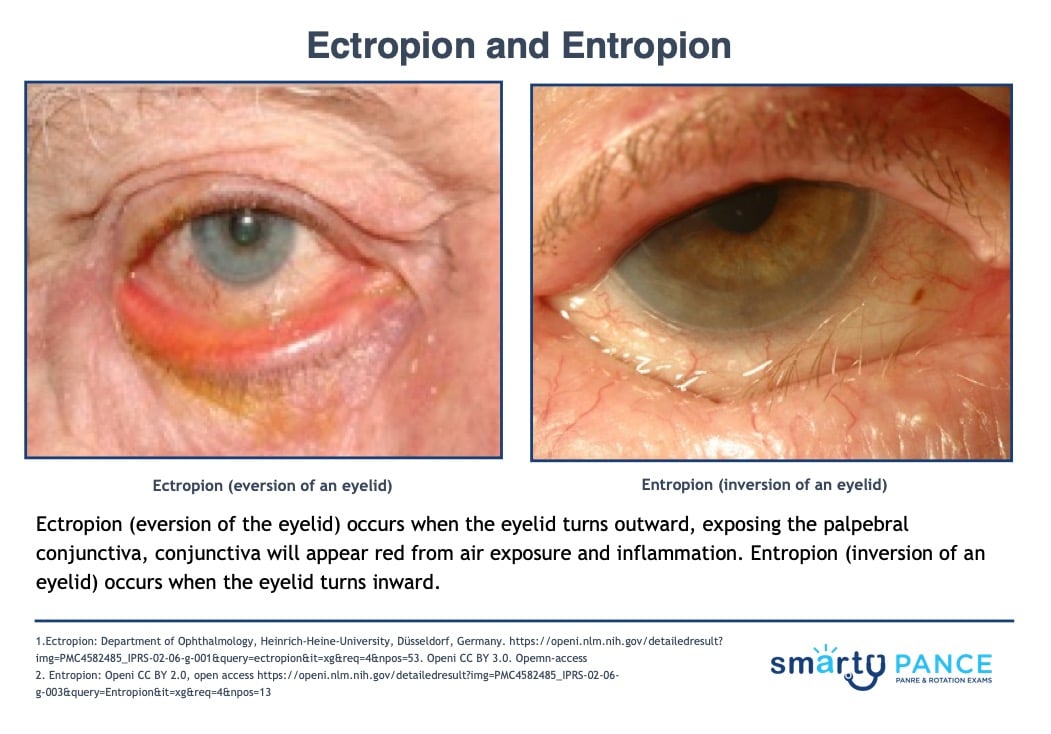
| Ectropion | Eyelid turns outward (eversion), causing dry eyes, excessive tearing, conjunctival redness from exposure. Common in elderly patients.
Clinical diagnosis. Key Difference: The eyelid is turned outward, causing exposure symptoms. |
Tear supplements, ocular lubricants; definitive surgical repair if severe.
Complications: Exposure keratitis, chronic irritation. |
| Entropion | Eyelid turns inward (inversion), leading to foreign-body sensation, tearing, irritation from eyelashes rubbing against the cornea. Common in elderly patients.
Clinical diagnosis. Key Difference: The eyelid is turned inward, leading to corneal irritation. |
Tear supplements, ocular lubricants; definitive surgical repair if severe.
Complications: Corneal abrasion or ulceration from eyelash friction. |
| Hordeolum (Stye) | Acute, painful, warm, red lump on the eyelid from bacterial infection (S. aureus most common).
Clinical diagnosis. Key Difference: Unlike a chalazion, it is tender, rapidly developing, and infectious. |
Warm compresses, topical antibiotics; incision/drainage if persistent; systemic antibiotics if cellulitis. Complications: Preseptal cellulitis if untreated. |
| Blepharitis | Patient will present as → a 34-year-old female with crusting, scaling, red-rimming of the eyelid, and eyelash flaking along with dry eyes. The patient has a history of seborrhea and rosacea. Eyelid changes: crusting, scaling, red-rimming of the eyelid, and eyelash flaking along with dry eyes and associated seborrhea and rosacea DX: Diagnosis is usually by slit-lamp examination
TX: Warm compresses, irrigation, lid massage, and topical antibiotics for flare-ups
 Blepharitis: notice the inflamed, flaky eyelid |
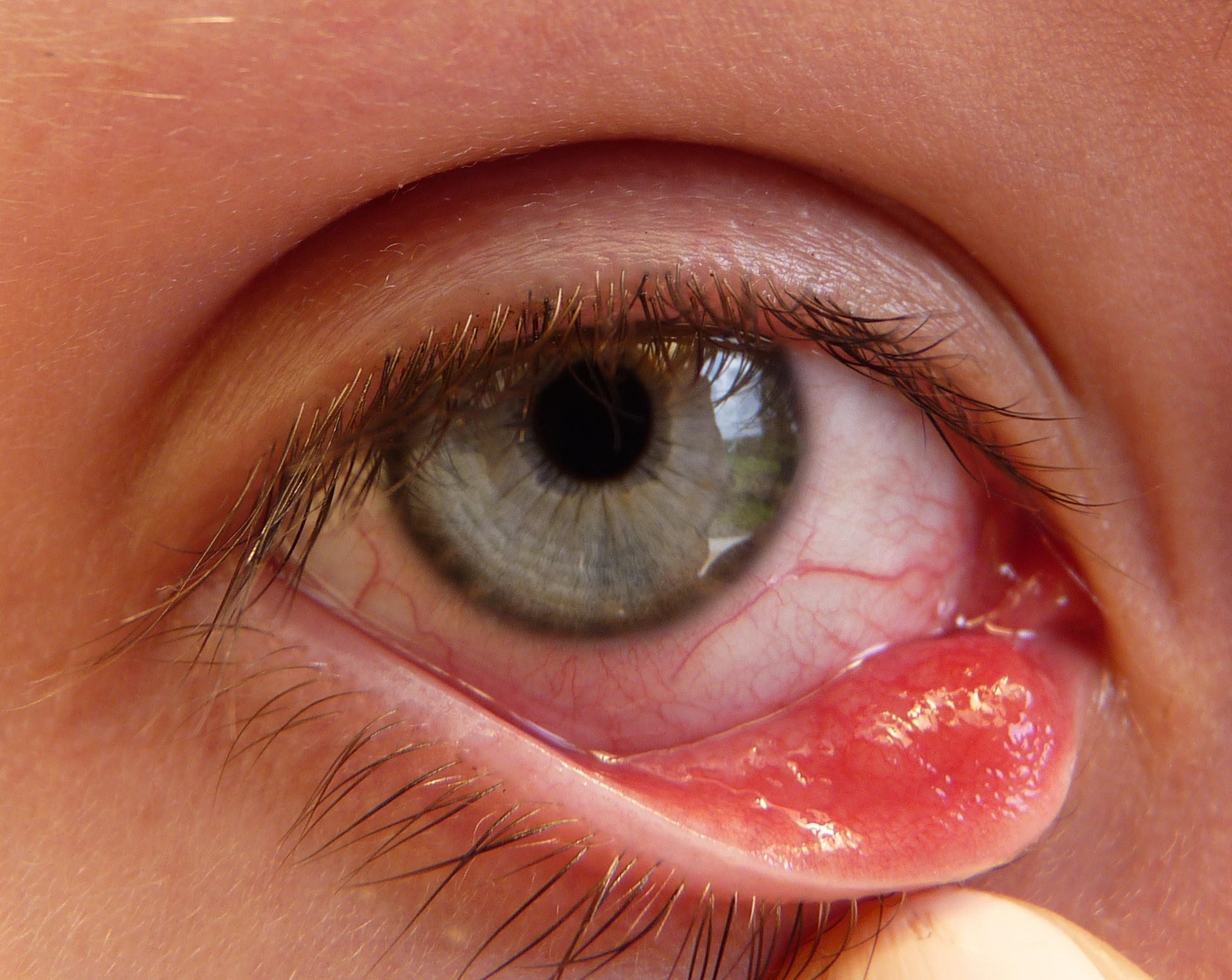
| Chalazion | Patient will present as → a 52-year-old male with a foreign-body sensation in the right eye. Over the last 3 weeks, he has had gradually increasing painless swelling around the right lower eyelid. Your examination shows a nontender discrete nodule on the right lower eyelid. There is no evidence of injection or discharge, and her visual acuity is normal. A chalazion is a sterile, painless (non-infectious) granuloma of the internal meibomian sebaceous gland, a painless "cold" lid nodule DX: Diagnosis is clinical
TX: Warm compresses and eyelid hygiene
 A chalazion is a painless granuloma of the internal meibomian sebaceous gland (PAINLESS LID NODULE) |
| Ectropion | Patient will present as → a 72-year-old with complaints of dry eyes coupled with excessive tearing. On exam, the conjunctiva appears red, and the left eyelid is turned outward. Ectropion (eversion of the eyelid) occurs when the eyelid turns outward, exposing the palpebral conjunctiva. The conjunctiva will appear red from air exposure and inflammation. DX: Diagnosis is clinical (the eyelid turns out) TX: Tear supplements and ocular lubricants at night
|
| Entropion | Patient will present as → a 75-year-old with a foreign body sensation and tearing of his right eye. On physical exam, you note a red, irritated right eye in association with an inverted eyelid. Entropion (inversion of an eyelid) occurs when the eyelid turns inward. It is most commonly caused by age-related tissue relaxation
DX: Diagnosis is clinical (eyelids turn in) TX: Tear supplements and ocular lubricants at night
|
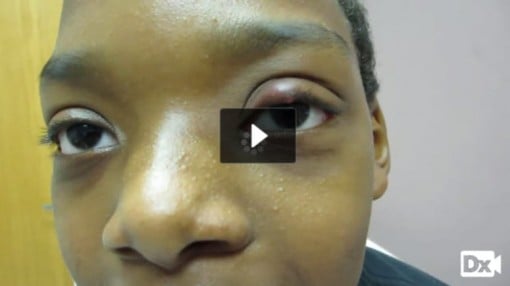
| Hordeolum (stye) (ReelDx) | ReelDx Virtual Rounds (Hordeolum )Patient will present as → a 15-year-old male with pain, redness, and swelling of the upper eyelid for the last 3 days. There are no visual changes or photophobia. Examination reveals a tender, erythematous, and outward-pointing edema of the right eyelid. Painful, warm (hot), swollen red lump on the eyelid (different from a chalazion, which is painless)
DX: The diagnosis is clinical TX: Warm compress and topical antibiotics
 Red, Painful, and "Hot" = Hordeolum |