External ear (PEARLS)
NCCPA™ PANCE EENT Content Blueprint ⇒ ear disorders ⇒ external ear
Q
Flashcards ready when you areYou have opened several Quizlet sets recently. Loading this one only when needed helps prevent a temporary Quizlet limit.
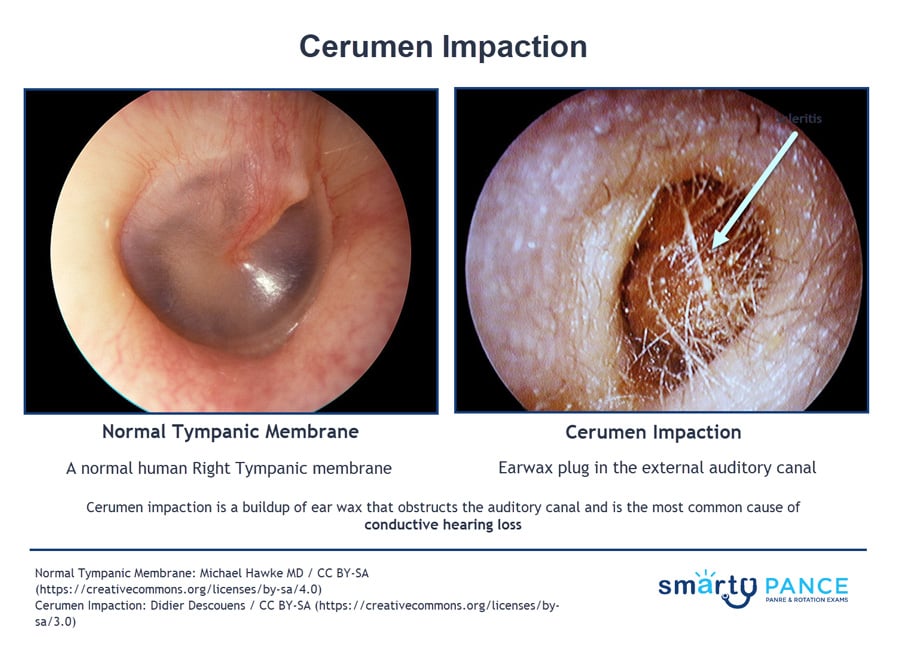
| Cerumen Impaction |
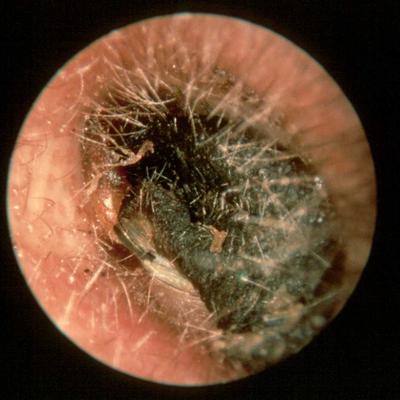
Patient will present as → a 25-year-old patient presents with unilateral hearing loss. Weber reveals lateralization to the right ear. Rinne test reveals the following: RIGHT: bone conduction = 10 seconds, air conduction = 5 seconds; LEFT: bone conduction = 5 seconds, air conduction = 10 seconds. 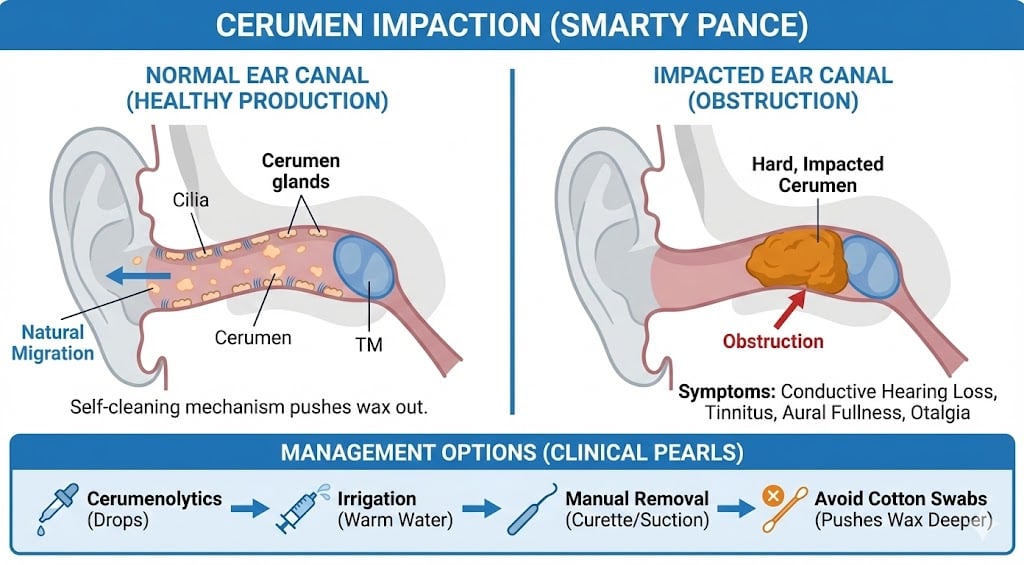 Cerumen impaction—buildup obstructs the auditory canal and is the most common cause of conductive hearing loss Cerumen impaction—buildup obstructs the auditory canal and is the most common cause of conductive hearing loss
- Abnormal Rinne test—bone conduction is better than air conduction
- Weber—sound lateralizes to the affected side (tuning fork is perceived more loudly in the ear with a conductive hearing loss)
DX: Diagnosis is clinical by otoscopy
- Confirm TM is intact before irrigation
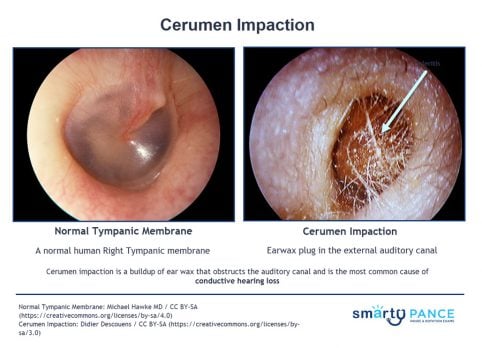
TX: Irrigation after several days of softening with carbamide peroxide (Debrox) or triethanolamine (Cerumenex)
PEARLS:
- TOP PEARL: Never irrigate if TM perforation is suspected. Cerumen impaction is the single most common cause of reversible conductive hearing loss in all age groups
- Cotton-tipped applicators are a leading cause of impaction — they push wax deeper into the canal
- Use body-temperature water for irrigation to avoid caloric-induced vertigo (cold or hot water stimulates the semicircular canals)
|
| Otitis externa |
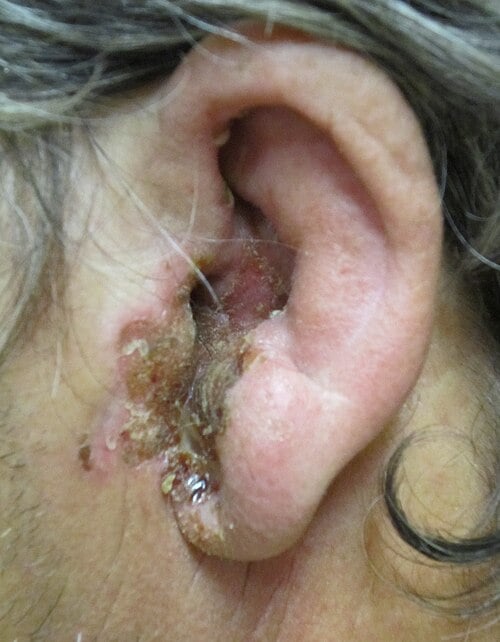
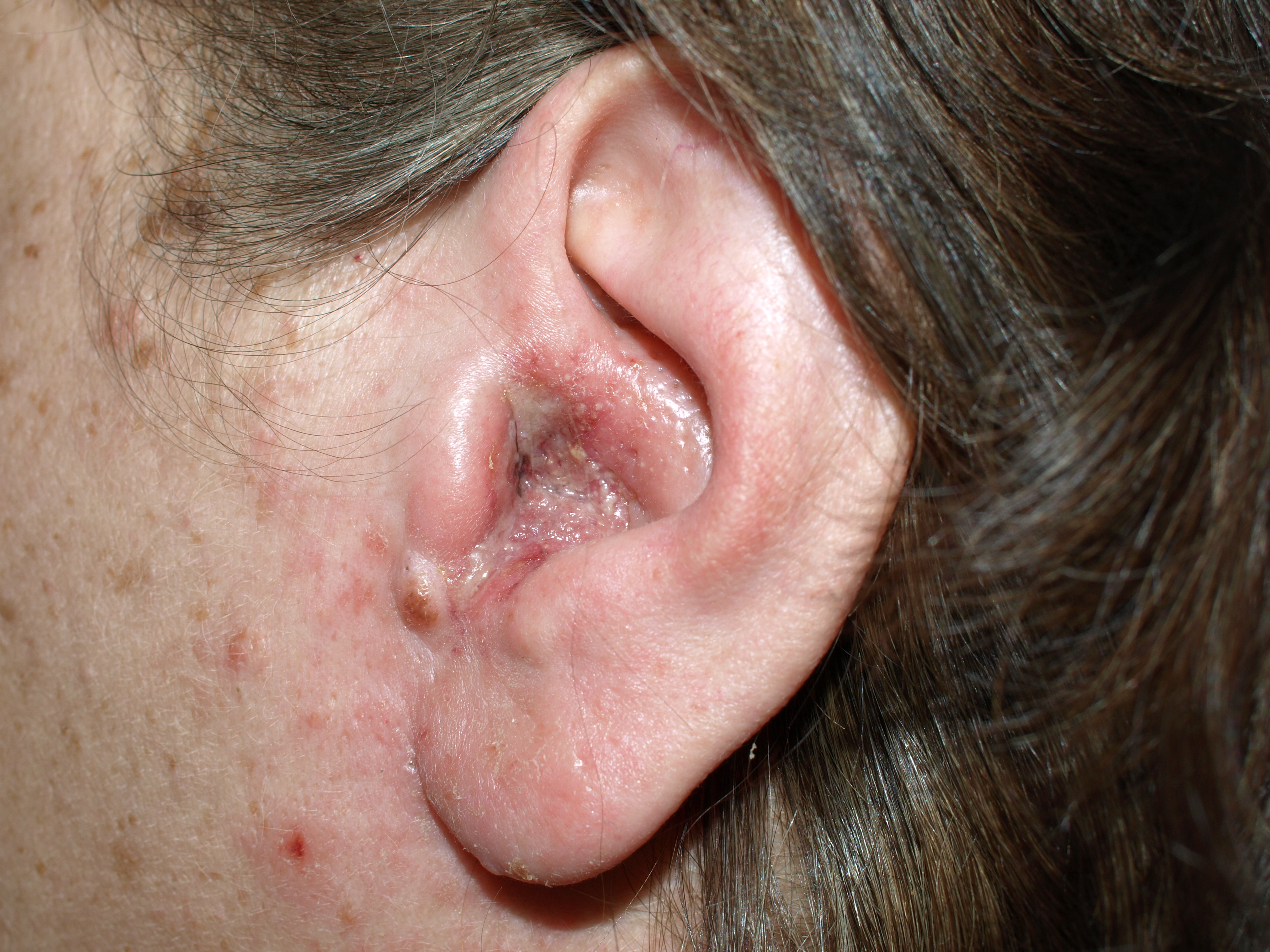
Patient will present as → a 4-year-old girl who is brought to the clinic by her mother, who states that the child has been complaining of progressively worsening ear pain and itchiness over the past week. Examination reveals left tragal tenderness and an edematous and closed canal. Weber lateralizes to the left. If the tympanic membrane is perforated (or patent tubes are present), which class of antibiotic drops must be avoided due to ototoxicity? Aminoglycosides (e.g., neomycin/polymyxin B/hydrocortisone). Fluoroquinolones (e.g., ofloxacin, ciprofloxacin) are safe for use with a perforated TM. 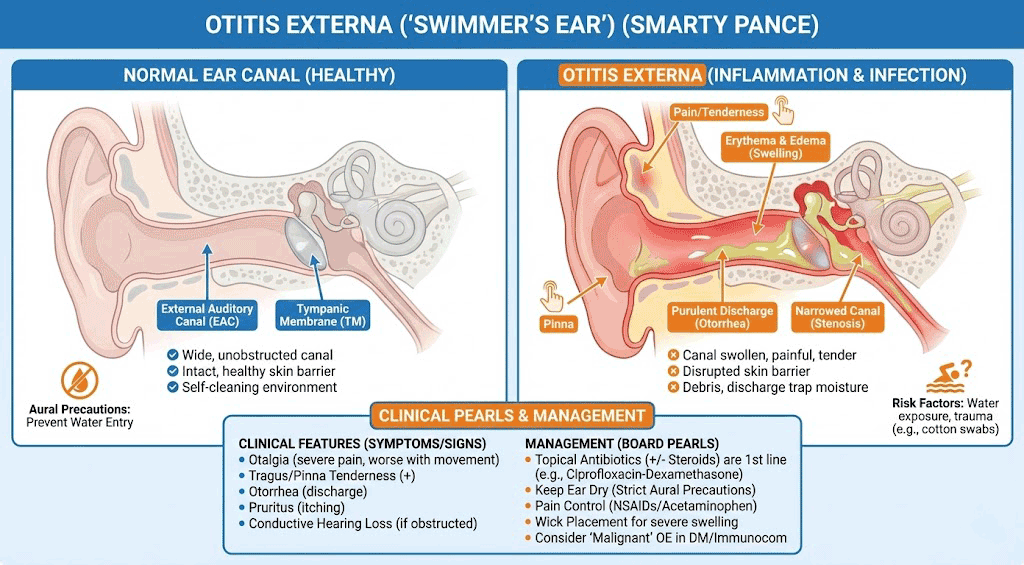 Bacterial otitis externa "swimmer's ear" Bacterial otitis externa "swimmer's ear"
- Edema with cheesy white discharge, palpation of the tragus is painful
- Ear pain, especially with movement of the tragus or auricle, pain with eating
- Tuning fork - bone conduction > air conduction
- Pseudomonas aeruginosa (swimmer’s ear), S. aureus (digital trauma)
- Malignant otitis externa is commonly seen in diabetics
DX: Diagnosis is clinical by otoscopy
TX:
- If perforated or chance of perforation → AVOID aminoglycosides (e.g., neomycin/polymyxin B/hydrocortisone)
- Fluoroquinolones (e.g., ofloxacin, ciprofloxacin) are safe for use with a perforated TM = Ciprofloxacin 0.3% and dexamethasone 0.1% suspension: 4 drops BID × 7 days, or ofloxacin: 0.3% solution 10 drops once a day × 7 days
- Cortisporin otic drops (safe if TM intact) = neomycin + polymyxin B + hydrocortisone
- Diabetic/immunocompromised: malignant otitis externa ⇒ necrotizing infection ⇒ hospitalization with IV abx (caused by aspergillus)
Fungal otitis externa
- Pruritus, weeping, pain, and hearing loss
- Swollen, moist, wet appearance
- Aspergillus niger (black), A. flavus (yellow) or A. fumigatus (gray), Candida albicans
DX: Diagnosis is clinical by otoscopy
TX:
- Topical therapy, anti-yeast for Candida or yeast: 2% acetic acid 3–4 drops QID; clotrimazole 1% solution; itraconazole oral
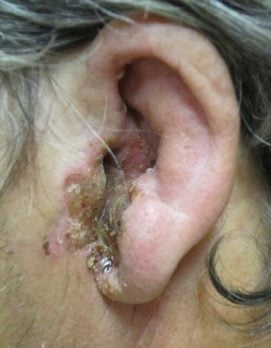 Otitis externa (“swimmer’s ear”) with inflammation and narrowing of the external auditory canal. Photo by James Heilman, MD via Wikimedia Commons, CC BY 3.0. |
| External Ear Trauma |
Patient will present as → a 17-year-old on the high school varsity wrestling team who was injured during a match. On physical exam, you note a fluctuant, tender edematous lesion of the anterior-superior outer portion of the right pinna Trauma to the external ear may result in hematoma, laceration, avulsion, or fracture
Subperichondrial hematoma (cauliflower ear)
- Blunt trauma to the pinna may cause a subperichondrial hematoma and accumulation of large amounts of blood between the perichondrium and cartilage
- This can interrupt the blood supply to the cartilage and render all or part of the pinna a shapeless, reddish-purple mass
- Avascular necrosis of the cartilage may follow
- The resultant destruction causes the characteristic cauliflower ear of wrestlers and boxers
Lacerations: Lacerations can be partial, or it may go all the way through the ear (complete)
Avulsions: The ear may be torn away from the head (avulsion). An ear may be partially or completely torn
Fractures: A forceful blow to the jaw may break (fracture) the bones around the ear canal and distort the canal’s shape, often narrowing it
DX:
The diagnosis of auricular hematoma is made by the characteristic clinical appearance in patients with a history of blunt trauma to the auricle
- Temporal bone CT without contrast, including fine axial and coronal cuts, for patients with head trauma and/or who may require operative intervention
- Tests for hearing may be warranted
TX:
- The most appropriate course of action for this patient is to refer immediately for I & D by an ENT specialist for the best results
- The cartilage of the pinna requires vascular supply from the perichondrium. If deprived of blood, the devascularized tissue can become permanently damaged, resulting in the so-called “cauliflower ear”
 Acute hematoma of the right ear
 Cauliflower ear |
Back to PANCE Blueprint EENT (6%)